

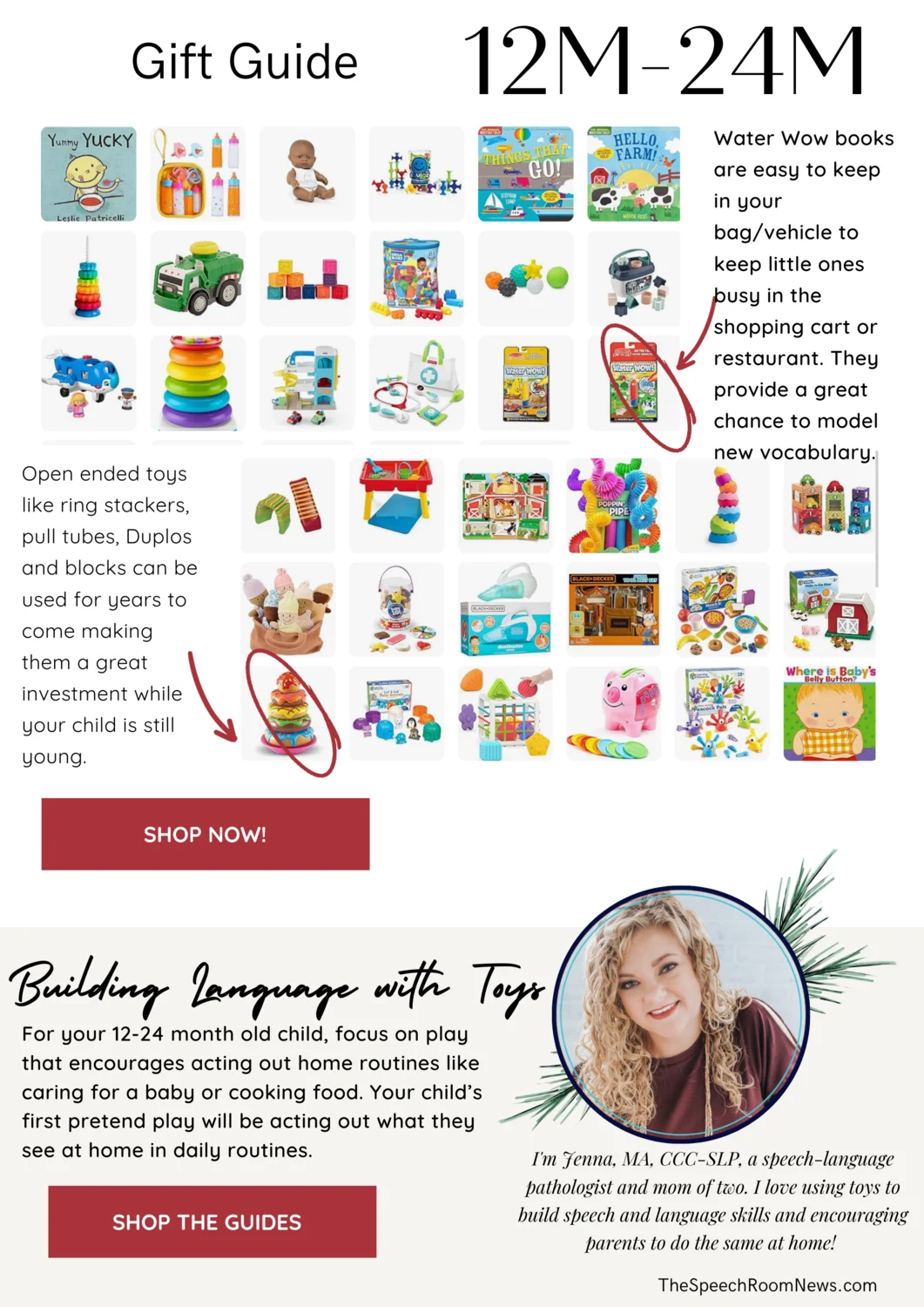
Jenna Kirk, MA, CCC-SLP, a distinguished pediatric speech-language pathologist and dedicated mother of two, has released a series of meticulously curated holiday toy guides designed to support and enhance children’s speech and language skills. Leveraging her extensive professional expertise and personal experience, including raising a child diagnosed with Childhood Apraxia of Speech, Kirk’s recommendations aim to empower parents and caregivers to make informed gift choices that offer significant developmental benefits beyond mere entertainment. The guides, accessible via Amazon, are thoughtfully organized by age group and include specific suggestions for engaging stocking stuffers, providing a practical resource for the upcoming holiday season.
The initiative by Kirk underscores a growing awareness within both professional and parental communities regarding the profound impact of purposeful play on early childhood development. For decades, research has consistently highlighted play as a fundamental mechanism through which children explore their world, develop cognitive abilities, and, crucially, build foundational communication skills. Speech-language pathologists, educators, and developmental psychologists universally advocate for play-based learning as a cornerstone of healthy growth, particularly in the formative years when neural pathways for language acquisition are rapidly developing. Toys, when selected with intent, can serve as invaluable tools to facilitate these critical learning processes.
The Foundational Role of Play in Language Acquisition
Play is not merely a pastime; it is the primary occupation of childhood, essential for holistic development. Through various forms of play—solitary, parallel, associative, and cooperative—children learn to interact with their environment, understand social cues, solve problems, and express themselves. Specifically for speech and language development, play provides a natural, low-pressure context for practicing new vocabulary, constructing sentences, understanding narrative structures, and engaging in reciprocal communication. For instance, imaginative play with dolls or action figures encourages children to create stories, assign roles, and use descriptive language. Building blocks can prompt spatial reasoning and the use of prepositions, while board games foster turn-taking, following instructions, and verbal negotiation.
The American Speech-Language-Hearing Association (ASHA) emphasizes that early language development is a strong predictor of later literacy skills and academic success. Disruptions or delays in this area can have long-lasting implications for a child’s social, emotional, and educational trajectory. According to the Centers for Disease Control and Prevention (CDC), approximately 1 in 12 children aged 3–17 years in the United States has had a disorder of speech, voice, or language during the past 12 months. This statistic highlights the widespread need for supportive interventions, both clinical and home-based, to address these challenges. Expert-curated resources like those provided by Jenna Kirk become vital bridges, translating complex therapeutic principles into accessible, everyday strategies for parents.

Jenna Kirk’s Expert Framework for Toy Selection
Jenna Kirk’s methodology for selecting toys transcends superficial appeal, delving into the core principles of developmental psychology and speech pathology. Her approach is rooted in several key criteria that maximize a toy’s potential for language stimulation:
-
Open-Ended Play Potential: Kirk prioritizes toys that do not have a single prescribed use, such as building blocks, art supplies, or dollhouses. These toys encourage creativity, imagination, and diverse forms of expression. When a toy allows for multiple interpretations and uses, children are prompted to generate their own narratives, problem-solve independently, and use a wider range of vocabulary and sentence structures to describe their play. This contrasts sharply with single-function electronic toys that often limit interaction to pre-programmed responses.

-
Interaction-Based Design: The most effective language-building toys are those that naturally encourage interaction between the child and a caregiver or other children. Board games, cooperative puzzles, or pretend-play sets facilitate turn-taking, negotiation, questioning, and responding. Such toys provide organic opportunities for conversational exchange, which is paramount for developing pragmatic language skills—the social rules of language. Kirk’s selections inherently promote dialogue, fostering environments where children can practice communication in a dynamic, responsive context.
-
Multi-Sensory Engagement: Toys that engage multiple senses—sight, sound, touch, and even smell or taste (for very young children with safe, non-toxic items)—can enhance learning and memory. Sensory play, such as with playdough, sand, or water tables, can stimulate descriptive language as children articulate their tactile experiences. Visual stimuli from colorful books or sorting games aid in vocabulary acquisition and concept development. Engaging multiple senses creates richer learning experiences, making new information more accessible and memorable.
-
Age-Appropriateness and Developmental Alignment: A crucial aspect of effective toy selection is ensuring that the toy aligns with a child’s current developmental stage. A toy that is too simple may bore a child, while one that is too complex can lead to frustration. Kirk’s guides are explicitly sorted by age, ensuring that each recommendation presents an optimal challenge level, supporting existing skills while gently pushing towards new ones. This careful calibration is particularly important for children with developmental delays, where targeted, stage-appropriate tools are essential for progress.

-
Durability and Lasting Educational Value: In an age of rapidly changing trends and disposable consumer goods, Kirk advocates for toys that offer enduring educational value and are built to last. Classic toys that have stood the test of time often possess inherent qualities that promote creativity and cognitive development. Investing in high-quality, educationally sound toys provides sustained opportunities for learning, reducing the need for constant novelty and allowing children to deepen their engagement over time.
Structuring the Guides: Age-Specific Pathways to Language Development
The comprehensive nature of Kirk’s gift guides is evident in their structured organization. Recognizing that language development is a continuous, age-dependent process, the guides categorize recommendations to align with specific developmental milestones:

- Infants (0-12 months): For the youngest learners, the focus is on sensory exploration and early sound production. Toys might include soft rattles, textured books, unbreakable mirrors, and stacking rings. These items encourage babbling, joint attention, object permanence, and early cause-and-effect understanding, all precursors to formal language.
- Toddlers (1-3 years): This stage is characterized by an explosion of vocabulary and the emergence of two-to-three-word phrases. Recommended toys would include chunky puzzles, shape sorters, musical instruments, simple pretend-play sets (e.g., kitchen, doctor’s kit), and board books. These facilitate naming objects, following simple directions, expanding vocabulary, and initiating imaginative play.
- Preschoolers (3-5 years): As children enter preschool, their language becomes more complex, incorporating longer sentences and early narrative skills. Kirk’s guides for this age group might feature elaborate pretend-play kits, puppet theaters, sequencing games, early board games with simple rules, and story-telling cards. These promote advanced vocabulary, sentence structure, social negotiation, problem-solving, and pre-literacy skills.
- School-Aged Children (5+ years): For older children, the emphasis shifts to more sophisticated language use, abstract reasoning, and complex social interactions. Recommendations could include strategic board games, construction sets, science kits, chapter books, and creative writing prompts. These foster critical thinking, detailed verbal explanations, complex narrative development, and advanced social communication skills.
Beyond these main categories, Kirk has also included a dedicated section for "stocking stuffers." These smaller, often overlooked items can be powerful tools for language development. Examples might include mini-puzzles, playdough tools, small figures for imaginative play, conversation starter cards, or even novelty items that spark curiosity and encourage descriptive language. This thoughtful inclusion ensures that every gift-giving opportunity can be leveraged for developmental enrichment.
Broader Implications and Impact
The release of these expert-curated toy guides holds significant implications for various stakeholders:

- Parental Empowerment: Perhaps the most immediate impact is on parents and caregivers. In an overwhelming market saturated with toys, many of which offer limited developmental benefit, Kirk’s guides provide a trustworthy, evidence-based roadmap. This empowers parents to make informed purchasing decisions that directly support their child’s speech and language development, reducing anxiety and increasing confidence in their role as primary educators.
- Bridging the Gap Between Therapy and Home: For families with children receiving speech therapy, these guides offer a practical way to extend therapeutic principles into the home environment. By integrating language-rich toys into daily play, parents can reinforce skills learned in therapy, accelerate progress, and make developmental support a natural, enjoyable part of family life. This seamless integration can be particularly beneficial for children with diagnosed conditions like Childhood Apraxia of Speech, where consistent practice across contexts is crucial.
- Normalization of Developmental Support: By presenting developmental support through the lens of holiday gift-giving, Kirk helps normalize the conversation around speech and language challenges. It subtly communicates that fostering these skills is a universal goal, not just for children with diagnosed disorders, thereby reducing any potential stigma associated with seeking or needing such support.
- Influence on the Educational Toy Market: As consumer awareness of developmental benefits grows, expert-led recommendations can influence market trends. Manufacturers of educational toys may see increased demand for products aligned with professional guidelines, potentially leading to an overall improvement in the quality and developmental efficacy of toys available to the public.
- Preventative Approach to Developmental Delays: Thoughtful toy selection can also be seen as a preventative measure. By consistently providing children with opportunities for language-rich play, parents can help build strong foundational skills, potentially mitigating the severity of future delays or even preventing them altogether in some cases.
Expert Endorsements and Community Reception (Inferred)
While no direct statements from external organizations are available, the broader speech-language pathology community would likely welcome such an initiative. Professional organizations like ASHA consistently advocate for parent education and resources that translate clinical knowledge into practical applications for families. Experts in the field often express the challenge of conveying complex developmental concepts to parents in an accessible manner, and resources like Kirk’s guides serve this crucial function effectively.
Within parental communities, particularly those navigating speech and language concerns, the guides would undoubtedly be received with enthusiasm. Forums and support groups frequently feature parents seeking recommendations for "therapy toys" or "toys that help with speech." An expert-backed, easily accessible list would fulfill a significant and recurring need. The personal narrative of Jenna Kirk, as both an SLP and a mother of a child with CAS, adds a layer of empathy and credibility that resonates deeply with families facing similar journeys.

In conclusion, Jenna Kirk’s comprehensive holiday toy guides represent more than just a list of gift ideas; they are a valuable resource for fostering healthy child development. By combining professional insight with practical accessibility, Kirk empowers parents to transform everyday play into powerful learning experiences, laying a strong foundation for children’s communication skills and overall well-being. The initiative is a testament to the ongoing efforts within the speech-language pathology field to extend expert guidance beyond clinic walls and into the homes where children’s most formative learning truly takes place. Parents and caregivers are encouraged to explore these carefully curated recommendations, accessible through Kirk’s Amazon storefront and a downloadable PDF, to enrich their children’s play and development this holiday season and beyond.
