

Speech-Language Pathologists (SLPs) are increasingly leveraging carefully designed therapeutic environments to maximize student engagement and facilitate communication development. A key component of this strategy involves the innovative use of bulletin boards, which transcend mere decoration to become integral pedagogical tools. Focusing on three distinct categories—demonstrative, interactive, and functional—SLPs are transforming their therapy rooms into dynamic learning spaces, particularly during seasonal transitions like winter. This proactive approach ensures a consistent rotation of engaging materials, aligning with best practices in educational psychology and special education.
The Pivotal Role of Environmental Design in Speech-Language Pathology

The environment in which therapy is delivered plays a crucial, though often underestimated, role in a child’s progress. For students receiving speech and language services, a stimulating and supportive setting can significantly impact motivation, attention, and the generalization of learned skills. Speech-Language Pathologists are frontline professionals dedicated to diagnosing and treating communication and swallowing disorders across all age groups. Their work is multifaceted, involving assessment, direct therapy, consultation with educators and parents, and often, the creation of an optimal learning atmosphere.
Educational research consistently highlights the benefits of multisensory learning, where visual, auditory, tactile, and kinesthetic inputs are integrated to reinforce concepts. Bulletin boards, when strategically conceptualized, serve as powerful visual aids that can be adapted to incorporate other sensory modalities. They provide a constant, low-cost resource for reinforcement, exposure, and passive learning, extending the therapeutic impact beyond direct session time. Furthermore, a welcoming and informative therapy room can ease anxiety for new students and families, fostering a sense of belonging and predictability, which are critical for effective intervention.
Categorical Framework for Bulletin Board Integration
To streamline planning and maximize therapeutic impact, many SLPs adopt a categorical approach to bulletin board design. This framework typically includes demonstrative, interactive, and functional boards, each serving distinct yet complementary purposes. This structured methodology allows for efficient resource allocation and ensures that the bulletin boards contribute meaningfully to therapy goals throughout the academic year, with seasonal themes providing a fresh, relevant context.
1. Demonstrative Bulletin Boards: Celebrating Progress and Reinforcing Skills
Demonstrative bulletin boards serve as visual showcases of student achievement and a tangible representation of therapeutic activities. These boards are typically adorned with crafts or projects completed by students during their therapy sessions, transforming the walls into a gallery of progress. The pedagogical rationale behind demonstrative displays is rooted in constructivist learning theories, where students actively create and connect with the material, leading to deeper understanding and retention.

-
The Snowflake Paper Strip Craft: Articulation Reinforcement through "Fake Crafting"
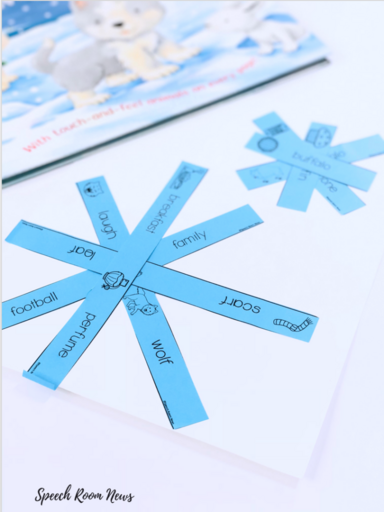
One particularly effective demonstrative activity for winter is the "Snowflake Paper Strip Craft." This method, often described as "fake crafting" due to its minimal preparation and simplified execution, allows SLPs to integrate fine motor skill development with articulation practice seamlessly. Students utilize pre-cut paper strips, often sourced from adaptable resources like "Year Round Craft Paper Strip Art for Articulation and Language." The simplicity of the craft enables the primary focus to remain on speech production.
During the activity, students repeatedly practice target words or phrases as they manipulate and assemble the paper strips into snowflake shapes. For instance, if a student is working on the /s/ sound, they might say "snow," "slide," or "snowflake" with each strip they glue. The physical act of cutting (if appropriate for skill level) and gluing provides a kinesthetic anchor to the auditory practice. Using blue colored computer paper enhances the winter theme, while offering cardstock for students with developing fine motor skills provides appropriate resistance for cutting practice. The finished snowflakes, each representing a session’s work and a student’s progress, are then displayed, creating a collective visual narrative of achievement and skill development. This process not only reinforces articulation but also fosters a sense of pride and ownership in the students’ therapeutic journey. -
Snowman Articulation Chop: Multi-faceted Practice in a Playful Format
Another highly effective demonstrative craft is the "Snowman Articulation Chop." This activity combines articulation practice with basic cutting and assembly, appealing to a wide range of developmental levels. The premise involves students "chopping" or cutting strips of paper, each containing target words or images related to their speech goals. These strips are then assembled to form a snowman figure.
For example, a student targeting /k/ sounds might cut out strips featuring words like "coat," "cookie," and "cold." Each cut and placement is an opportunity for repetitive, focused practice. The visual progression of the snowman’s construction provides immediate positive feedback and maintains engagement. The adaptability of the craft allows for customization, such as coloring the carrot nose or adding a construction paper hat, further personalizing the experience and encouraging creative expression. Displaying these unique snowman creations not only celebrates individual student efforts but also provides a cheerful, winter-themed backdrop that subtly reminds students of their therapeutic goals and accomplishments. Such crafts contribute to a positive and motivating therapy environment, encouraging continued participation.
2. Interactive Bulletin Boards: Fostering Active Engagement and Spontaneous Practice
Interactive bulletin boards transform passive displays into dynamic learning stations where students can actively engage with therapeutic content. This approach aligns with principles of active learning, promoting self-directed practice and fostering intrinsic motivation. These boards are particularly valuable for extending learning beyond structured therapy sessions, allowing students to reinforce skills while waiting for their turn or passing by the therapy room.
-
Falling Flakes: Apraxia Snowflakes – Multisensory Support for Motor Planning
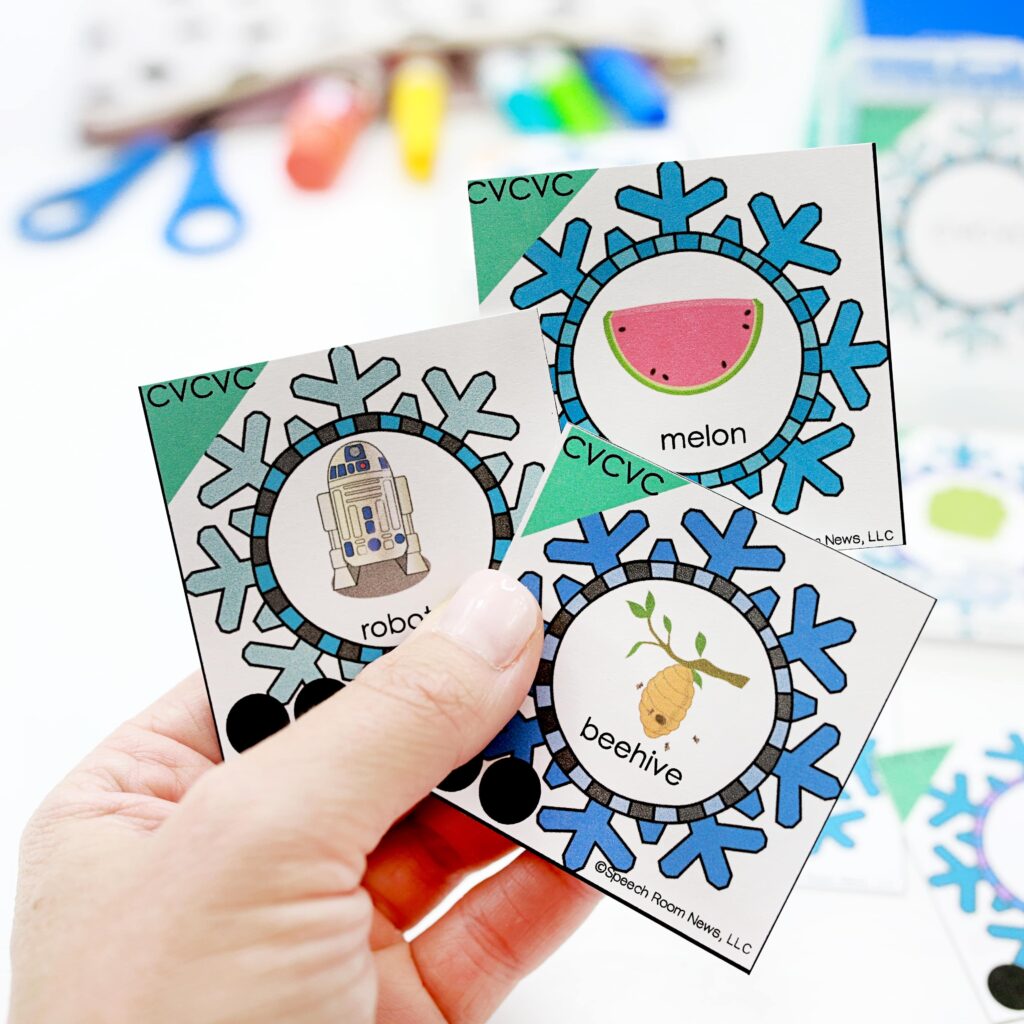
The "Falling Flakes: Apraxia Snowflakes" set exemplifies an interactive design tailored for students with childhood apraxia of speech (CAS) or other motor speech disorders. Each snowflake card features an image and a word, crucial for visual-verbal association. A distinctive element is the inclusion of black dots in the bottom left corner, representing the number of syllables. Students are encouraged to touch these dots as they produce the corresponding word, integrating tactile and kinesthetic input with auditory and visual cues. This multisensory approach is vital for developing motor planning for speech, helping students to segment words and practice syllable integrity.
The cards are further organized by color and syllable pattern in the top left corner, aiding in quick identification and structured practice. For the bulletin board display, a poster-sized snow globe with velcro dots is used. Students attach the snowflake cards, also equipped with velcro, to the globe. This physical act of attaching and detaching the "flakes" provides a hands-on, engaging way to practice speech sounds spontaneously. The interactive nature of this board encourages repetition and self-correction, making abstract motor planning concepts more concrete and accessible. -
Falling Flakes: Phonology Activities – Targeting Phonological Disorders with Minimal Pairs
Complementing the apraxia set, the "Falling Flakes: Phonology Activities" focuses on addressing phonological disorders using minimal pairs. Minimal pairs are words that differ by only one phoneme (e.g., "pat" vs. "bat"), used to highlight sound contrasts and facilitate the remediation of phonological processes. Similar to the apraxia set, each snowflake card presents an image and a word, with color and pattern coding for organizational efficiency.
A poster-sized snow globe with 24 velcro dots serves as the central interactive element on the bulletin board. Students engage by adding or removing snowflake cards, each representing a minimal pair or a target phonological pattern, from the globe. This interaction provides repeated exposure to target sounds and helps students to discriminate between sounds and produce them accurately. The inclusion of additional winter-themed posters allows SLPs to vary the display throughout the season, maintaining novelty and interest. By actively manipulating the cards, students reinforce their phonological awareness, practice sound discrimination, and generalize newly acquired speech patterns in a playful, self-directed manner.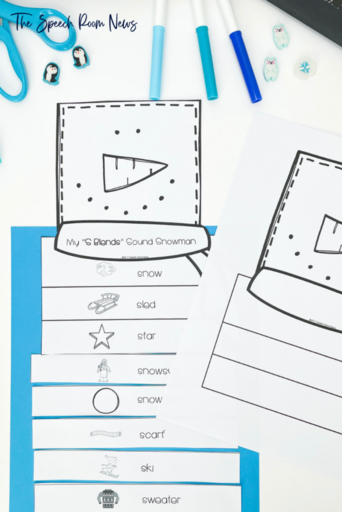
3. Functional Bulletin Boards: Empowering Parents and Bridging Home-Therapy Gaps
Functional bulletin boards shift the focus from student-centric activities to resources designed for parents and caregivers. These boards are invaluable for fostering a strong home-school connection, providing practical strategies and ideas that enable parents to support their child’s communication development in everyday settings. This approach recognizes parents as crucial partners in the therapeutic process, vital for the generalization of skills outside the therapy room.
- Winter Speech and Language Packet: Learning Through Play – Practical Home Handouts
A prime example of a functional bulletin board resource is the "Winter Speech and Language Packet: Learning Through Play." This collection of handouts provides parents with actionable ideas for integrating speech and language practice into common winter activities. The handouts offer concrete suggestions for leveraging everyday scenarios, such as a snowball fight, building a snowman, sledding, making hot chocolate, or even a simple winter walk, to enhance communication skills.
For each activity, the packet typically outlines specific speech and language targets. For instance, during a "Snowman" activity, parents might be guided to work on descriptive vocabulary (e.g., "round," "white," "cold"), sequencing (e.g., "first, we roll the snow, then we stack it"), following directions, or articulation of target sounds within context. A "Hot Chocolate" activity could focus on action verbs ("pour," "stir," "drink"), requesting, or social communication during shared experiences.
Displaying these handouts on a functional bulletin board makes them readily accessible to parents who visit the therapy room. The visual reminder and easy access to practical tips empower parents to become active participants in their child’s therapy journey, promoting consistent reinforcement of skills learned in sessions. The availability of a Spanish version of this packet further underscores a commitment to inclusive communication and supports diverse family populations, ensuring that language barriers do not impede parental involvement.
Implications and Broader Impact
The strategic implementation of demonstrative, interactive, and functional bulletin boards in speech-language pathology settings carries significant implications for student outcomes, parent engagement, and professional efficacy.
- Enhanced Student Outcomes: By creating an engaging and multisensory learning environment, SLPs can foster greater motivation, attention, and participation among students. The constant exposure to target sounds and language concepts, both during and outside of formal therapy, contributes to faster acquisition and better generalization of skills. Celebrating student work through demonstrative boards boosts self-esteem and reinforces positive learning behaviors.
- Strengthened Parent-School Partnerships: Functional bulletin boards bridge the gap between clinical intervention and home practice. By providing parents with accessible, practical resources, SLPs empower them to become effective co-therapists, reinforcing skills in natural, meaningful contexts. This collaboration is critical for maximizing therapy effectiveness and ensuring long-term communication success.
- Optimized SLP Workflow and Professionalism: A structured approach to bulletin board design streamlines planning and resource management for SLPs. The ability to rotate themes seasonally keeps the environment fresh and relevant without requiring extensive, continuous effort. Furthermore, a well-organized and stimulating therapy room reflects professionalism and dedication, enhancing the SLP’s image within the school community and among families.
- Inclusive and Accessible Learning Environments: By incorporating diverse materials, visual aids, and interactive elements, bulletin boards contribute to creating an inclusive environment that caters to various learning styles and needs. The availability of resources in multiple languages, as seen with the Spanish packet, ensures equitable access for all families.
In conclusion, the evolution of bulletin boards from static displays to dynamic, purposeful therapeutic tools represents a significant advancement in speech-language pathology. By thoughtfully designing demonstrative, interactive, and functional boards, SLPs are not merely decorating their spaces; they are intentionally crafting powerful learning environments that actively support communication development, celebrate student achievement, and foster vital home-school collaboration. These strategic initiatives underscore a holistic approach to therapy, recognizing that every element of the therapeutic setting can contribute to a child’s success in mastering essential speech and language skills.
