

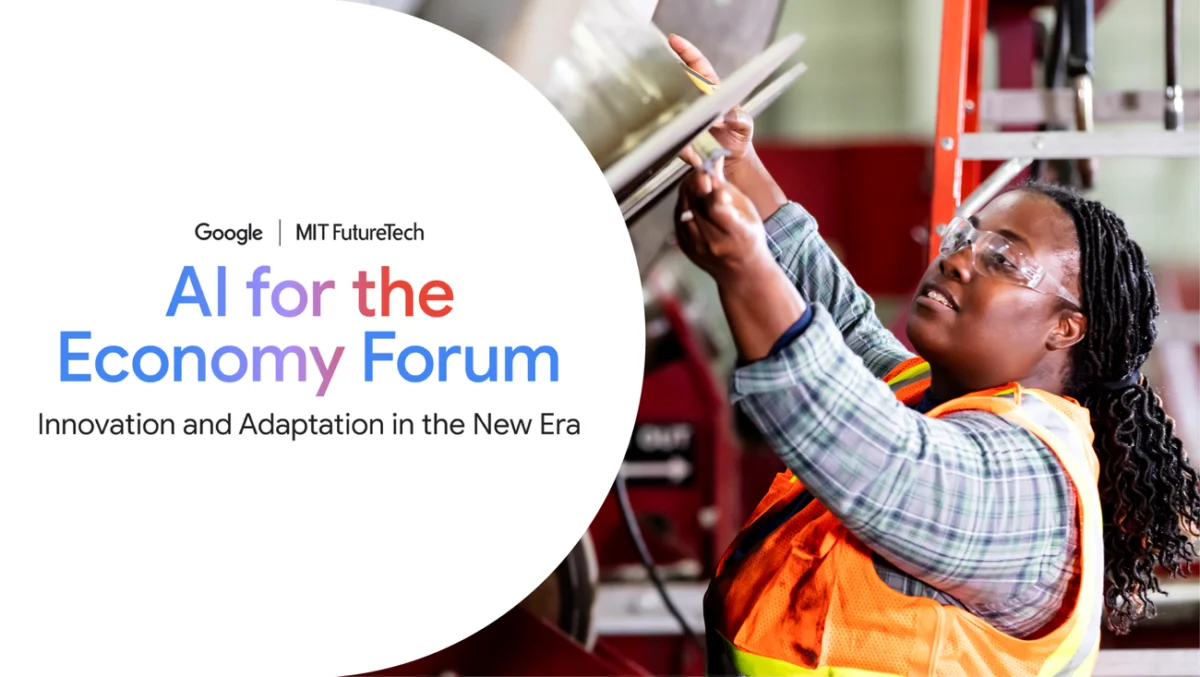
The intersection of artificial intelligence and global economics took center stage in Washington, D.C., as Google, in partnership with MIT FutureTech, convened the inaugural AI for the Economy Forum. This landmark event brought together a diverse assembly of economists, industry leaders, policymakers, and academic researchers to address the multifaceted impact of artificial intelligence on the labor market and the broader economic landscape. The forum operates on the foundational premise that the socio-economic outcomes of AI—whether beneficial or disruptive—are not predetermined. Instead, the organizers argue that the trajectory of AI’s impact is a matter of societal choice, requiring a concerted effort across sectors to ensure that technological progress translates into shared prosperity.
The forum serves as a critical junction for stakeholders to share data, identify existing knowledge gaps, and establish a framework for long-term collaboration. As AI moves from a speculative technology to a primary driver of industrial transformation, the need for empirical research and proactive workforce development has become paramount. Google’s leadership emphasized that the current transition necessitates a "new era of partnership," signaling a move away from siloed corporate development toward a more integrated model involving workers, governments, and civil society.
A Strategic Framework for Economic Transition
To support this transition, Google announced a multi-pronged strategy focused on two primary pillars: intensive research investment and large-scale skill development. The company is positioning itself as a facilitator of the information required for "smart decision-making" by governments and private entities alike. This initiative arrives at a time when global economic institutions, such as the International Monetary Fund (IMF), have predicted that AI could affect nearly 40% of jobs globally, with the potential to either exacerbate inequality or significantly boost productivity depending on the policy responses adopted by nations.
The forum’s agenda highlights the urgency of understanding how AI tools can be integrated into the workplace without merely displacing human labor. By focusing on "human-in-the-loop" systems, the research presented at the forum suggests that the most successful applications of AI are those that automate repetitive tasks, thereby freeing human workers to engage in more complex, collaborative, and creative endeavors.
Deepening Research through the AI and Economy Research Program
A cornerstone of the forum’s announcements is the expansion of Google’s AI & Economy Research Program. This initiative is designed to answer pressing questions regarding productivity, organizational transformation, and the evolving nature of work. Central to this effort is the Visiting Fellows program, which enlists high-profile economists to conduct original research. Among the notable participants is MIT’s David Autor, a leading scholar on labor economics whose previous work has extensively documented the impact of automation and international trade on the American workforce.
Furthering this academic collaboration, the Digital Futures Project has already begun yielding insights. Research conducted by MIT’s Ben Armstrong and Julia Shah explored how firms can implement AI in ways that simultaneously benefit the company’s bottom line and the workers’ professional development. Their findings indicate that the highest rates of success occur when AI is used to minimize "drudgery" and foster an environment of continuous learning.
To broaden the scope of this inquiry, Google.org is providing significant funding and Google Cloud credits to a new cohort of researchers. These scholars will investigate sector-specific transformations in critical industries such as manufacturing and healthcare. The research will also extend to the "economics of AI agents"—autonomous systems capable of performing complex tasks—and their potential to redefine productivity for knowledge workers.
Global Academic Oversight and Policy Alignment
To ensure the rigor and objectivity of its economic research, Google is drawing on an elite panel of academic advisors. This group includes Nobel Laureate Michael Spence, Cambridge University’s Dame Diane Coyle, and Mohamed El-Erian, the former CEO of PIMCO and current professor at the Wharton School. These advisors bring a wealth of experience in global finance, productivity measurement, and economic policy, providing a high-level perspective on how AI will influence global trade and national economies.
The forum also highlighted Google’s recent endorsement of bipartisan legislation in the United States aimed at preparing the workforce for the AI transition. These bills focus on three key areas: assessing the total economic impact of AI, equipping workers with necessary technical skills, and encouraging the adoption of AI in ways that empower rather than disenfranchise the labor force. By aligning with legislative efforts, the tech giant is signaling its support for a regulatory environment that balances innovation with social stability.
Scalable Training and the Global AI Opportunity Fund
Recognizing that research alone cannot mitigate the challenges of a shifting economy, the forum detailed extensive commitments to education and vocational training. Google reported that it has already trained 100 million people globally in digital skills, including 13 million within the United States. However, as the economy shifts from basic digital literacy to AI-specific requirements, the company is evolving its curriculum.
The newly launched AI Professional Certificate is a primary example of this shift, designed to move learners from basic awareness to "AI fluency." This is bolstered by the $120 million Global AI Opportunity Fund, which seeks to democratize access to AI education in underserved communities worldwide. The goal is to prevent a "digital divide" where only those in high-tech hubs benefit from the AI-driven economic expansion.
In the realm of K-12 and higher education, the Google AI Educator Series, in partnership with ISTE+ASCD, aims to provide AI literacy training to all six million teachers and faculty members in the U.S. This initiative reflects the belief that the foundations of an AI-ready economy must be laid within the traditional education system, ensuring the next generation of workers is equipped for a transformed job market.
Infrastructure and Long-Term Capital Investment
The discussions in Washington also touched upon the physical and technical infrastructure required to sustain an AI-driven economy. Google highlighted its foundational investments, including $1 billion dedicated to AI education and job training in the U.S., alongside tens of billions of dollars directed toward technical infrastructure and energy capacity.
The development of AI requires massive computational power, which in turn demands significant upgrades to data centers and energy grids. These investments are framed not just as corporate expenditures, but as essential contributions to national competitiveness. The company’s U.S. Economic Impact Report suggests that these technological tools act as engines for economic mobility, allowing small and medium-sized businesses to compete on a more level playing field by accessing high-level analytical tools previously reserved for large corporations.
Analysis of Economic Implications and Sector Transformation
The implications of the research and programs discussed at the forum suggest a shift in how productivity is measured. Traditionally, productivity gains from technology have taken years, if not decades, to manifest in national GDP figures—a phenomenon known as the Solow Paradox. However, the rapid deployment of generative AI has the potential to compress this timeline.
In healthcare, for instance, AI-driven research could accelerate drug discovery and personalize patient care, potentially lowering costs and improving outcomes. In manufacturing, the integration of AI agents into supply chain management could mitigate the types of disruptions seen during the global pandemic. The forum’s focus on these sectors indicates a strategic move to apply AI where its economic "multiplier effect" is greatest.
Furthermore, the emphasis on "AI agents" marks a new chapter in the automation debate. Unlike previous waves of automation that primarily affected manual labor, AI agents are poised to assist—and in some cases, substitute—cognitive tasks. The forum’s objective is to ensure that this transition leads to "job enhancement" rather than "job replacement," a goal that requires ongoing data collection and flexible policy frameworks.
Conclusion: A Collaborative Path Forward
The inaugural AI for the Economy Forum concludes with a call for sustained, multi-stakeholder engagement. The consensus among participants is that the AI transition is too vast and complex for any single entity—whether a corporation or a government—to manage in isolation.
As Google and MIT FutureTech move forward with their research and training initiatives, the focus remains on building a foundation of transparency and shared knowledge. By investing in the human capital of the workforce and the intellectual capital of the research community, the forum aims to navigate the uncertainties of the AI era. The ultimate success of these efforts will be measured by the degree to which AI contributes to a resilient, inclusive, and highly productive global economy. Through the "AI Works" initiative and continued legislative engagement, the groundwork is being laid for a future where technological progress and economic stability are mutually reinforcing.
