

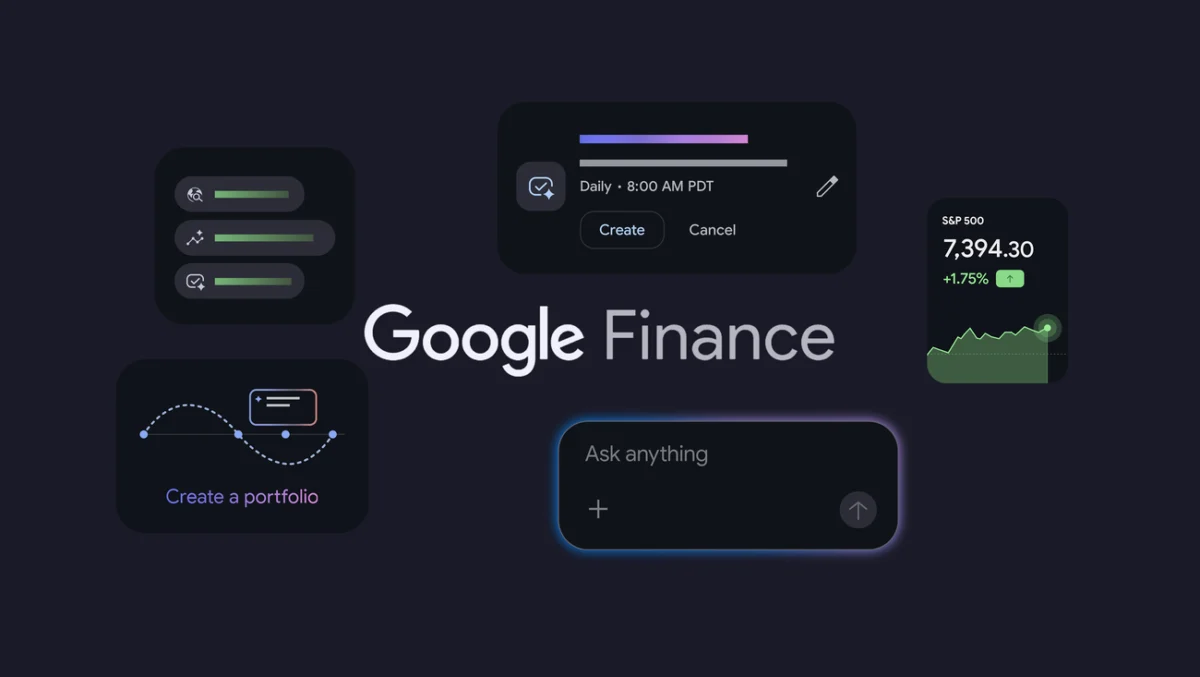
The landscape of retail investing is undergoing a fundamental transformation as technological barriers to entry continue to dissolve. In a significant move to recapture the attention of individual investors and compete with long-standing financial data giants, Google has announced that the newly redesigned Google Finance is officially moving out of its beta phase. This transition is accompanied by the introduction of a dedicated Android application and a suite of sophisticated, AI-driven tools designed to streamline how users track, analyze, and interpret market data. Barine Tee, Principal Engineer for Search at Google, detailed these updates as part of a broader strategy to make financial literacy and portfolio management more accessible through the integration of large-scale data processing and natural language understanding.
As global markets face heightened volatility and a surge in retail participation, the demand for centralized, easy-to-use financial tools has never been higher. Google Finance, which has existed as a staple of the web for nearly two decades, is now leveraging the company’s advancements in artificial intelligence to move beyond simple price tracking. The latest version aims to provide a holistic view of an individual’s financial health while offering predictive insights and customized briefings that were previously the domain of professional-grade terminals.
A New Era for Portfolio Management
The cornerstone of this update is the global rollout of enhanced portfolio tracking capabilities. Recognizing that many investors hold assets across multiple brokerages, Google Finance now offers a consolidated dashboard that provides a unified view of performance data and asset allocation. This feature is designed to eliminate the friction often associated with manual data entry, which has historically been a deterrent for casual investors looking to maintain a comprehensive overview of their holdings.
To facilitate this, Google has introduced several frictionless onboarding methods. Users are no longer required to manually input every trade; instead, the platform allows for the uploading of CSV files and PDFs, such as brokerage statements. Perhaps more innovatively, the system utilizes optical character recognition (OCR) and document AI to extract investment details from screenshots. Users can even describe their investments in plain language to seed a portfolio, which the platform then populates with real-time market data. This emphasis on ease of entry reflects a broader trend in the fintech industry toward "low-friction" data integration, aiming to provide immediate value to the user.
Once a portfolio is established, the platform moves into an analytical role. The dashboard does more than just display the current value of holdings; it provides deep dives into asset allocation, showing how a user’s wealth is distributed across sectors, regions, and asset classes. This transparency is intended to help investors identify potential risks, such as over-concentration in a specific industry or a lack of geographical diversification.
The Integration of AI-Powered Research Tools
The exit from beta marks the debut of a more conversational interface within Google Finance. By integrating sophisticated search algorithms and generative AI, the platform now allows users to query their portfolios using natural language. This shift represents a departure from traditional financial tools that require users to navigate complex menus or build their own spreadsheets to answer specific questions.
Investors can now ask the platform nuanced questions such as, "What sectors are currently underrepresented in my portfolio?" or "How does my fixed income allocation impact my long-term growth potential?" These queries are processed by an AI engine that scans the user’s specific holdings against broader market trends and historical data. The goal is to provide a research experience that feels less like data mining and more like a consultation with a digital financial analyst.
Furthermore, the platform addresses the challenge of "information overload." In an era where financial news is constant and often contradictory, Google Finance’s AI-powered "key moments" feature aims to provide clarity. This tool identifies significant price movements in a stock and automatically correlates them with relevant news events, earnings reports, or macroeconomic shifts. By explaining the "why" behind a stock’s volatility, the platform helps users distinguish between market noise and fundamental changes in a company’s value proposition.
Strategic Expansion into Mobile: The Android Launch
While Google Finance has long been accessible via mobile browsers, the launch of a dedicated Android app marks a strategic pivot toward "on-the-go" financial management. The app is designed for high-frequency users who require real-time updates and a dedicated space for market monitoring. It integrates the core functionalities of the web experience, including the watchlist and real-time data feeds, but optimizes them for a mobile-first interface.
The Android app serves as a centralized hub for financial intel, offering a live news feed tailored to the user’s interests and holdings. Crucially, the app includes the AI research tool, ensuring that users can perform complex analysis from their smartphones. Google has confirmed that the mobile experience will continue to evolve, with plans to integrate live earnings calls and the full suite of portfolio management tools in the coming months. An iOS version of the application is also slated for release later this year, ensuring cross-platform parity for the global user base.

Custom Market Intel and Automated Briefings
In addition to reactive tools, Google Finance is introducing proactive features designed to keep investors ahead of market movements. The new "Market Intel" capability allows users to automate the delivery of customized briefings. Rather than manually checking for updates, users can set specific tasks for the AI to perform in the background.
For example, an investor focused on the digital asset space can instruct the platform to "Send a daily pre-market briefing analyzing significant overnight moves across major cryptocurrencies." The system then aggregates data from various sources, filters for significance, and delivers a concise summary via notifications on the Google app for Android or iOS. These briefings are fully customizable; users can adjust the schedule, the scope of the assets covered, and the depth of the analysis provided. By leveraging the user’s watchlist and portfolio data, these updates are inherently personalized, ensuring that the information delivered is always relevant to the individual’s financial strategy.
Chronology of Google Finance Evolution
The journey to this week’s launch has been one of gradual iteration and strategic repositioning. Google Finance was originally launched in 2006, positioning itself as a clean, fast alternative to Yahoo Finance and MSN Money. For years, it was praised for its integration with Google Search and its interactive charting capabilities. However, as the fintech landscape shifted toward mobile apps and social trading, the platform’s web-centric model began to feel dated.
In 2017, Google initiated a controversial redesign that integrated Finance more deeply into the Search ecosystem but removed several legacy features, such as the ability to download historical data in certain formats and some portfolio tracking tools. This led to a period of user feedback that eventually informed the "new" Google Finance experience that entered beta in recent years. The current iteration represents a "return to roots" for the platform, reinstating robust portfolio tools while layering on the AI capabilities that have become the hallmark of Google’s modern product suite.
Market Context and Broader Implications
The revitalization of Google Finance arrives at a time when the retail investment market is seeing sustained growth. According to industry reports, retail trading now accounts for a significant portion of daily market volume, fueled by the rise of zero-commission brokerages and the democratization of financial information. However, this increase in participation has also highlighted a gap in sophisticated, yet accessible, analytical tools.
By offering professional-grade insights for free, Google is positioning itself as a primary gateway for financial information. This has implications for the broader fintech ecosystem. Established players like Bloomberg and Refinitiv cater to the institutional market with high-cost terminals, while platforms like Yahoo Finance and Morningstar serve the retail segment. Google’s entry into the space with a heavy emphasis on AI and search integration could disrupt the traditional "freemium" models of its competitors.
Furthermore, the integration of financial data into the broader Google ecosystem (Search, Android, and eventually iOS) creates a powerful feedback loop. As users spend more time within the Google Finance app, the company gains deeper insights into consumer sentiment and investment trends, which can, in turn, refine its search algorithms and AI models.
Looking Ahead: The Future of AI in Finance
The exit from beta is not the conclusion of Google Finance’s development but rather the start of a new phase. The company has signaled that it will continue to lean into AI to solve complex financial problems. Future updates are expected to include more granular risk assessment tools, integration with broader economic indicators, and enhanced collaborative features.
As AI continues to mature, the distinction between "data" and "insight" will become increasingly important. Google’s Principal Engineer Barine Tee emphasized that the goal is not just to provide more information, but to provide better information. In a world where an investor can be overwhelmed by thousands of data points a second, the ability of a platform to synthesize that data into actionable intelligence is the ultimate competitive advantage.
For the millions of retail investors globally, the new Google Finance offers a glimpse into a future where the tools of Wall Street are available on every smartphone, powered by the same AI that drives the world’s most advanced search engine. As the platform rolls out globally this week, the financial community will be watching closely to see how these tools perform in the high-stakes environment of live markets.
