

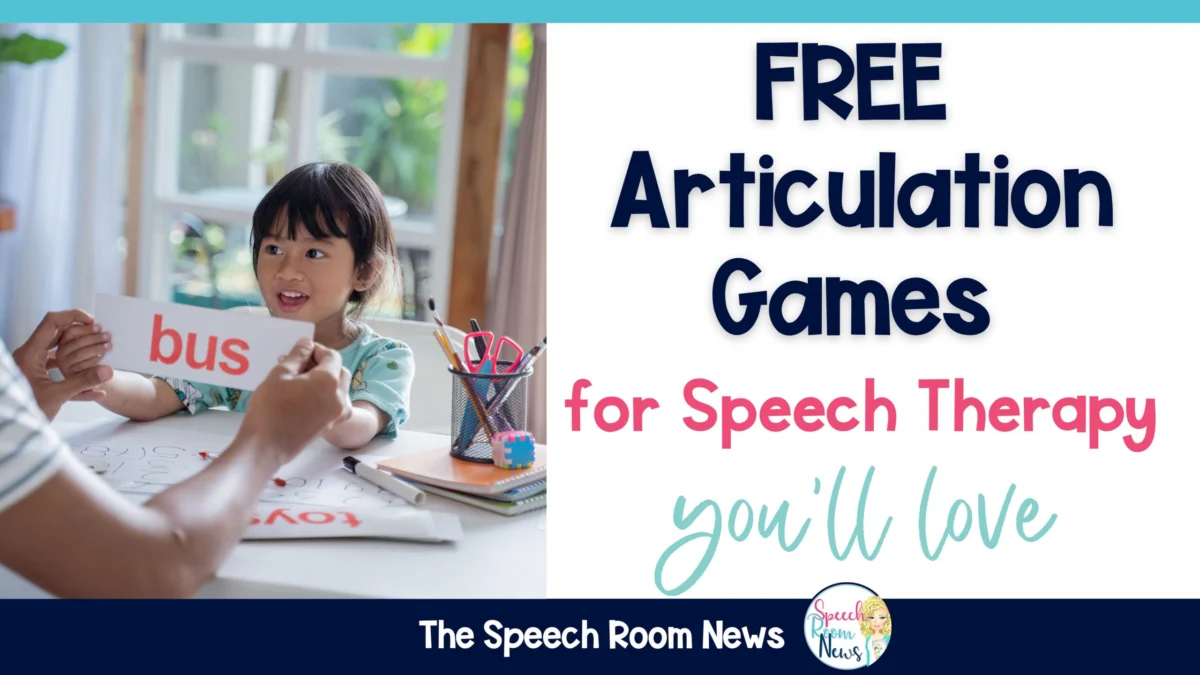
The integration of play into therapeutic interventions has become a cornerstone of modern speech-language pathology, fundamentally transforming how children engage with and benefit from articulation practice. This pedagogical shift not only significantly boosts engagement, making speech therapy sessions more memorable and enjoyable for young learners, but also provides invaluable opportunities to generalize newly acquired language skills into real-world, everyday contexts. The increasing availability of high-quality, free resources, encompassing interactive online games, versatile printable materials, and ingenious no-materials-needed activities, marks a pivotal development in making effective speech therapy more accessible and dynamic for students, regardless of their learning environment—be it virtual, in-person, or a hybrid model.
Understanding Articulation Disorders: A Critical Need for Effective Intervention
Articulation disorders, a type of speech sound disorder (SSD), affect a significant portion of the pediatric population, impacting their ability to produce certain sounds or sound patterns correctly. According to the American Speech-Language-Hearing Association (ASHA), approximately 8-9% of young children exhibit some form of speech sound disorder, with many of these issues manifesting as articulation difficulties. These disorders can range from simple sound substitutions (e.g., saying "wabbit" instead of "rabbit") to more complex patterns of errors, and if left unaddressed, can have far-reaching implications for a child’s academic success, social interactions, and overall self-esteem. Early intervention is therefore paramount, as timely and effective therapy can significantly improve a child’s communication abilities and prevent potential secondary challenges. The objective of articulation therapy is to help children learn to produce target sounds accurately and consistently, eventually integrating these corrected sounds into spontaneous speech. However, the repetitive nature often required for mastery can lead to disengagement, particularly in younger children. This challenge underscores the critical need for creative, stimulating, and accessible therapeutic tools that maintain motivation and facilitate consistent practice.
The Evolution of Therapeutic Tools: From Drills to Dynamic Engagement
The landscape of speech therapy has undergone a profound transformation over the past few decades, shifting from predominantly drill-based, repetitive exercises to more holistic, child-centered, and play-infused methodologies.

Early Methodologies and Their Limitations
Historically, articulation therapy often relied heavily on repetitive drills, flashcards, and mirror work. While these methods provided a foundational structure for sound practice, they frequently struggled to maintain children’s attention and enthusiasm over extended periods. The challenge lay in bridging the gap between isolated sound production and the spontaneous use of those sounds in natural conversation. Therapists often had to invest considerable time and effort in creating or adapting materials, which could be resource-intensive and often limited in variety.
The Dawn of Digital and Printable Innovation
The late 20th and early 21st centuries ushered in a new era of resource development. The proliferation of personal computers and, subsequently, the internet, democratized access to educational materials. Platforms like Teachers Pay Teachers emerged as vital hubs for speech-language pathologists (SLPs) to share and access printable resources, offering a vast array of articulation cards, board games, and worksheets. This period saw a significant increase in the diversity of materials, allowing SLPs to tailor activities to individual student interests and therapeutic goals more easily. Concurrently, the rise of educational software and early mobile applications began to introduce interactive elements, though often at a cost.
Post-Pandemic Acceleration: The Rise of Telepractice
The COVID-19 pandemic served as a catalyst for unprecedented innovation and adoption of digital tools in speech therapy. With in-person sessions severely curtailed, telepractice became a necessity, accelerating the development and widespread use of online games and interactive digital platforms. This era highlighted the critical importance of readily available, often free, digital resources that could be seamlessly integrated into virtual sessions. The demand for engaging, screen-friendly activities surged, prompting developers and SLPs to create and share more dynamic online content, further diversifying the toolkit available to practitioners and families. This period solidified the role of technology not just as an auxiliary tool but as an integral component of contemporary speech therapy.
Digital Frontiers: Harnessing Online Platforms for Articulation Practice
Interactive online games have emerged as a significant "game-changer" for students working on their articulation skills, transforming what might otherwise be perceived as tedious practice into effective and enjoyable learning experiences. The digital realm offers a wealth of free resources that cater to various age groups and articulation targets.
Interactive Games for Foundational Sounds
For younger students, foundational literacy and phonological awareness are crucial precursors to articulation mastery. Platforms like ABCya offer engaging activities such as "Alphabet BINGO," which helps children associate letters with their corresponding sounds in a playful, low-pressure environment. Similarly, Phoneme Pop (often found on educational portals like Topmarks) provides an online game where children can pop bubbles containing words that feature their target sounds, offering immediate auditory feedback and reinforcement. These games are designed with intuitive interfaces, making them accessible even for preschoolers, and help solidify early sound discrimination and production.

Comprehensive App-Based Solutions
Mobile applications have also revolutionized on-the-go practice. The Articulation Station App (Lite Version), available for download on app stores, exemplifies this trend. While a paid version offers extensive features, the free lite version typically provides access to several key sound options and interactive games. Its user-friendly design allows students to practice sounds in isolation, syllables, words, phrases, and sentences, often incorporating engaging visuals and auditory models. This app’s accessibility on personal devices makes it an excellent resource for both in-session therapy and structured home practice, empowering parents to support their child’s progress.
Expanding Horizons with Specialized Platforms
Beyond individual apps, dedicated online platforms are continually expanding their offerings. Language Playroom, for instance, provides a growing collection of free online games specifically focused on articulation, with plans to include fluency, language, and social communication activities. Such sites are invaluable for SLPs seeking a diverse range of activities without the need for extensive setup. Another powerful digital tool gaining widespread traction is Boom Cards. These interactive, self-grading digital task cards can be found on platforms like Teachers Pay Teachers and Boom Learning. Many SLPs and educators create and share free Boom Card decks targeting various articulation sounds, offering interactive drag-and-drop, multiple-choice, and fill-in-the-blank activities. These decks provide immediate feedback, making them ideal for independent practice during therapy sessions or as homework assignments, further personalizing the learning experience. The dynamic nature of Boom Cards allows for hundreds of trials within a short period, a critical factor for articulation remediation.
Tangible Learning: The Enduring Value of Printable Articulation Games
Despite the rise of digital tools, printable games and materials maintain a significant role in articulation therapy, particularly for those who thrive with hands-on activities, prefer screen-free options, or lack consistent access to digital devices. These resources are not only excellent for in-session use but can also be easily sent home to facilitate continued practice in a familiar environment.
Targeted Skill Development with Worksheets
Publishers like Super Duper Publications are well-known for their extensive range of therapy materials, and they generously offer a selection of free printable worksheets. These worksheets often target specific articulation sounds in various word positions (initial, medial, final) and can include activities like word searches, matching games, or simple fill-in-the-blanks. Such resources provide structured practice that can be easily adapted for different age groups and skill levels, serving as a reliable foundation for repetitive drills in a more engaging format than plain word lists.
Engaging Seasonal and Themed Activities
Thematic resources can significantly boost motivation by tying therapy into current seasons, holidays, or popular interests. The "Whack-a Sound /S/ Self-Checking Articulation Freebie" is an example of a game designed for preschool through second grade, helping children identify the position of a target sound within words (initial, medial, or final). This interactive approach transforms a typically analytical task into a fun, quick-paced activity. Similarly, the "Hot Chocolate Articulation Board Game" is ideal for winter months, where flashcards with target words can be integrated. Children practice saying a word, and if successful, they roll a dice and advance on the board. This game structure encourages multiple repetitions within a playful context, moving away from rote memorization towards functional application. Another popular category is "100 Trial Challenges" by creators like Peachie Speechie, available on Teachers Pay Teachers. These sheets often feature themed designs (e.g., holiday scenes, sports) where children color or mark off an item for each successful articulation trial. The goal of reaching 100 trials motivates children to engage in numerous repetitions, a cornerstone of effective articulation practice, while also providing a clear visual representation of their progress.

Group Dynamics and Fun with Bingo
Bingo-style games remain a favorite for both individual and group therapy sessions. "Color & Play Ocean Articulation Bingo," for example, offers printable bingo cards featuring target words. Children practice saying the word associated with a picture, and if they articulate it correctly, they can mark it on their card. This format is particularly effective in group settings, fostering a sense of friendly competition and peer modeling. It allows SLPs to target multiple students’ goals simultaneously while maintaining a high level of engagement and providing numerous opportunities for practice in a social context. The act of coloring also adds a kinesthetic element, enhancing memory and enjoyment.
Therapy on the Go: Maximizing Learning with Material-Free Articulation Games
Effective articulation practice does not require elaborate setups or specialized equipment; some of the most beneficial activities can be conducted anywhere, anytime, without any materials at all. These "no-prep" games are particularly valuable for generalizing skills outside the therapy room, integrating practice into daily routines, and supporting families who may have limited access to physical or digital resources.
Leveraging Everyday Environments
Classic games can be ingeniously adapted to target articulation goals. "I Spy," for instance, can be modified to focus on specific sounds. Instead of simply saying, "I spy with my little eye something blue," the game can become, "I spy with my little eye something that starts with the /s/ sound," prompting the child to articulate words like "sun," "sky," or "sign." This encourages heightened auditory awareness and precise production of the target sound in a natural, observational context. Similarly, "The Alphabet Game," traditionally played by finding objects for each letter, can be repurposed for articulation. Children take turns saying words that start with each letter of the alphabet, with the specific instruction to focus on correctly articulating their target sounds within those words. This promotes phonological awareness and systematic practice across a broad range of vocabulary.
Fostering Cognitive and Linguistic Skills
Beyond simple sound production, material-free games can also enhance higher-level linguistic and cognitive skills while simultaneously working on articulation. "20 Questions" encourages children to ask questions and use descriptive language to identify an object, person, or place. The SLP or parent can guide the child to formulate questions using words that contain their target sounds (e.g., "Is it small?" for /s/ practice, "Does it have wheels?" for /w/ practice). This activity embeds articulation practice within a broader communication goal, promoting both accuracy and fluency. "Rhyme Time" is another excellent choice, where participants take turns saying words that rhyme with a target word. The focus remains on the correct articulation of each rhyming word, reinforcing phonological patterns and sound production in a fun, reciprocal exchange. These material-free games emphasize the portability and inherent flexibility of articulation therapy, demonstrating that learning can happen continuously and organically throughout a child’s day.
The Broader Impact: Enhancing Accessibility and Outcomes in Speech Therapy

The proliferation of free and engaging articulation games carries significant implications for the field of speech-language pathology, impacting practitioners, families, and the overall effectiveness of therapeutic interventions.
Empowering Speech-Language Pathologists
For speech-language pathologists (SLPs), the availability of diverse, free resources is a professional boon. Many SLPs operate within tight budgetary constraints, whether in school districts, private practices, or clinical settings. Access to high-quality, no-cost materials alleviates financial pressure and allows therapists to constantly refresh their therapeutic toolkit, preventing student fatigue and maintaining high levels of engagement. An SLP from a metropolitan school district noted, "Budget cuts often limit our ability to purchase new materials. These free online and printable games are invaluable; they allow me to keep therapy dynamic and responsive to each child’s unique interests without breaking the bank." Furthermore, platforms like Teachers Pay Teachers foster a collaborative community among SLPs, where professionals share their innovations and best practices, collectively raising the standard of care.
Supporting Families and Home Practice
The impact on families is equally profound. Effective speech therapy relies heavily on consistent home practice, which can often be a source of stress for both parents and children. Free, engaging games transform homework into playtime, seamlessly integrating therapeutic goals into daily family routines. Parents appreciate resources that are easy to understand, fun to implement, and don’t require specialized training or expensive purchases. A parent of a child receiving articulation therapy shared, "We struggled to get our son to practice his /r/ sounds. But with the ‘Hot Chocolate Game,’ he actually looks forward to it. It’s made a huge difference in how much practice he gets without feeling like ‘work’." This shift from chore to play significantly increases the likelihood of consistent practice, which is directly correlated with faster progress and better generalization of skills.
Fostering Equity and Bridging Gaps
Perhaps one of the most critical implications is the role these free resources play in fostering equity and bridging gaps in access to quality speech therapy. For families in underserved communities, those with limited financial resources, or those without reliable internet access, material-free games offer an invaluable lifeline. Even for those with digital access, the cost of commercial apps and subscription services can be prohibitive. By providing a wide array of free options, these resources ensure that children from all socioeconomic backgrounds have opportunities for engaging and effective articulation practice, thereby mitigating disparities in therapeutic outcomes. This democratized access is crucial for ensuring that every child has the opportunity to develop clear and confident communication skills.
Conclusion: A Future Shaped by Play and Innovation
The integration of free and engaging games into speech therapy represents a significant advancement in the field of speech-language pathology. By leveraging the inherent power of play, these resources not only captivate young learners but also provide a powerful, cost-effective means to achieve critical articulation goals. From interactive online platforms that bring therapy into the digital age to versatile printable activities that cater to hands-on learners, and ingenious material-free games that turn everyday moments into learning opportunities, the landscape of articulation practice is richer and more accessible than ever before. This evolving ecosystem of resources empowers speech-language pathologists, supports families in fostering home practice, and ultimately enhances the developmental trajectory for countless children striving to master their speech sounds. The future of speech therapy is undeniably shaped by this ongoing commitment to innovation, engagement, and accessibility, promising brighter communication futures for all.
