

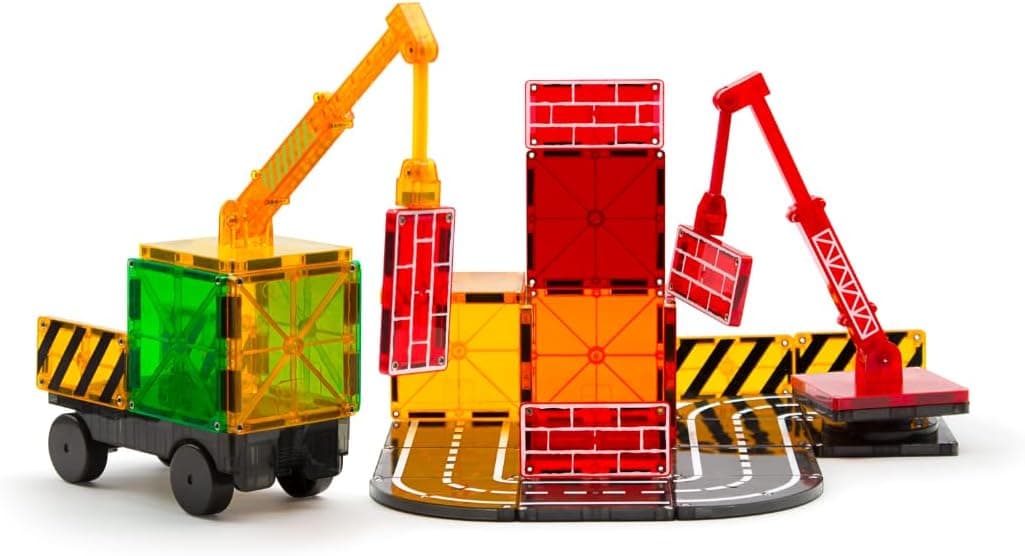
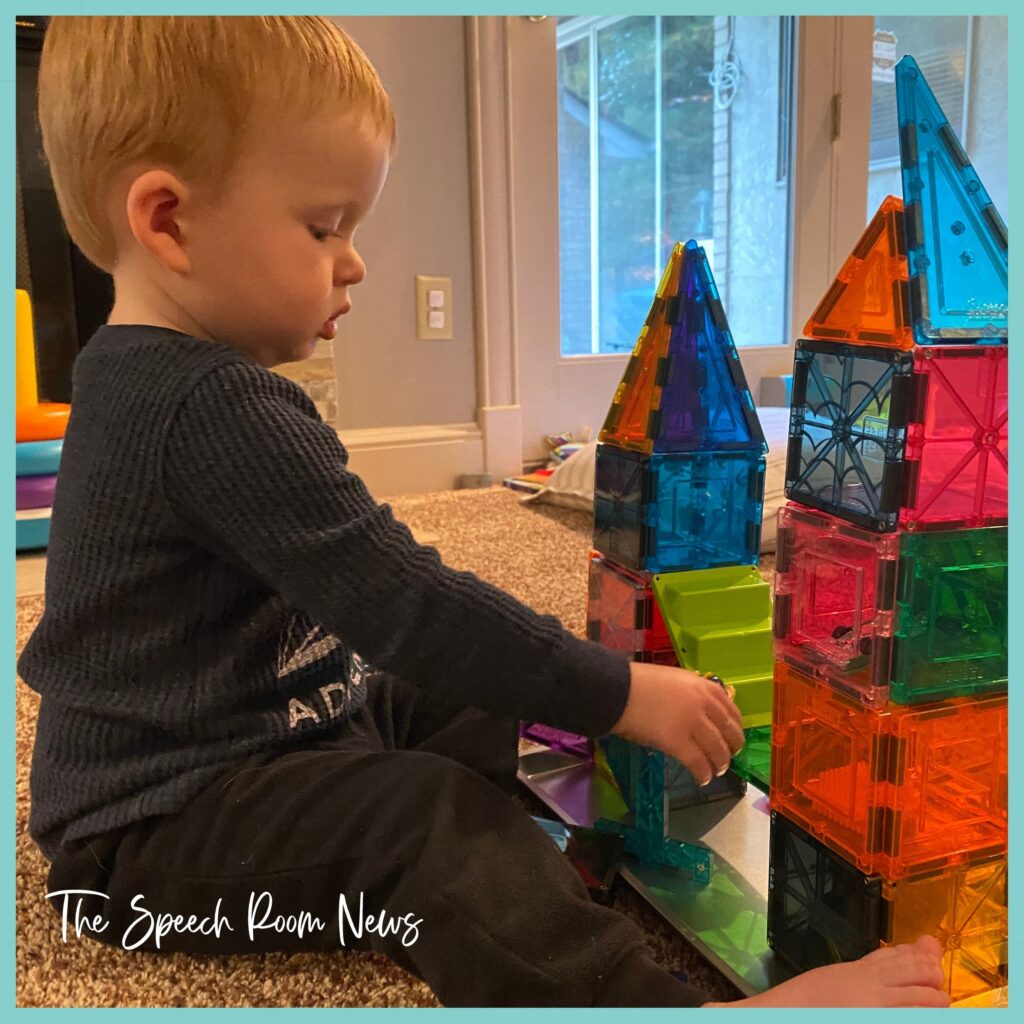
Magnetic tiles, long cherished in homes and early childhood education settings for their open-ended play potential, are increasingly being recognized and utilized by Speech-Language Pathologists (SLPs) as a dynamic and highly effective therapeutic tool. These brightly colored, geometrically shaped magnetic construction pieces offer a unique blend of engagement and versatility, allowing clinicians to target a broad spectrum of speech and language development goals in young children from as early as one year old. The inherent appeal of hands-on, constructive play provides a natural, low-pressure environment conducive to learning and skill acquisition, transforming therapy sessions into enjoyable, interactive experiences.
The Evolving Landscape of Pediatric Speech Therapy
Modern pediatric speech therapy emphasizes child-centered, play-based interventions, moving away from purely didactic approaches. This shift acknowledges that young children learn best through active exploration, discovery, and meaningful interaction. However, a significant challenge for SLPs is maintaining sustained engagement and motivation, especially for children with attention difficulties or those who find traditional therapy exercises daunting. Approximately 7.7% of U.S. children aged 3-17 years have a speech or language disorder, highlighting the critical need for effective and engaging therapeutic strategies. Tools that seamlessly integrate therapeutic goals into enjoyable play are invaluable in this context. Magnetic tiles perfectly align with this philosophy, offering a tangible, multisensory platform that captures children’s imaginations while subtly addressing complex linguistic and cognitive processes.
Magnetic Tiles: A Multifaceted Therapeutic Instrument
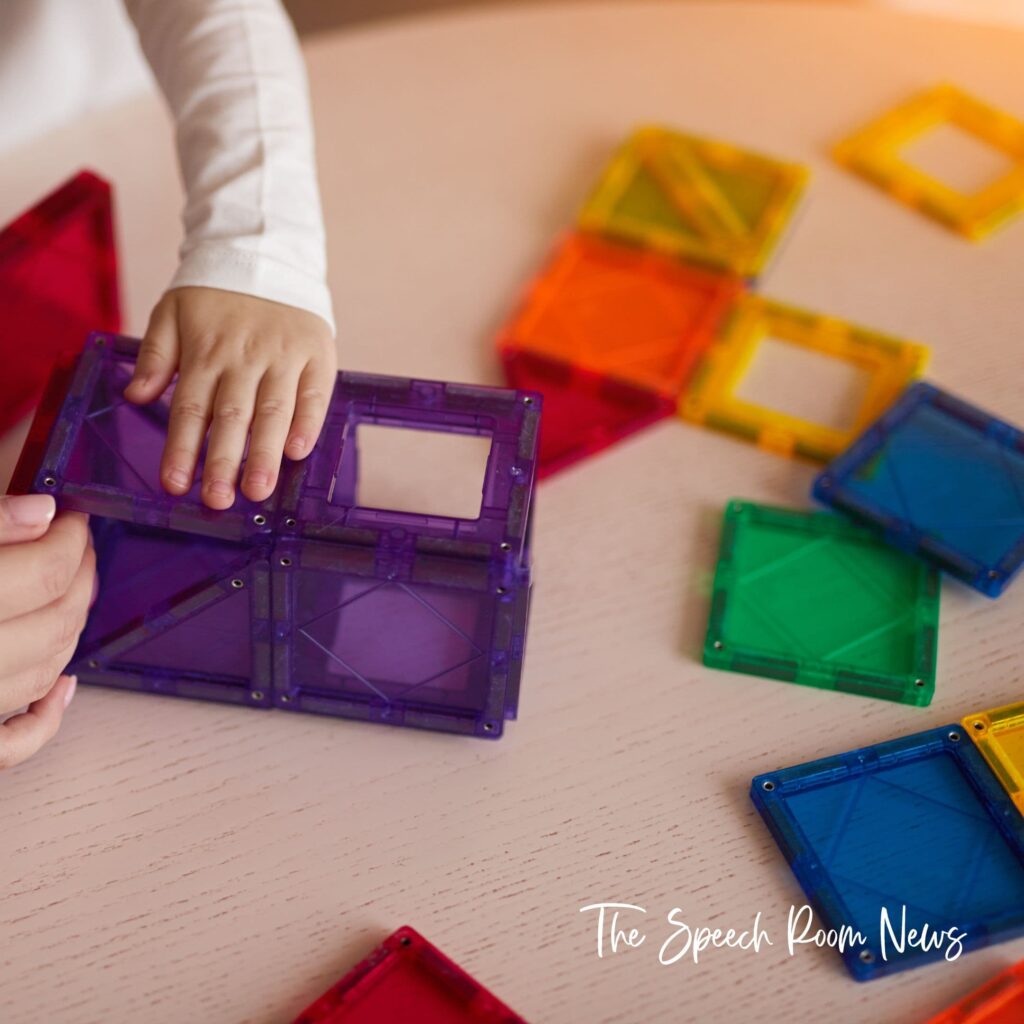
The fundamental design of magnetic tiles—simple shapes that connect to form intricate structures—makes them inherently engaging. Their durability, ease of use, and ability to be combined into endless configurations appeal to a wide age range, ensuring longevity and adaptability within a therapy setting. Beyond their recreational value, magnetic tiles provide a concrete medium for abstract concepts, enabling children to physically manipulate elements related to language, cognition, and social interaction. This makes them a powerful ally for SLPs seeking to enhance communication skills, from basic vocabulary and sentence structure to more complex narrative abilities and social pragmatics.
In-Depth Exploration of Therapeutic Applications
The application of magnetic tiles in speech therapy extends across numerous developmental domains, offering a rich environment for skill development:
1. Fostering Social-Cooperative Communication
Magnetic tiles serve as an exceptional catalyst for cultivating social interaction and collaborative communication skills. When children work together to construct a shared creation, they are naturally prompted into back-and-forth dialogue. This includes negotiating roles ("You get the big squares, I’ll find the triangles"), planning designs ("Let’s build a tall tower first, then add a roof"), and problem-solving ("Oh, it fell! How can we make it stronger?"). Such interactions inherently encourage turn-taking, active listening, perspective-taking, and the articulation of ideas and intentions. For children with social communication deficits, the shared goal of building provides a structured, low-stakes context to practice these vital social pragmatics, enhancing their ability to engage meaningfully with peers and adults.
2. Mastering Prepositional Concepts
Understanding spatial relationships is a foundational cognitive and linguistic skill. Magnetic tiles offer a highly interactive and concrete method for teaching prepositions. Rather than rote memorization, children physically demonstrate and articulate concepts like "on," "under," "beside," "between," "above," "below," "in front of," and "behind." An SLP might instruct, "Place the green square on the blue rectangle," or "Put the small triangle under the arch." This direct manipulation reinforces the abstract meanings of prepositions, aiding in comprehension and expressive use. The visual and tactile feedback makes these concepts more accessible, particularly for visual learners or those struggling with abstract language.
3. Enhancing Categorization and Cognitive Skills through Sorting
Sorting by attribute is a critical pre-linguistic and cognitive skill that magnetic tiles facilitate beautifully. Children can be asked to group tiles by color (all reds together), by shape (all squares, all triangles), or by size (big tiles, small tiles). This activity not only enhances their ability to categorize and differentiate but also provides ample opportunities for descriptive language. As they sort, they verbally identify attributes ("This is a red square," "These are all triangles"). To extend the activity, children can construct "sorting bins" using the tiles themselves, adding an extra layer of engagement and purpose to the task, and further solidifying their understanding of classification.
4. Targeted Articulation Practice
Integrating specific speech sounds into magnetic tile activities makes articulation therapy both productive and intrinsically motivating. An SLP can select a target phoneme, such as /s/, and encourage children to build structures while naming elements that contain the sound. For example, building a "castle" might involve saying "stack," "slide," "see," "set," or "stone." Each placement of a tile can be paired with a word containing the target sound, promoting repetitive practice in a natural, play-based context rather than drill-and-practice. This approach reduces cognitive load and fosters greater spontaneous use of target sounds within meaningful utterances.
5. Reinforcing Irregular Verbs
Irregular verbs often pose a significant challenge for language learners due to their unpredictable past tense forms. Magnetic tiles provide a dynamic platform for practicing these verbs within narrative contexts. Children can build a scenario, such as a "house that fell down" or a "robot that ran away," and then narrate the actions using target irregular verbs like "built," "saw," "ate," "drank," "came," or "went." The tangible construction allows for immediate visual representation of the actions, making the irregular verb forms more memorable and easier to apply in storytelling and conversational speech.
6. Cultivating Executive Functioning Skills
Executive functioning skills, including planning, organization, working memory, and inhibitory control, are crucial for academic success and daily living. Magnetic tiles offer an excellent medium for developing these skills. SLPs can introduce tasks with specific parameters, such as "Build a tower taller than this one in two minutes," or "Recreate this exact design using only squares and triangles." These challenges require children to plan their approach, sequence their actions, remember instructions, and manage their time effectively. The concrete nature of the tiles allows for immediate feedback on their planning and execution, fostering self-correction and strategic thinking.
7. Developing Regular Plurals and Grammatical Structures
The repetitive nature of building with multiple pieces naturally lends itself to practicing regular plurals. As children select and place tiles, the SLP can prompt them to describe the quantity: "I have two squares," "We need more triangles," or "Look at all the roofs!" This facilitates the acquisition of the /s/, /z/, and /ɪz/ plural morphemes in a functional and contextualized manner. Beyond plurals, the activity encourages the use of various grammatical structures, such as subject-verb agreement ("The tile goes here") and descriptive adjectives ("This is a big, red square").
8. Addressing WH-Questions and Conversational Skills
Magnetic tiles are an excellent tool for eliciting and practicing responses to WH-questions (Who, What, Where, When, Why, How). During construction, an SLP can ask: "Where should this piece go?" (location), "What are you building?" (description/intention), "Who made that tall wall?" (identification), or "Why did it fall?" (reasoning). These questions stimulate critical thinking, comprehension, and expressive language. Children learn to formulate complete sentences to answer, thereby improving their conversational skills and ability to retrieve and convey information effectively.
9. Practicing Pronoun Usage (e.g., "I")
Correct pronoun usage, particularly self-referencing pronouns like "I" and "my," can be challenging for some young children. Magnetic tile activities provide abundant opportunities for natural practice. By prompting children to describe their actions and choices, SLPs can encourage correct pronoun use: "What are you doing?" "I am putting a blue tile on top." "Whose turn is it?" "It’s my turn." This active participation in building and narrating their own contributions reinforces the accurate and spontaneous use of pronouns within a meaningful context.
10. Supporting AAC Core Word Acquisition
For children using Augmentative and Alternative Communication (AAC) systems, magnetic tiles offer a powerful platform for reinforcing core words—high-frequency words that are broadly applicable across contexts. During play, an SLP can model and prompt the use of core words such as "more" ("Do you want more tiles?"), "on" ("Put it on"), "off" ("Take it off"), "up" ("Lift it up"), "down" ("It fell down"), "big" ("That’s a big tower"), "little" ("Get the little square"), "help" ("Do you need help?"), "go" ("Let’s go"), and "stop" ("Stop building for a moment"). The hands-on nature of the activity provides concrete referents for these abstract concepts, facilitating understanding and encouraging functional communication for non-verbal or minimally verbal communicators.
Expert Perspectives and Clinical Endorsement
Speech-language pathologists widely endorse the integration of adaptable, engaging tools into their clinical practice. The pedagogical principles underpinning the use of magnetic tiles—multisensory input, active learning, and intrinsic motivation—are well-supported by research in child development and educational psychology. Experts often highlight that toys like magnetic tiles reduce the perceived "work" of therapy, allowing children to relax and engage more authentically. This can lead to increased vocalizations, more spontaneous language use, and a greater willingness to participate in challenging tasks. Furthermore, the portability and durability of magnetic tiles make them ideal for various therapy settings, including clinics, school-based programs, and even teletherapy sessions where parents can facilitate the play.
Implications for Practice and Home Learning
The growing adoption of magnetic tiles in speech therapy has several positive implications. While the initial investment might seem significant, their longevity and versatile application across numerous goals make them a cost-effective tool over time, reducing the need for a multitude of single-purpose toys. For parents, observing how SLPs leverage magnetic tiles provides tangible strategies for reinforcing speech and language goals at home, thereby extending the therapeutic benefits beyond clinic walls. This encourages parental involvement and consistent practice, which are crucial for optimal developmental outcomes. For clinicians, the open-ended nature of magnetic tiles encourages creativity and adaptability, requiring minimal specialized training beyond understanding the underlying therapeutic principles. Their universal appeal also makes them an accessible tool for children with diverse developmental needs, including those with autism spectrum disorder, ADHD, and various language delays.
In conclusion, magnetic tiles represent far more than just a popular children’s toy; they are a sophisticated and highly effective instrument in the speech-language pathologist’s toolkit. By transforming complex therapeutic objectives into enjoyable, interactive play, these versatile tiles empower children to build not only intricate structures but also foundational communication skills. Their capacity to foster social interaction, solidify linguistic concepts, and enhance cognitive functions underscores their profound impact on pediatric speech therapy, making learning an accessible, engaging, and deeply enriching experience for every child.
