

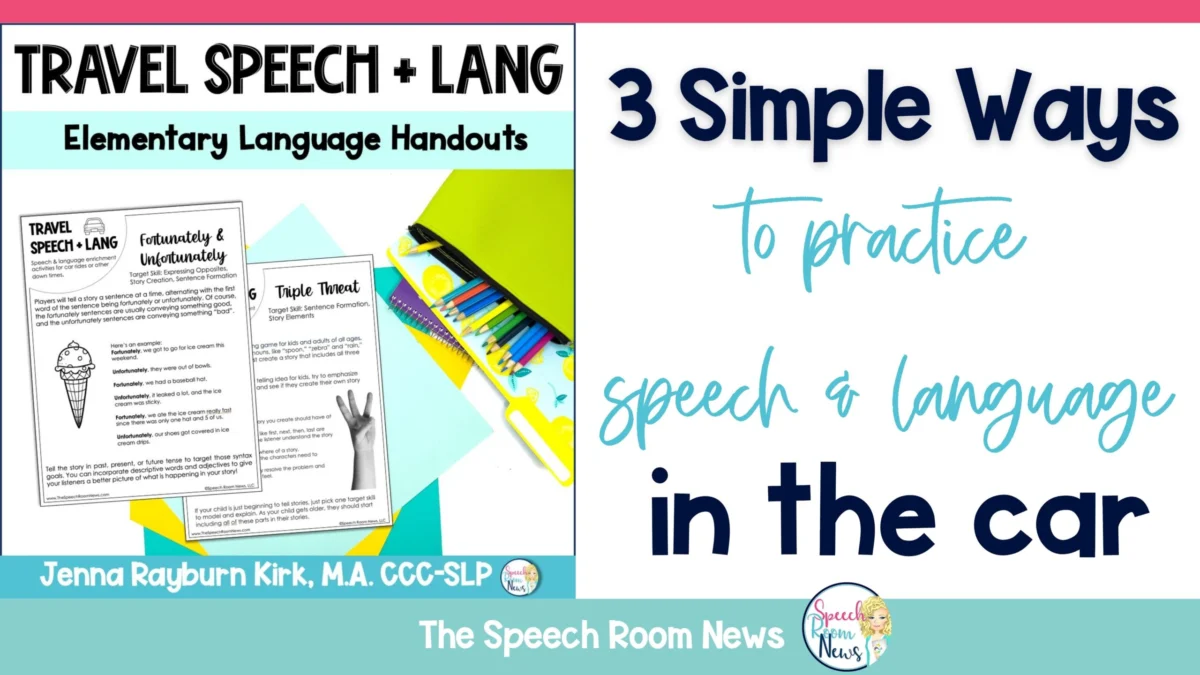
The perennial challenge of carving out dedicated time for children’s speech and language development is increasingly being addressed through innovative, integrated approaches. For many families, the daily commute, often perceived as lost time, is now recognized by Speech-Language Pathologists (SLPs) and child development experts as a prime opportunity to foster crucial communication skills. This shift towards leveraging everyday routines not only alleviates scheduling pressures for busy parents but also embeds learning within natural, engaging contexts, yielding significant developmental benefits.
The Growing Need for Integrated Speech and Language Practice
Speech and language delays affect a substantial portion of the pediatric population. According to the National Institute on Deafness and Other Communication Disorders (NIDCD), approximately 5% of children in the U.S. have a noticeable speech disorder by the first grade, while language disorders can affect 7-10% of preschool children. Early intervention is paramount, with research consistently demonstrating that children who receive timely support for communication difficulties show improved academic outcomes, social skills, and long-term quality of life. However, the demands of modern life—balancing work, school, extracurricular activities, and therapy appointments—often leave parents searching for practical ways to reinforce therapeutic goals outside clinical settings. It is within this context that the car, traditionally a space for passive consumption of media or quiet travel, is being redefined as a dynamic learning environment.
Unlocking the Commute: The Car as a Unique Learning Environment
The vehicle interior offers several inherent advantages for focused speech and language practice. Unlike a bustling home or a classroom filled with potential distractions, the car provides a relatively contained and distraction-free environment. This minimizes sensory overload, allowing children to concentrate more effectively on verbal exchanges. Furthermore, the confined space naturally encourages back-and-forth communication, establishing a rhythmic conversational flow essential for developing turn-taking skills, active listening, and responsive dialogue.
Beyond the immediate conversational benefits, car rides expose children to a rich tapestry of vocabulary and concepts. Road signs, passing scenery, other vehicles, and even the sounds of the environment present natural prompts for discussion, labeling, description, and storytelling. This organic exposure helps expand a child’s lexicon in a meaningful, contextualized way, far removed from rote memorization. As one leading Speech-Language Pathologist, Dr. Eleanor Vance, notes, "The car ride is a hidden gem for language development. It’s a dedicated block of time where parents and children are literally ‘on the same page,’ looking at the same world outside the window, fostering shared experiences that are ripe for communication." Utilizing this valuable time not only maximizes a family’s schedule but transforms routine journeys into enjoyable and productive learning experiences, fostering stronger parent-child bonds through shared engagement.
Expert Insights: Bridging Therapy and Daily Life
Speech-Language Pathologists are increasingly advocating for and equipping parents with strategies to integrate therapeutic goals into everyday activities. This approach, often termed "naturalistic intervention," recognizes that consistent, informal practice within a child’s natural environment can be as impactful as formal therapy sessions, if not more so, for generalization of skills. The car commute exemplifies such an environment, offering predictable routines and consistent opportunities. SLPs often provide parents with specific handouts and activity ideas tailored to car settings, emphasizing that these are not meant to replace therapy but to augment and reinforce it. The aim is to empower parents to become active facilitators of their child’s communication growth, making therapy less of a separate event and more a seamless part of daily family life.
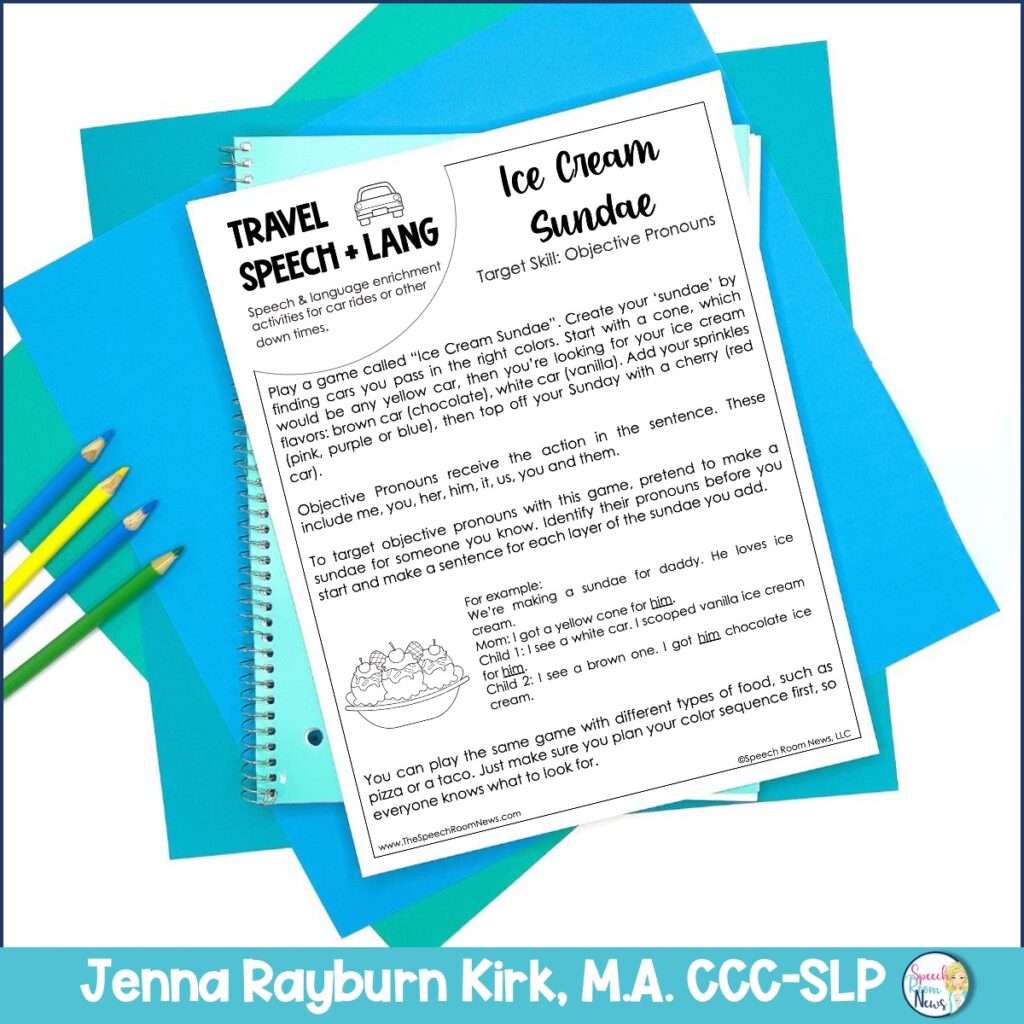
Foundational Skills: Engaging Activities for Language Development
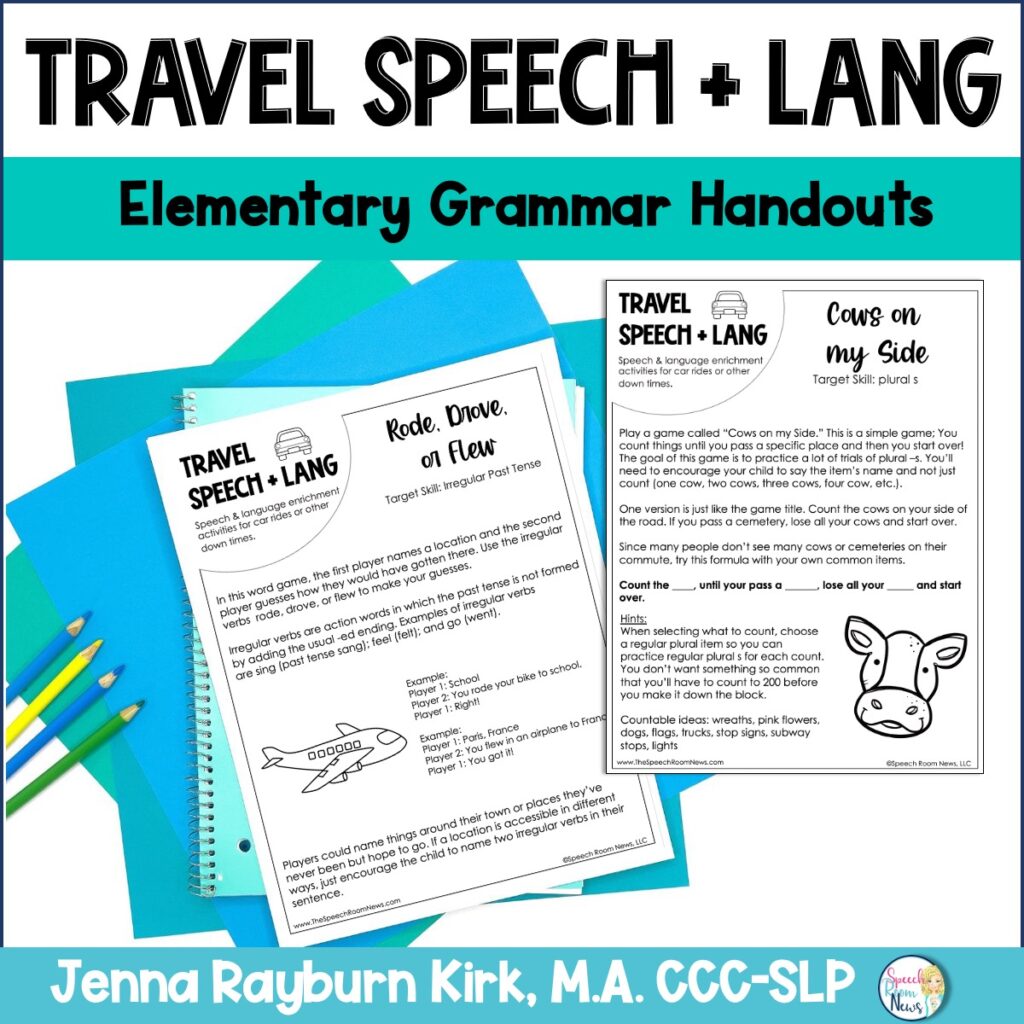
The following activities, many of which are core components of comprehensive parent resource bundles, offer practical ways to target various speech and language goals while on the road.
"The Grocery Game": Mastering Question Formation
The ability to formulate grammatically correct and semantically appropriate questions is a cornerstone of effective communication and critical thinking. It allows children to seek information, clarify understanding, and engage actively in conversations. "The Grocery Game" is an excellent vehicle for practicing this complex skill.
- How to Play: One player secretly chooses an item typically found in a grocery store. Other players ask "yes" or "no" questions to deduce the item.
- Targeted Skills: The primary grammar target is question formation, focusing on correct word order (e.g., "Is it…?", "Do you…?", "Can you…?"). Beyond this, the game naturally addresses a multitude of other language skills:
- Functions: (e.g., "Does it melt?", "Is it something you cook?")
- Actions: (e.g., "Do you bite it?", "Can you spread it?")
- Categories: (e.g., "Is it a fruit?", "Is it dairy?")
- Associations: (e.g., "Is it something that goes on bread?", "Does it come in a can?")
- Enrichment: To elevate the game, parents can model increasingly complex question structures, introduce adjectives for more specific queries (e.g., "Is it a red fruit?"), or encourage deductive reasoning by prompting children to think about categories before guessing. For younger children, start with broader categories like "food" or "toys" before narrowing to grocery items. This activity not only strengthens linguistic structures but also hones problem-solving and inferential thinking skills.
"Red Light Race": Sharpening Articulation and Phonological Awareness
Clear articulation is vital for intelligibility and confidence in speaking. "Red Light Race" provides a playful and structured way to practice specific speech sounds, known as phonemes, within a natural conversational context.
- How to Play: When the car stops at a red light, players take turns naming as many items as possible within a chosen category that contain a specific target sound. One person names, the other counts.
- Targeted Skills: This game primarily targets articulation of specific sounds (e.g., /s/, /r/, /l/, /k/, /g/). It also subtly incorporates:
- Auditory Bombardment: The adult models the target sound repeatedly, increasing the child’s exposure and awareness of the sound in context. This helps the child attune their ear to the sound, a crucial step before accurate production.
- Vocabulary Expansion: Naming items within categories naturally broadens a child’s vocabulary.
- Categorization: Identifying items that fit a given category.
- Enrichment: Parents should select target sounds based on their child’s individual therapy goals.
- Example for /s/ sound: Categories like "animals" (snake, seal, horse, mouse), "foods" (sandwich, soup, sausage, raisins), "things we see outside" (sun, sky, grass, bus).
- Example for /r/ sound: Categories like "colors" (red, green, brown), "vehicles" (car, truck, train), "animals" (rabbit, bear, tiger).
- Progressive Practice: Start with the sound in the initial position of words, then medial, then final. Encourage production at the word, phrase, and sentence level. For children working on phonological processes, such as "fronting" (producing /t/ for /k/), the game can focus on categories with many /k/ words to encourage back-of-mouth sounds.
"Triple Threat": Cultivating Narrative and Sentence Structure
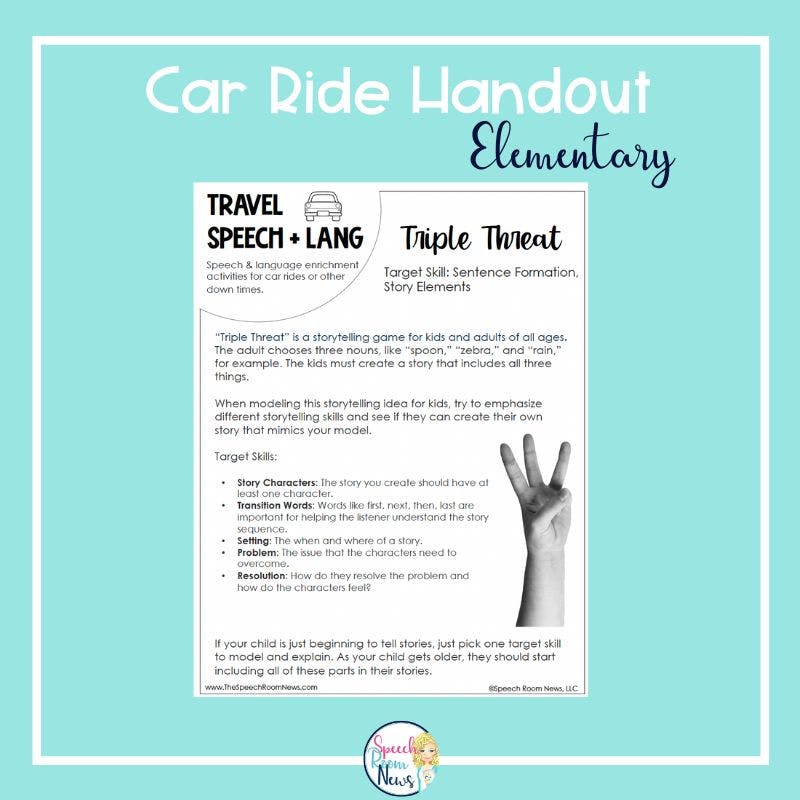
Narrative skills—the ability to tell a coherent story—are foundational for academic success, social interaction, and complex thought. They involve sequencing events, understanding cause and effect, developing characters, and using varied sentence structures. "Triple Threat" makes practicing these skills imaginative and fun.
- How to Play: An adult provides three unrelated nouns (e.g., "dog," "milk," "bike"). The child must then create a short story that incorporates all three items. The sillier the story, the better!
- Targeted Skills:
- Sentence Formation: Encourages the creation of grammatically complex and varied sentences.
- Story Retell/Narrative Skills: Develops the ability to sequence events, introduce characters, and build a plot, even a fantastical one.
- Creativity and Imagination: Promotes divergent thinking and the ability to make connections between disparate concepts.
- Vocabulary Integration: Forces the child to use the given nouns meaningfully within a story context.
- Grammar and Syntax: Provides a natural opportunity for parents to model correct verb tenses, pronouns, and conjunctions as they participate or prompt.
- Enrichment: For younger children, start with two nouns and gradually increase to three. Parents can model by starting a story and letting the child finish, or vice-versa. Encourage elaboration by asking "What happened next?" or "How did that make the dog feel?". For older children, introduce more abstract nouns or add a fourth element like an emotion or a setting. This activity is invaluable for developing higher-level language processing and expression.
Beyond the Core Three: Expanding Car-Based Learning
The potential for car-based speech and language activities extends far beyond these three examples. Many other simple games can be adapted:
- "I Spy" for Descriptive Language: Instead of just naming an object, encourage children to describe its attributes (color, shape, size, function). "I spy something red, round, and delicious that grows on trees." This targets adjectives, categorization, and inferential skills.
- "Story Chain" for Sequencing and Creativity: One person starts a story with a sentence, and each subsequent person adds a sentence, building a collaborative narrative. This enhances sequencing, imagination, and turn-taking.
- "Rhyme Time" for Phonological Awareness: Take turns naming words that rhyme with a given word. This is critical for developing phonological awareness, a strong predictor of reading success.
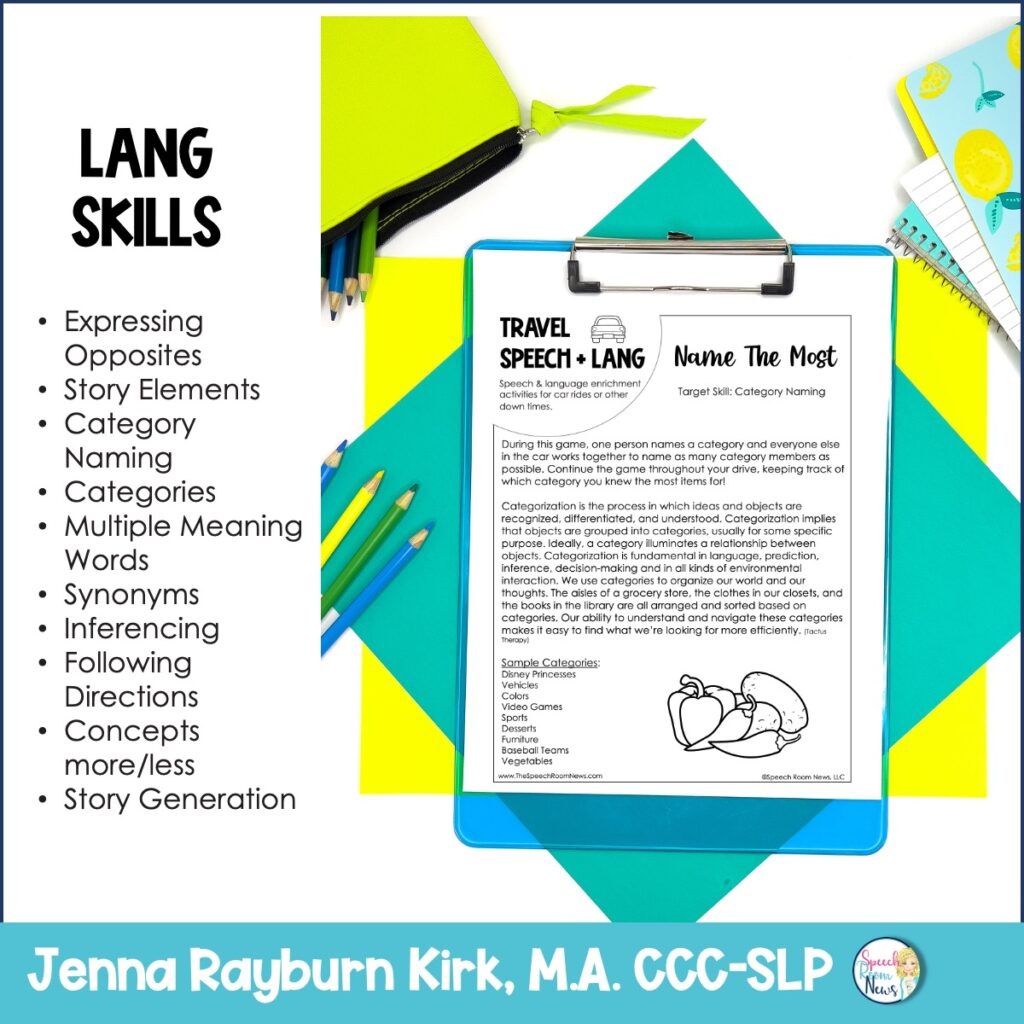
- "Category Challenge" for Semantic Organization: Choose a category (e.g., "things that are soft," "things you can find in a forest") and take turns naming items within that category. This strengthens semantic organization and vocabulary retrieval.
- "What Comes Next?" for Prediction and Sequencing: Describe the beginning of a common routine or story and ask the child to predict what happens next. "First, we get dressed, then we eat breakfast, and then what comes next?" This helps with sequencing and understanding daily routines.
Empowering Parents: The Role of Accessible Resources
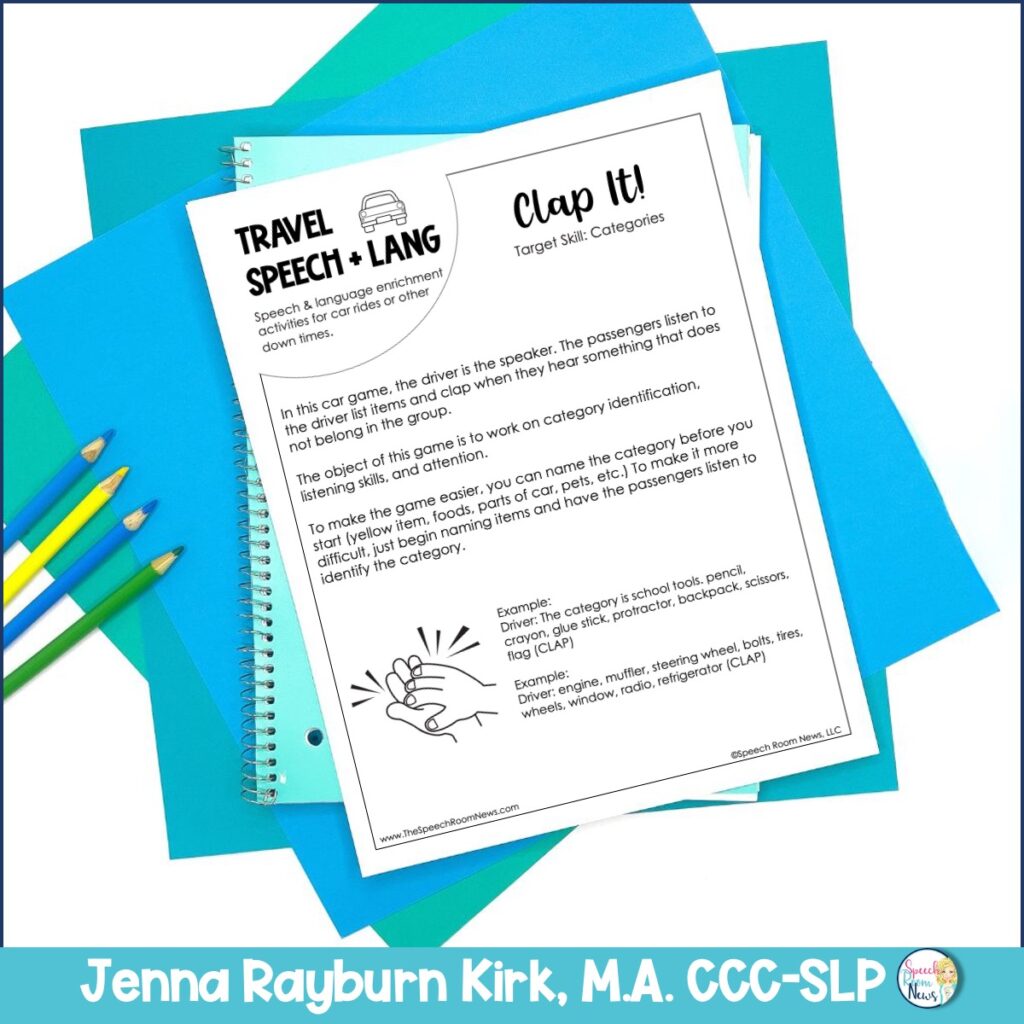
The success of integrating speech and language practice into daily life hinges on providing parents with accessible, easy-to-understand resources. Educational bundles, such as the "Travel Speech and Language Bundle" referenced in the original guidance, serve as invaluable tools for both SLPs and families. These bundles typically include parent handouts with clear explanations of activities, specific examples, and practical tips for implementation. For SLPs, these resources streamline the process of sending home carryover activities, ensuring consistency between therapy sessions and home environments. For parents, they offer a roadmap to confidently support their child’s communication development, transforming potentially overwhelming goals into manageable, fun interactions. The availability of free samples further lowers the barrier to entry, allowing parents and professionals to experience the benefits before committing to a full resource.
The Broader Impact: Nurturing Communication and Connection
Beyond the immediate acquisition of specific speech and language skills, the intentional use of car time for these activities yields broader, profound benefits. It fosters a culture of communication within the family, where talking, listening, and expressing oneself are valued and encouraged. It provides a consistent opportunity for positive parent-child interaction, strengthening emotional bonds through shared laughter, imaginative play, and collaborative problem-solving. In an era dominated by screens, these verbal games offer a refreshing alternative, promoting face-to-face interaction and cognitive engagement. Moreover, for children with speech or language delays, successful participation in these activities can boost self-esteem and reduce communication-related anxieties, empowering them to become more confident and capable communicators in all aspects of their lives. The integration of therapeutic principles into the mundane journey transforms it into a powerful engine for holistic child development.
The strategic utilization of daily car commutes for speech and language practice represents a significant evolution in developmental support. By reframing routine travel as an opportunity for intentional engagement, parents can effectively reinforce therapeutic goals, expand vocabulary, improve articulation, and nurture crucial narrative skills. This approach, championed by Speech-Language Pathologists, not only maximizes valuable time but also enriches the parent-child relationship, proving that even the shortest journey can become a significant step in a child’s communication journey.
