

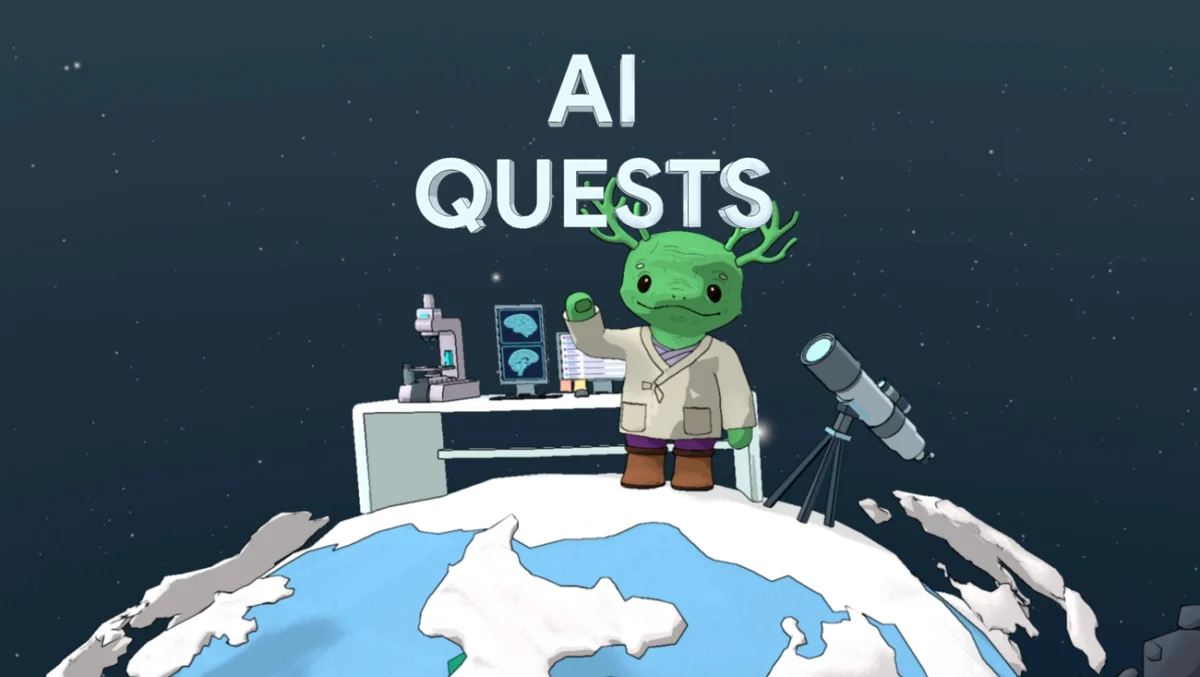
Google Research, in partnership with the Stanford Accelerator for Learning, has officially announced the release of "Polar Peaks," the third installment in its global AI Quests educational series. This latest module marks a significant expansion of Google’s efforts to provide comprehensive AI literacy to students aged 11 to 14, moving beyond basic digital fluency to address the complex intersections of artificial intelligence and neuroscience. The program, which has already seen over 400,000 completed quests across 10 languages, aims to demystify the internal workings of AI while encouraging the responsible and ethical application of the technology.
The launch of "Polar Peaks" comes at a critical juncture in global education, as school systems grapple with how to integrate rapidly evolving generative AI and machine learning concepts into standard curricula. By placing students in the role of researchers, the AI Quests series attempts to transform passive consumption of technology into active, inquiry-based learning. The third quest specifically focuses on the field of connectomics—the comprehensive mapping of neural connections within the brain—leveraging real-world data and research methodologies developed by Google over the last decade.
The Evolution of AI Quests: From Floods to Neuroscience
The AI Quests initiative was conceived as a collaborative bridge between high-level laboratory research and middle-school science classrooms. The series began with a focus on environmental and medical applications, grounding students in the practical utility of machine learning. The first quest addressed flood forecasting, a project inspired by Google’s Flood Hub, which uses AI to provide life-saving alerts in areas prone to natural disasters. The second quest pivoted to global health, tasking students with identifying diabetic retinopathy through AI-assisted screening, modeled after Google’s Automated Retinal Disease Assessment (ARDA) tool.
"Polar Peaks" represents a significant leap in complexity. In this module, students navigate a narrative-driven environment where they assist a game character suffering from memory loss. To solve the mystery, students must utilize AI tools to scan and map neurons, effectively building a digital representation of a neural network. This process mirrors the actual work performed by neuroscientists who use machine learning to segment high-resolution electron microscopy images of brain tissue—a task that would be impossible for humans to complete manually due to the sheer volume of data.
Bridging the Gap: The Role of Stanford Accelerator for Learning
The pedagogical foundation of AI Quests is rooted in the collaboration with the Stanford Accelerator for Learning. This partnership ensures that the complex technical concepts provided by Google Research are translated into age-appropriate learning experiences that align with cognitive development stages. The Stanford team focused on "learning by doing," a framework that encourages students to experiment, fail, and iterate.
The curriculum is designed to address the "black box" problem of AI. Instead of presenting AI as a magical solution, "Polar Peaks" requires students to engage in data cleaning, model testing, and result verification. This hands-on approach is intended to instill a healthy skepticism and a "human-in-the-loop" mentality, teaching students that AI outputs are only as reliable as the data and human oversight behind them.
Technical Context: A Decade of Connectomics at Google
The scientific backbone of "Polar Peaks" is Google Research’s ten-year investment in connectomics. The field involves reconstructive mapping of the brain’s wiring at a nanometer scale. Recently, Google celebrated a milestone in this field: the mapping of the complete male fruit fly brain. This project, which identified tens of thousands of neurons and millions of synapses, stands as the largest brain map by neuron count to date.
Mapping a brain—even one as small as a fruit fly’s—generates petabytes of data. For context, a single cubic millimeter of human brain tissue produces roughly 1.4 petabytes of data when scanned. AI is the only tool capable of processing this information to trace the long, winding paths of neurons across thousands of individual images. By introducing these concepts to middle schoolers, Google is not only teaching AI literacy but also potentially inspiring the next generation of computational neuroscientists. Upon completing the quest, students are given access to insights from the actual researchers behind these breakthroughs, providing a direct link between their classroom activity and the frontiers of modern science.
Empowering Educators: The AI Educator Series
Recognizing that the success of any educational tool depends on the proficiency of the instructor, Google is simultaneously rolling out new training modules for teachers. These modules are integrated into the Google AI Educator Series and are designed to help teachers facilitate discussions around the ethical implications of AI.
The training for the first two quests is currently available, with the "Polar Peaks" module scheduled for release next month. These resources provide teachers with lesson plans, discussion prompts, and technical troubleshooting guides. By supporting educators, Google aims to ensure that AI Quests can be seamlessly integrated into existing STEM (Science, Technology, Engineering, and Math) programs rather than existing as an isolated extracurricular activity.
Milestones and Global Recognition
The AI Quests series has garnered significant accolades since its inception. Earlier in 2026, the program received a Webby Award for AI Education, Learning & Training. It was also named the Best Global K–12 Learning Solution at the ETIH Innovation Awards. These honors reflect the program’s ability to scale high-level technical concepts for a global audience.
The localization of the quests into 10 languages has been a key factor in its adoption. By removing language barriers, Google has allowed students in diverse geographical regions to engage with the same high-quality research data. This global reach is essential for fostering an equitable understanding of AI, ensuring that students in developing economies have the same access to AI literacy as their peers in tech hubs.
Analysis: The Strategic Importance of AI Literacy
The launch of "Polar Peaks" and the broader AI Quests initiative suggests a strategic shift in how technology companies approach the future workforce. As AI becomes ubiquitous, the ability to understand and manage these systems is becoming as fundamental as reading or basic mathematics.
From a journalistic perspective, several key implications emerge from this development:
- Human-Centric AI Development: By emphasizing the role of the human researcher in "cleaning" and "testing" AI models, Google is pushing back against the narrative of autonomous, uncontrollable AI. This educational strategy promotes a version of the future where AI remains a tool guided by human ethics and critical thinking.
- Gamification as a Standard for STEM: The success of the AI Quests—measured by the 400,000 completions—highlights the effectiveness of gamification in teaching abstract concepts. This may set a precedent for how other complex topics, such as quantum computing or synthetic biology, are introduced to younger audiences.
- Long-term Talent Pipeline: By exposing 11-to-14-year-olds to connectomics and flood forecasting, Google is effectively seeding interest in specialized fields that will require highly skilled researchers in the coming decades.
Future Outlook
As the 2026-2027 school year progresses, Google and the Stanford Accelerator for Learning have indicated that they will continue to expand the series. Future quests are expected to tackle other "grand challenges" of humanity, potentially touching on climate change mitigation, sustainable energy, or advanced materials science.
The integration of "Polar Peaks" into the classroom represents more than just a new lesson plan; it is an attempt to synchronize the pace of educational development with the unprecedented speed of technological advancement. By grounding students in the realities of neuroscience and the mechanics of machine learning, the AI Quests series is attempting to build a foundation for a future where artificial intelligence is understood, questioned, and utilized for the greater scientific good.
For now, the focus remains on the success of "Polar Peaks." As students across the globe begin mapping digital neurons, the data gathered from their interactions will likely inform how Google and Stanford refine their educational models, ensuring that the next generation is prepared for a world where the boundary between biological and artificial intelligence continues to blur.
