

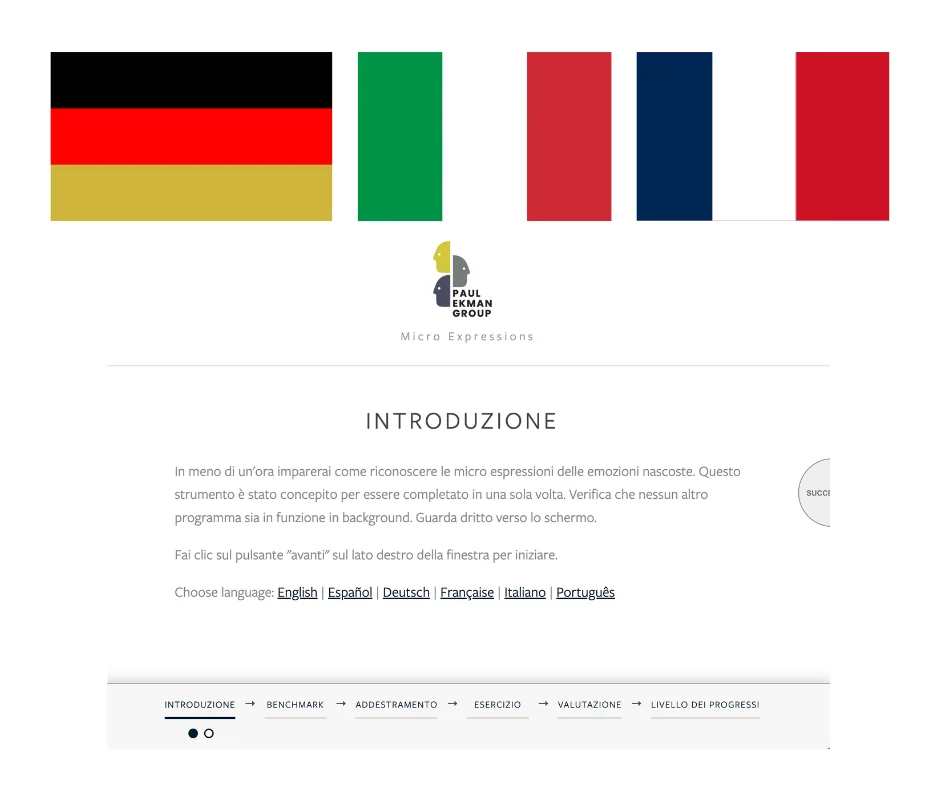
The Paul Ekman Group has announced a significant expansion of its renowned online micro expression training tools, now offering comprehensive courses in Italian, French, and German. This strategic move aims to democratize access to cutting-edge emotional intelligence training, making Dr. Paul Ekman’s scientifically validated methodologies accessible to a broader global audience. The newly translated modules encompass all seven core micro expression training tools previously available in English, Spanish, and Portuguese, marking a pivotal moment in the organization’s commitment to global emotional literacy.
Background and Strategic Rationale
Founded on the pioneering research of Dr. Paul Ekman, a world-renowned psychologist and expert in emotions and facial expressions, the Paul Ekman Group has long been dedicated to enhancing human understanding through the science of micro expressions. Micro expressions are fleeting, involuntary facial movements, typically lasting less than half a second, that can betray a person’s true emotional state, even when they attempt to conceal it. These subtle cues are crucial for discerning genuine emotions from feigned ones, a skill invaluable across numerous professional and personal domains.
The decision to introduce Italian, French, and German language options stems from a growing global demand for emotional intelligence and deception detection training. The organization’s existing reach, extending to over 230 countries, highlighted a clear need to overcome language barriers. By offering training in these widely spoken European languages, the Paul Ekman Group anticipates a substantial increase in user engagement and a more profound impact on individuals and organizations seeking to improve their interpersonal skills, enhance security protocols, and foster more empathetic communication.
Timeline of Expansion
The development and release of these new language modules represent a culmination of extensive translation and localization efforts. While the exact timeline for the translation project was not publicly disclosed, the announcement signifies the completion of a critical phase in the organization’s international expansion strategy. Previously, the Paul Ekman Group had established a strong foundation with translations into Spanish and Portuguese, catering to significant segments of the Latin American and Iberian Peninsula markets. The addition of Italian, French, and German further solidifies its presence in the European continent, a region with a strong academic and professional interest in psychology and communication sciences. The current offering includes all seven core training tools, indicating a comprehensive approach to translation rather than a piecemeal rollout. Users are prompted to select their preferred language at the commencement of each course, ensuring a seamless learning experience from the outset.
Content and Accessibility of Training Tools
The translated micro expression training tools are designed to be comprehensive and engaging, mirroring the depth and rigor of the original English versions. The seven core training modules cover a range of essential skills, including the identification of universal emotions, the recognition of subtle facial cues, and the understanding of how emotions manifest across different cultures. These tools are structured into three distinct training packages, catering to various levels of expertise and learning objectives.
Upon purchasing a training package or logging into an existing account, users will now be presented with an option to select their preferred language. This intuitive interface ensures that learners can immediately immerse themselves in the material without encountering linguistic hurdles. The training methodology typically involves a combination of video-based learning, interactive exercises, and assessments designed to build proficiency in recognizing and interpreting micro expressions. The objective is to equip individuals with the ability to perceive and understand emotional nuances that are often missed by the untrained eye.
The Scientific Underpinnings and Significance of Micro Expressions
Dr. Paul Ekman’s research, which forms the bedrock of these training tools, has consistently demonstrated the universality of certain basic human emotions and their corresponding facial expressions. His work, particularly studies conducted in remote cultures, has provided compelling evidence that specific facial configurations are associated with emotions such as happiness, sadness, anger, fear, surprise, disgust, and contempt, regardless of cultural background. This universality is what makes micro expression training so powerful and applicable across diverse populations.
Micro expressions are particularly significant because they offer a window into a person’s authentic emotional state, often bypassing conscious control. In high-stakes situations, such as law enforcement investigations, courtroom proceedings, or diplomatic negotiations, the ability to detect concealed emotions can be critical for making informed decisions, assessing credibility, and de-escalating potential conflicts. In interpersonal relationships, understanding micro expressions can foster greater empathy, improve communication, and strengthen bonds by enabling individuals to respond more accurately to the emotional needs of others.
The training provided by the Paul Ekman Group emphasizes not just the identification of these fleeting expressions but also the contextual understanding of their implications. This nuanced approach helps learners develop a sophisticated understanding of human behavior and emotional dynamics, a cornerstone of emotional intelligence.
Broader Impact and Implications for Global Communication
The expansion into Italian, French, and German markets carries significant implications for various sectors. For law enforcement and security agencies, enhanced micro expression recognition can lead to more effective interrogations, improved threat assessment, and better behavioral analysis. In the corporate world, leaders can leverage these skills to foster more authentic team dynamics, improve negotiation outcomes, and enhance customer relations. Mental health professionals can utilize this training to gain deeper insights into their clients’ emotional states, leading to more targeted and effective therapeutic interventions. Educators can benefit by better understanding the emotional well-being of their students, creating more supportive learning environments.
The increasing globalization of business and interpersonal interactions necessitates a common language of emotional understanding. By bridging linguistic divides, the Paul Ekman Group is contributing to a more interconnected and empathetic global community. The ability to accurately read and respond to emotions, irrespective of linguistic differences, can foster greater trust, reduce misunderstandings, and promote more harmonious relationships on both personal and professional levels.
Supporting Data and Research
The effectiveness of micro expression training is supported by a substantial body of scientific research. Studies on the accuracy of micro expression recognition have shown that individuals trained in these techniques can significantly outperform untrained individuals. For instance, research published in peer-reviewed journals has indicated that trained individuals can achieve accuracy rates of 70-90% in identifying micro expressions, compared to baseline rates often around 50%. The Paul Ekman Group’s training programs are built upon decades of empirical evidence, including Dr. Ekman’s seminal work on facial coding systems like the Facial Action Coding System (FACS). FACS is a comprehensive, anatomically based system for describing all observable facial movements, providing a standardized framework for analyzing facial expressions.
The demand for such skills is reflected in market trends. The global emotional intelligence market is projected to grow substantially in the coming years, driven by an increasing awareness of its importance in leadership, employee engagement, and overall organizational success. While specific figures for the micro expression training segment are not always granularly reported, the broader EI market’s growth indicates a strong underlying demand for the skills that micro expression training imparts.
Official Statements and Future Outlook
While direct quotes from Dr. Paul Ekman or other executives regarding this specific expansion were not provided in the initial announcement, the company’s mission statement consistently emphasizes making emotion science accessible globally. The expansion into these new languages is a clear demonstration of this commitment.
Looking ahead, the Paul Ekman Group has indicated that it is actively exploring further language additions. They have extended an invitation to their global community to suggest future languages for translation, signaling a commitment to continuous improvement and responsiveness to user needs. This forward-looking approach suggests that the current expansion is part of a larger, ongoing strategy to make emotional awareness and deception detection skills universally accessible. The company’s proactive engagement with its user base through feedback mechanisms like email invitations for language suggestions underscores its dedication to serving a diverse international clientele.
The announcement concludes with an invitation for users to explore the training tools in their preferred languages, reinforcing the organization’s dedication to an inclusive and globally connected learning experience. The emphasis on continuing the journey with the global community, regardless of language spoken, highlights the human-centric philosophy underpinning the Paul Ekman Group’s work.
