

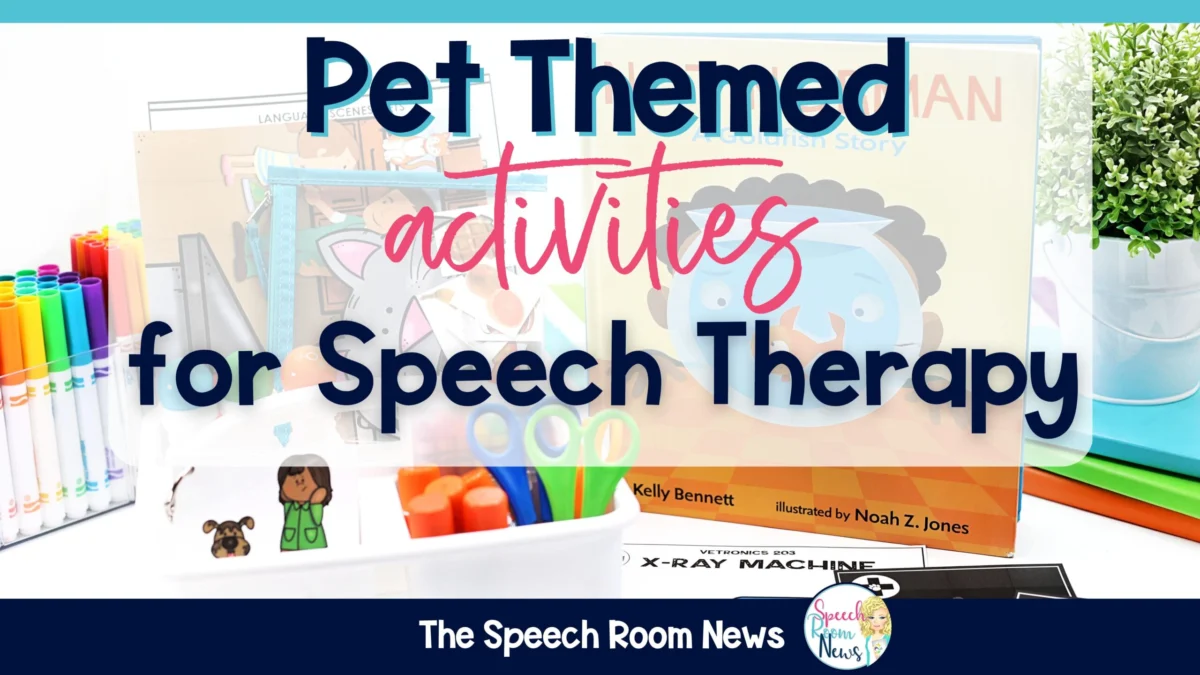
The Foundational Principles of Thematic Speech Therapy
Thematic instruction in speech-language pathology is rooted in educational and psychological principles that emphasize contextual learning and engagement. Unlike isolated skill drills, thematic units provide a cohesive framework where new vocabulary, grammatical structures, and articulation targets are encountered repeatedly within meaningful contexts. This repetition and contextualization are crucial for language acquisition and generalization of learned skills.
SLPs face persistent challenges in maintaining student motivation and ensuring the carryover of skills outside the therapy room. Thematic units address these by:

- Enhancing Engagement: Themes intrinsically motivate students by tapping into their interests, transforming therapy sessions into exciting, cohesive experiences rather than disjointed exercises. Research consistently shows that engaged learners are more receptive to new information and more likely to participate actively.
- Promoting Generalization: When skills are taught within a thematic context, students are better able to connect them to real-world scenarios. For example, learning animal vocabulary within a "pets" theme naturally extends to discussions about family pets, visits to the vet, or animal stories, facilitating the transfer of knowledge.
- Saving Preparation Time and Resources: Developing diverse, engaging materials for each therapy session can be incredibly time-consuming. Thematic kits, pre-planned and curated, offer a significant advantage, allowing SLPs to allocate more time to direct therapy and individualized student needs rather than material creation. Furthermore, non-holiday specific themes like "pets" can be reused multiple times throughout the year, maximizing resource utility and financial efficiency compared to single-use, holiday-specific materials.
- Facilitating Multimodal Learning: Thematic units naturally lend themselves to incorporating a variety of sensory and learning modalities—visual, auditory, kinesthetic, and tactile—catering to diverse learning styles and strengthening neural pathways for language processing.
A Deep Dive into the "Pets Theme" for Speech-Language Development
Among the myriad themes available, a "pets theme" stands out for its broad appeal and rich potential for therapeutic application. The universal connection children have with animals, whether through personal experience, media, or imagination, creates an immediate rapport and a fertile ground for language exploration. This intrinsic interest can significantly reduce anxiety often associated with therapy and amplify motivation.
The pet theme offers unique opportunities to target an extensive range of speech and language goals, including but not limited to:
- Articulation and Phonology: Practicing specific sounds (e.g., /d/ in "dog," /k/ in "cat," /s/ in "snake") within pet-related words and sentences.
- Vocabulary Expansion: Introducing nouns (breeds, pet items), verbs (feed, walk, cuddle), adjectives (fluffy, tiny, playful), and adverbs (quickly, gently).
- Grammar and Syntax: Developing sentence structures (e.g., "The dog barks," "I feed the cat," "The fish swims in the bowl"), plurals, pronouns, and possessives.
- Narrative Skills: Creating stories about pets, sequencing events, identifying characters, settings, problems, and solutions.
- Social Pragmatics: Engaging in role-playing scenarios (e.g., visiting the vet, talking about pets with friends), practicing turn-taking, asking and answering questions, and expressing empathy.
- Following Directions: Executing multi-step instructions related to pet care or themed activities.
- Descriptive Language: Using attributes to describe pets (color, size, texture, actions, sounds).
Integrating Literature: Books as Therapeutic Tools

Books form the cornerstone of many thematic units, providing narrative context and rich vocabulary. For a pet theme, several titles are particularly effective:
- Not Norman by Kelly Bennett: This humorous narrative about a boy’s initial disappointment with his goldfish, Norman, offers an excellent platform for targeting emotional vocabulary (disappointment, affection, realization), narrative sequencing (beginning, middle, end), and problem-solution structures. Students can discuss character feelings, predict outcomes, and articulate why the boy’s perspective on Norman changes, thereby developing inferential reasoning and social-emotional language skills.
- Some Pets by Angela DiTerlizzi: With its vibrant illustrations and diverse portrayal of children and their animal companions, this book is ideal for expanding descriptive vocabulary related to different animals and their characteristics. It supports categorization skills (mammals, birds, fish), comparison/contrast, and encourages simple sentence formulation while celebrating diversity in pet ownership.
- Lola Gets a Cat by Anna McQuinn: Lola’s journey from daydreaming about a cat to understanding the responsibilities of pet ownership is perfect for teaching concepts of cause and effect, sequencing events, and developing vocabulary related to caretaking. It also provides opportunities to discuss responsibility, patience, and realistic expectations, fostering pragmatic language skills through role-play.
- Interactive Vocabulary Book about Pets: These specialized resources, often found on platforms like TeachersPayTeachers, are designed specifically for speech therapy. They typically cover a range of pet-related vocabulary (e.g., animal names, food, toys, actions, care items) through repetitive, interactive formats. Such books are invaluable for early learners, supporting joint attention, pointing, labeling, and expanding mean length of utterance (MLU) by encouraging short phrases and sentences. The direct link between such books and complementary play materials, like a vet clinic toy set, enhances the practical application of learned vocabulary.
Auditory Engagement: Songs for Language Acquisition
Songs leverage rhythm, melody, and repetition to embed new language concepts effectively. For early childhood speech and language development, pet-themed songs are exceptionally beneficial:
- "I Have a Pet" and "Do You Have a Pet?": These songs often feature simple, repetitive structures, ideal for practicing core vocabulary, question-answer formats, and basic sentence construction (e.g., "I have a cat," "Do you have a dog?"). They encourage imitation, turn-taking, and the production of animal sounds.
- "I Love Dogs": This song can be used to expand vocabulary related to dog breeds, actions, and characteristics, while reinforcing the use of the verb "love" and simple declarative sentences.
- "Wag Your Tail": Action songs like this are excellent for teaching action verbs, body parts, and following simple motor commands, linking language to physical movement, which is highly beneficial for kinesthetic learners.
Interactive Games: Gamifying Speech Therapy

Games are powerful tools for engaging students and embedding therapeutic targets within enjoyable activities.
- Color and Play Pets Bingo: This game can be adapted to target multiple goals. For articulation, SLPs can require students to say a target word or phrase containing their sound before marking a square. For vocabulary, students identify and name pets or pet-related items. Following directions can be addressed by instructing students on which squares to mark. Turn-taking and social interaction are inherent to the game structure.
- Feed the Dog Articulation Boom Cards: Digital, interactive games like Boom Cards offer a highly engaging, gamified experience. The "Feed the Dog" concept provides immediate reinforcement (the "crunch" sound) and high-repetition opportunities for articulation practice. Students are motivated to produce their target sounds accurately to "feed" the hungry dog, making drill practice less monotonous and more effective. This technology-based approach caters to tech-savvy learners and allows for easy data collection.
Tactile and Play-Based Learning: Toys for Experiential Growth
Hands-on play with themed toys provides rich opportunities for spontaneous language generation and skill practice.
- Critter Clinic Toy Vet Set: This popular toy, with its doors, keys, stuffed animals, and veterinary tools, is a microcosm for developing complex language and social skills. Role-playing as a vet or pet owner allows students to practice:
- Social Communication: Greetings, asking and answering questions ("What’s wrong with your pet?"), giving instructions ("Give this medicine").
- Descriptive Language: Describing symptoms ("My cat has a cough"), tools, and animal characteristics.
- Problem-Solving: Identifying the "problem" and suggesting "solutions."
- Sequencing: Explaining the steps of a vet visit.
- Emotional Regulation: Comforting a "sick" animal, expressing empathy.
- Prepositional Concepts: "The thermometer is in the dog’s mouth."
- Hape Family Pet Houses: This set of small pet figures and houses is excellent for fostering imaginative play and targeting a wide array of language goals, including:
- Vocabulary: Naming different pets, household items, and actions.
- Spatial Concepts: "The dog is in the house," "The cat is on the bed," "The bird is under the cage."
- Narrative Development: Creating elaborate stories about the pets’ lives, their adventures, and their interactions.
- Grammar: Practicing pronouns (he, she, they), verbs, and sentence expansion.
Creative Expression: Crafts for Multi-Sensory Learning

Crafts integrate fine motor skills with language development.
- Clifford the Big Red Dog Craft: Inspired by the beloved character, a paper plate Clifford craft allows students to follow multi-step directions, identify colors and shapes, and discuss the characteristics of dogs. Reading Clifford books alongside the craft further enhances vocabulary and narrative comprehension, providing a tangible output that reinforces learning.
Sensory Exploration: Themed Sensory Bins
Sensory bins offer a rich, tactile experience that can be highly engaging for many students.
- Pet-Themed Sensory Bin: Filling a bin with sensory materials like dried rice or beans, hidden small pet toys (e.g., plastic animals, miniature pet accessories), and tools like scoops or tongs creates an immersive environment. This activity can be used to:
- Develop Descriptive Language: Students describe what they feel, see, and find. For example, "I feel something bumpy," or "I see a pointy black ear."
- Target Vocabulary: Naming the discovered pets and items.
- Practice Following Directions: "Find the cat," "Scoop some rice into the bowl."
- Reinforce Concepts: Identifying colors, sizes, and textures of the hidden items.
Streamlining Practice: The Comprehensive Pet-Themed SLP Kit

The practical application of these diverse activities often requires significant planning. To address this, comprehensive kits, such as the "Pet Themed Speech Therapy Kit" mentioned, are invaluable resources for SLPs. These kits typically offer a structured curriculum, often spanning an entire month (four weeks) of lessons. They consolidate therapy printables, interactive play resources, circle time lessons, parent handouts, crafts, and book companions into one accessible package. Such resources not only save precious preparation time but also ensure a cohesive and well-rounded therapeutic experience, providing SLPs with evidence-informed materials aligned with various learning objectives.
Broader Implications and Professional Consensus
The shift towards thematic, play-based intervention aligns with current research in early childhood education and special education, which advocates for holistic, child-centered learning environments. Professional organizations within speech-language pathology consistently highlight the importance of functional, engaging, and context-rich interventions to maximize therapeutic gains. Thematic units support these recommendations by creating naturalistic learning opportunities that foster communication skills in a meaningful way.
The adoption of comprehensive thematic kits also contributes to professional development by offering structured, ready-to-implement curricula. This empowers SLPs, particularly those early in their careers or those managing large caseloads, to deliver high-quality, diverse interventions without the burden of constant material creation. Furthermore, providing parent handouts within these kits facilitates home practice, extending the therapeutic impact beyond the clinic or classroom and fostering a collaborative approach to language development.

In conclusion, thematic instruction, exemplified by a well-designed "pets theme," represents a highly effective and efficient approach in speech-language pathology. By leveraging universal appeal, integrating diverse learning modalities, and providing structured resources, SLPs can create dynamic, engaging, and outcome-driven therapy environments that significantly contribute to the speech and language development of their students. The continued evolution of such resources, including digital interactive tools, underscores a commitment within the field to innovative, accessible, and impactful intervention strategies.
