


A recent discourse within professional networking circles has ignited a conversation about the fundamental nature of influence, proposing a paradigm shift from "lasting and ethical" to "loving and eternal" approaches. This evolving perspective, initially articulated by influence expert Brian Ahearn, suggests that true impact stems not merely from adherence to ethical guidelines, but from a profound, internal disposition of genuine care and a desire for the well-being of others. The inquiry was prompted by a direct question from LinkedIn connection Reyes Castillo, who sought practical application of Ahearn’s philosophy in real-world coaching scenarios.
Castillo’s query, "I’m curious how that shows up in your actual coaching. What’s the first thing someone usually has to stop doing once they start asking what’s best for the other person instead of what’s allowed?" touches upon a core challenge in the practice of influence. Ahearn’s contemplative response, developed during a morning walk, reframed the question from a focus on cessation of action to a cultivation of being. "I don’t think it starts with something we need to stop doing," Ahearn posited. "I think it starts with something we need to do, so we can become." This foundational idea posits that influence, at its highest form, is an outflow of an individual’s internal state—a transformation from the "inside out."
The Foundation: Influence From the Inside Out
The principle of "influence from the inside out" draws parallels to widely understood concepts of personal growth and integrity. Ahearn references biblical parables, such as Jesus’ admonition to the Pharisees to "clean the inside of the cup so the outside would be clean too," and the analogy of a good tree producing good fruit. These illustrations underscore a fundamental truth: outward actions are often a reflection of inner conditions. This perspective suggests that the efficacy and ethicality of our influence are inextricably linked to who we are becoming as individuals.
This philosophical underpinning is crucial when examining the practical application of influence principles. Citing Robert Cialdini’s renowned work on persuasion, Ahearn highlights the principle of Liking, which states that individuals are more inclined to agree to requests from people they know and like. A common, yet potentially misguided, reaction to this principle is the question, "How can I get people to like me?" Ahearn argues this is a backward approach.
Instead, he advocates for a proactive stance: "Instead of trying to get people to like you, start looking for reasons to genuinely like them." This shift in focus, while seemingly subtle, has profound implications. Research in social psychology supports the idea that genuine interest and admiration are reciprocated. Studies on interpersonal attraction consistently identify shared interests and positive regard as key drivers of liking. When an individual actively seeks out commonalities and offers sincere compliments, they not only foster a positive connection but also, as Ahearn points out, experience a reciprocal increase in their own positive feelings towards the other person.
The critical distinction lies in the internal motivation. Whether the goal is to be liked or to genuinely like, the outward behaviors—asking questions, identifying similarities, offering compliments—may appear identical. However, the internal landscape has been fundamentally altered. "Me. My attention has shifted from myself to you, and people can often sense the difference," Ahearn elaborates. This perceived authenticity, stemming from a genuine liking, cultivates trust. When individuals believe that someone truly likes them, they are more likely to infer that this person has their best interests at heart, thereby creating a fertile ground for ethical and effective influence.
Ethical Versus Loving Influence: A Higher Standard
The distinction between "lasting and ethical" and "loving and eternal" influence is central to Ahearn’s argument. Ethical influence, characterized by honesty, appropriateness, and respect for autonomy, serves as a crucial baseline. These principles, taught and practiced for decades, remain indispensable. However, love introduces an additional, higher-order question: "Do I genuinely want what’s best for this person?"
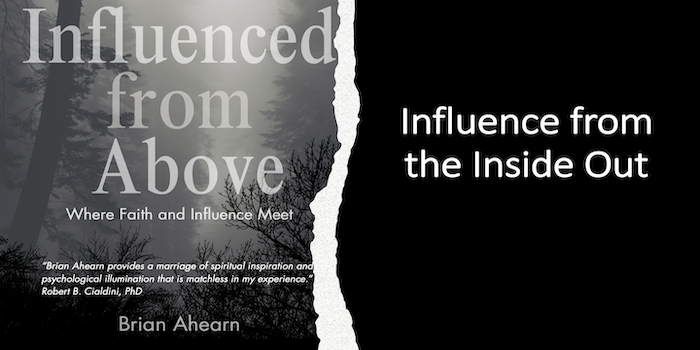
This question elevates the practice of influence beyond mere compliance with rules to a commitment to the well-being of the other. The challenge lies in the fact that two individuals can employ the exact same influence techniques, ask identical questions, and adhere to all ethical guidelines, yet their underlying intentions can be vastly different. One might be driven by a desire for personal gain—"How can I get this person to say yes?"—while the other is motivated by a genuine commitment to facilitating the best outcome for the individual—"How can I help this person make the best decision?"
The implications of this internal divergence are significant. While outwardly indistinguishable, the motivations create a chasm in the nature of the influence exerted. This is why the transition from ethical to loving influence is not about acquiring new techniques but about undergoing a personal transformation. "It’s about becoming a different kind of person," Ahearn asserts. This internal metamorphosis, when achieved, naturally leads to a shift in behavior and, consequently, a more profound and sustainable form of influence.
The Practical Implications and Broader Impact
The core message of shifting focus from "what should I stop doing?" to "who am I becoming and what do I genuinely want for the person I’m trying to influence?" carries substantial implications for professional development, leadership, and interpersonal relationships. In the realm of coaching, as exemplified by Ahearn’s practice, this means prioritizing the client’s ultimate success and well-being over the coach’s immediate perceived effectiveness or the client’s superficial agreement.
This approach is supported by a growing body of research in positive psychology and organizational behavior, which emphasizes the importance of empathy, authenticity, and a genuine desire for others’ success in fostering strong relationships and driving positive outcomes. For instance, studies on transformational leadership consistently show that leaders who focus on the growth and development of their team members, demonstrating genuine care and concern, inspire higher levels of engagement, motivation, and performance. Data from organizations that have prioritized employee well-being and development often report lower turnover rates, increased productivity, and a more positive work environment. A 2022 report by Deloitte, for example, found that companies with a strong focus on employee well-being were 2.1 times more likely to report being innovation leaders in their market.
The shift towards "loving influence" also has implications for sales and marketing. While traditional approaches often focus on persuasion tactics, a more holistic view suggests that building genuine relationships based on trust and a desire to serve the customer’s needs leads to greater customer loyalty and long-term success. A study published in the Journal of Marketing Research indicated that customer lifetime value is significantly higher for customers who perceive a high degree of trustworthiness and ethical conduct from the companies they engage with.
The call for introspection and a focus on internal transformation is not merely theoretical. It requires a conscious effort to cultivate virtues such as empathy, active listening, and genuine curiosity. It involves challenging one’s own assumptions and biases, and consistently asking whether one’s actions are aligned with a genuine desire for the other person’s betterment.
In essence, the discourse initiated by Ahearn and Castillo invites a re-evaluation of what it means to be influential. It posits that the most potent and enduring form of influence is not derived from manipulative techniques or strict adherence to rules, but from a cultivated internal state of love and a commitment to the highest good of those with whom we interact. This perspective, while demanding, offers a pathway to more meaningful connections, more profound impact, and a more ethical and fulfilling practice of influence. The ongoing dialogue, particularly among those with experience in coaching and influence, is crucial for further exploring and integrating this powerful paradigm shift into everyday professional and personal life.
