

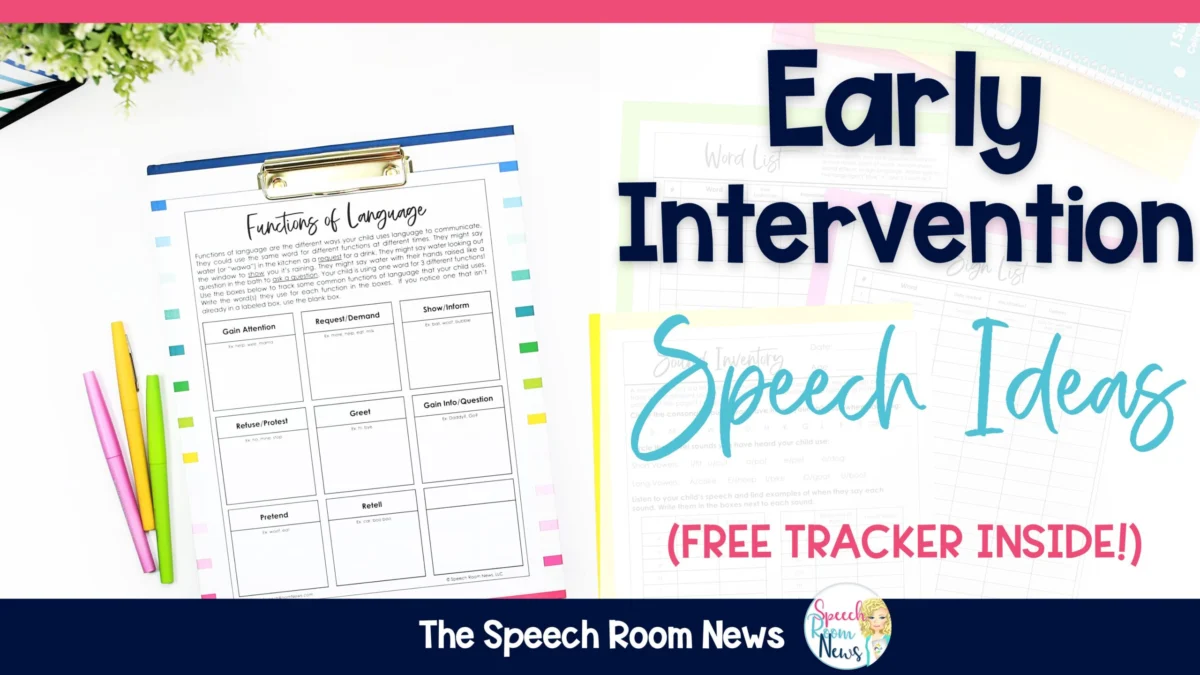
In the complex and crucial journey of early childhood development, the emergence of speech and language stands as a cornerstone for cognitive, social, and emotional growth. For children experiencing difficulties in acquiring these foundational skills, the strategic implementation of early intervention speech therapy is not merely beneficial but profoundly transformative. This specialized approach, initiated during a child’s formative years, offers a critical window of opportunity to address communication challenges, establish vital linguistic pathways, and significantly improve long-term developmental outcomes. Understanding the multifaceted nature of early intervention, from its scientific underpinnings to its practical application in daily routines, is essential for both clinical professionals and parents navigating the intricacies of pediatric speech development.
Understanding Early Intervention in Speech and Language Development
Early intervention (EI) refers to a system of services provided to children from birth to age three who have developmental delays or disabilities. In the context of speech and language, EI focuses on identifying and treating communication disorders as early as possible. These services are typically provided by a multidisciplinary team, with speech-language pathologists (SLPs) playing a central role. The philosophy behind EI is rooted in the understanding that the brain’s plasticity is highest during these early years, making it more receptive to learning and adaptation. Timely intervention can mitigate the severity of a delay, prevent secondary complications, and set a child on a more typical developmental trajectory.
Speech and language disorders are among the most common developmental challenges, affecting a significant portion of the pediatric population. According to data from the Centers for Disease Control and Prevention (CDC), approximately 1 in 12 children aged 3-17 years (7.7%) have had a disorder of speech, voice, language, or swallowing in the past 12 months. The American Speech-Language-Hearing Association (ASHA) reports that between 8% and 9% of young children have a speech sound disorder, and language disorders affect about 5% of preschool-aged children. These statistics underscore the widespread need for effective early intervention programs.
The Professional and Parental Lens: A Unified Front
The journey through early speech development can be a deeply personal one for families, often bringing unique insights to the forefront for even seasoned professionals. The experience of a speech-language pathologist becoming a parent to a child with a speech delay highlights the convergence of professional expertise and lived experience. This dual perspective underscores the emotional weight carried by parents and the practical necessity of robust support systems. While SLPs are trained to identify developmental milestones and implement therapeutic strategies, the day-to-day reality of a "late talker" can shift their professional understanding, emphasizing the need for accessible, parent-friendly resources and data-tracking tools.
This convergence of perspectives is crucial for effective early intervention. Therapists, armed with clinical knowledge, can design targeted interventions, but parents, as primary caregivers, are instrumental in carrying out these strategies consistently within the child’s natural environment. The success of early intervention often hinges on this collaborative partnership, where parents are empowered to become active participants in their child’s therapy. This empowerment is significantly enhanced by tools that help parents objectively track and document their child’s progress, transforming subjective observations into valuable data points for the therapeutic team.
The Imperative of Tracking Early Speech Sounds and Words
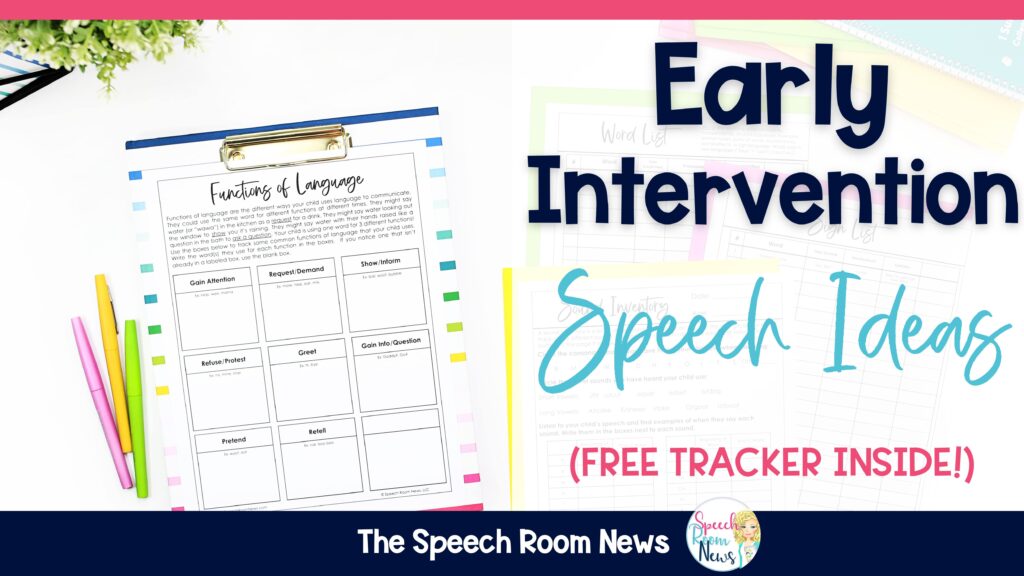
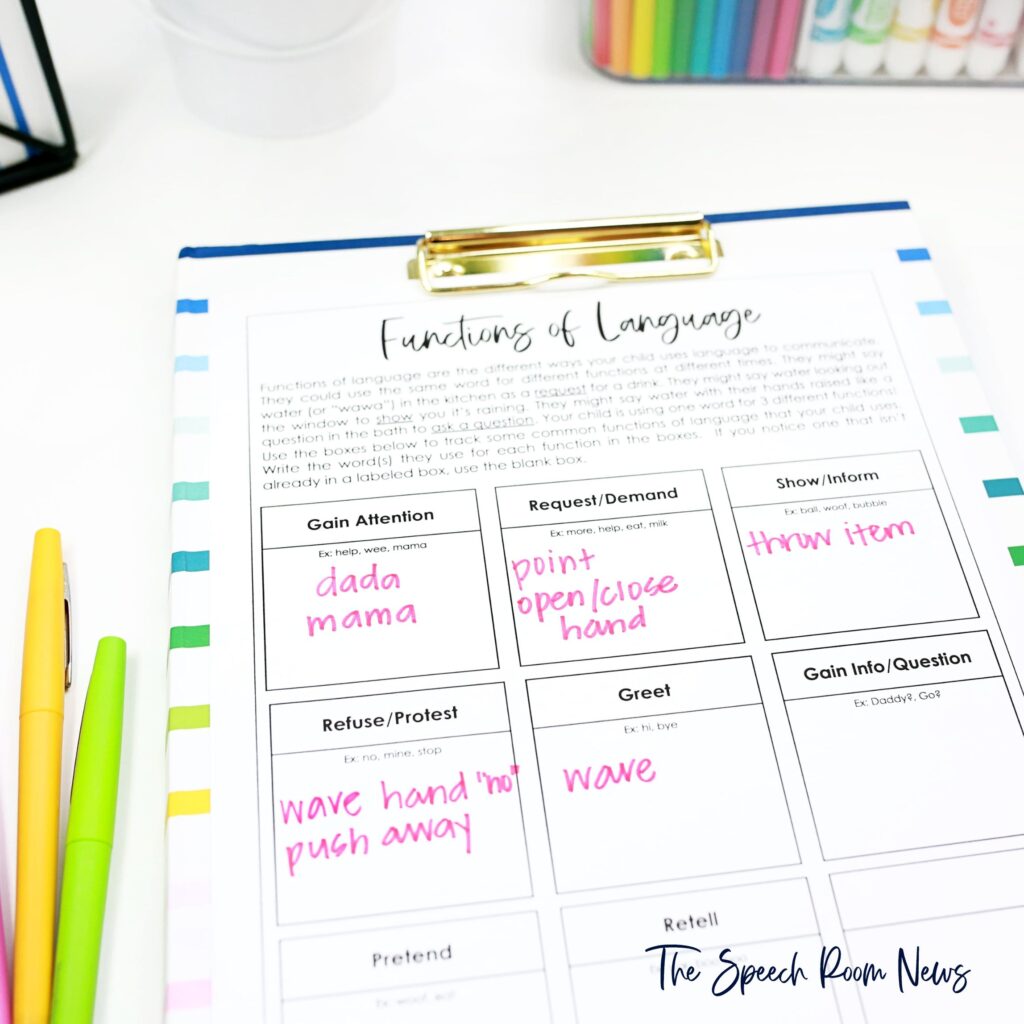
Accurate and consistent tracking of a child’s emerging speech sounds and words is a cornerstone of effective early intervention. This practice serves multiple critical functions, benefiting both the child’s development and the efficacy of the therapeutic process. Firstly, it provides a factual, chronological record of linguistic development, allowing parents and therapists to objectively monitor progress and identify patterns that might otherwise be overlooked. In the dynamic environment of a child’s rapid development, relying solely on memory can be unreliable, especially when charting the subtle emergence of new sounds or word approximations.
Beyond simple word counts, tracking enables a deeper analysis of a child’s phonological development. Observing the types of syllable shapes a child produces—such as consonant-vowel (CV) words like "ba" for ball, vowel-consonant (VC) words like "up," consonant-vowel-consonant-vowel (CVCV) words like "mama," or consonant-vowel-consonant (CVC) words like "dog"—offers critical insights into their emerging phonological system. This detailed data helps SLPs understand which speech sounds a child can produce, which are emerging, and which patterns are still absent. Such granular information is invaluable for tailoring intervention strategies, targeting specific sounds or syllable structures, and measuring the impact of therapy over time.
For parents, tracking acts as a powerful tool for engagement and reassurance. Witnessing incremental progress through documented milestones can be incredibly motivating, providing concrete evidence of their child’s development, even when overall progress feels slow. This data also facilitates more productive communication during therapy sessions, allowing parents to share precise observations with their child’s SLP, leading to more informed adjustments to the intervention plan. Resources like dedicated "First Words Trackers" or "Early Intervention Parent Handouts" are designed to simplify this process, making it manageable and effective for families.
Recognizing "Late Talkers" and When to Seek Professional Guidance
While every child develops at their own pace, there are established developmental milestones that serve as benchmarks for speech and language acquisition. A "late talker" is generally defined as a child between 18 and 30 months who has a limited vocabulary for their age (typically fewer than 50 words by 24 months) and does not combine words into two-word phrases, despite demonstrating typical development in other areas (e.g., motor skills, cognitive development, social interaction). It is important to note that not all late talkers will require intervention, as some will spontaneously catch up to their peers; however, a significant percentage (estimated between 25-50%) may go on to experience persistent language delays.
The decision of when to seek professional evaluation is crucial. Pediatricians often monitor speech and language milestones during routine check-ups, but parents are typically the first to notice potential deviations. Red flags that warrant a consultation with a doctor or a speech-language pathologist include:

- No babbling by 12 months.
- No first words by 15-18 months.
- Fewer than 50 words by 24 months.
- No two-word phrases by 24 months (e.g., "more juice," "bye-bye mommy").
- Difficulty understanding simple instructions.
- Lack of eye contact or joint attention.
- Frequent frustration when trying to communicate.
- Regression in speech or language skills.
Upon noticing these signs, the recommended first step is to consult with the child’s pediatrician. The pediatrician can conduct an initial assessment, rule out underlying medical conditions (such as hearing loss), and provide a referral to an SLP or an early intervention program. In many regions, families can directly contact their local school district or early intervention service providers to request an evaluation, regardless of a pediatrician’s referral. Early identification and intervention are paramount; delaying intervention can lead to more entrenched communication difficulties and potentially impact other areas of development, including literacy, social skills, and academic performance.
Integrating Speech Therapy into Daily Routines: Practical Strategies
Effective early intervention speech therapy is not confined to clinical settings; it thrives when integrated seamlessly into a child’s everyday life. Daily routines offer a rich, predictable, and natural context for language learning. The repetitive nature of routines creates opportunities for repeated exposure to specific vocabulary, social expectations, and action sequences, which are vital for language acquisition. By embedding targeted speech activities into familiar daily events, parents can transform ordinary moments into powerful learning experiences.
1. Eating a Snack: Snack time is an ideal "communication temptation." Rather than offering a full meal, a small bowl of a preferred snack creates motivation for communication.
- Modeling: As you pour the snack, verbally describe your actions: "Look, I’m pouring some crackers into the bowl. Yum! I love to eat crackers. You like to eat crackers too. Mmmm, crackers." Use descriptive words like "crunchy," "yummy," "more."
- Pausing and Waiting: After modeling, pause and look expectantly at your child. Wait for a response, which could be a gesture, a sound, or a word approximation. Celebrate any attempt at communication.
- Expansion: If the child says "cracker," you can expand: "Yes, crunchy cracker!" or "You want more cracker!"
- Vocabulary Targets: Focus on nouns (snack names), verbs (eat, pour, open), adjectives (yummy, hot, cold), and basic requests (more, please, open).
2. Brushing Teeth: Time spent in front of a mirror provides a natural stage for interaction and language building, leveraging visual feedback and social routines.
- Explaining and Describing: Narrate each step: "It’s time to brush your teeth. We brush and clean our teeth so they stay healthy. We want healthy teeth so we can eat all kinds of foods. Let’s get your green toothbrush. Can you find the toothpaste? Squeeze just a little bit out."
- Action and Positional Words: As you brush, use action words ("brush," "clean," "rinse") and positional words ("up," "down," "front," "back," "top," "bottom"). "Now what do we do? Yes! Let’s brush the front. Now what? Yes—time to brush the back! I go up and down and make sure I get all your teeth."
- Turn-Taking: Encourage turn-taking by saying, "Now your turn to brush," and then "Mommy’s turn to brush."
- Sound Play: Make silly sounds in the mirror, encourage your child to imitate mouth movements and sounds.
- Vocabulary Targets: Body parts (teeth, tongue, mouth), objects (toothbrush, toothpaste), actions (brush, rinse, spit), spatial concepts (up, down, front, back).
3. Bath Time: The sensory-rich environment of bath time offers abundant opportunities for language.
- Descriptive Language: "The water is warm. Splash! The bubbles are bubbly. Look at your rubber ducky!"
- Action Verbs: "Wash hair, wash arms, pour water, splash feet."
- Requests and Choices: "Do you want soap or shampoo?" "More bubbles?"
4. Getting Dressed: This routine provides a context for teaching clothing vocabulary and following directions.
- Naming Items: "Let’s put on your shirt. Where are your socks?"
- Following Directions: "Put your arm in." "Lift your foot."
- Colors and Sizes: "This is your blue shirt." "These are big shoes."
5. Reading Books: Picture books are invaluable for fostering language and literacy skills.
- Pointing and Naming: Point to pictures and name objects, actions, and characters.
- Asking Questions: "What’s that?" "What is the dog doing?"
- Sound Effects: Imitate animal sounds or character voices.
- Predicting: "What do you think will happen next?"
The key principle in all these activities is to engage the child in child-led play and interactions, allowing them to initiate communication and follow their interests. Parents are encouraged to model language frequently, provide choices, use expectant pauses, and respond enthusiastically to all communication attempts, whether verbal or non-verbal.
Broader Impact and Long-Term Implications

The profound impact of early intervention extends far beyond immediate speech and language improvements. By addressing communication delays early, children are better equipped to navigate their social world, express their needs and desires, and build relationships with peers and adults. This foundational communication competence significantly influences their social-emotional development, reducing frustration and fostering self-confidence.
Academically, strong early language skills are a powerful predictor of future literacy success. Children with untreated speech and language delays are at a higher risk for reading and writing difficulties, which can cascade into broader academic struggles. Early intervention helps to build the phonological awareness, vocabulary, and narrative skills necessary for successful schooling. Longitudinal studies consistently demonstrate that children who receive early intervention for speech and language disorders achieve better academic outcomes, have improved social skills, and are less likely to require special education services later in life.
From an economic perspective, early intervention is a cost-effective strategy. Investing in services during the critical early years can reduce the need for more intensive, expensive interventions in later childhood and adolescence. By promoting a child’s full developmental potential, early intervention contributes to their ability to participate fully and productively in society, ultimately yielding substantial societal benefits.
In conclusion, early intervention speech therapy is a critical component of pediatric healthcare, offering a lifeline to children facing communication challenges. Through a collaborative effort between dedicated speech-language pathologists and engaged parents, supported by systematic tracking and integrated daily activities, children can unlock their full communicative potential. The commitment to early identification and comprehensive intervention represents an investment not only in a child’s immediate well-being but also in their enduring success in education, social integration, and life.
