

The early years of a child’s life represent a critical window for neurological development, particularly concerning language acquisition. During this formative period, the brain exhibits remarkable plasticity, making it uniquely receptive to learning and establishing foundational communication pathways. Consequently, early intervention speech therapy stands as an indispensable tool, offering significant benefits for children exhibiting developmental delays in speech and language. For parents and caregivers, recognizing the signs of a potential delay and understanding the available support mechanisms is paramount, as timely intervention can profoundly influence a child’s cognitive, social, and emotional trajectory.
Understanding the Landscape of Speech and Language Development
Normal speech and language development follows a generally predictable sequence, though individual variations are common. Typically, by 12 months, infants begin to babble with varied consonant-vowel combinations and may say their first word. Between 18 and 24 months, a child’s vocabulary rapidly expands, and they start combining two words. By age three, most children are forming simple sentences, asking questions, and are largely intelligible to familiar listeners. However, when a child consistently misses these age-specific milestones, it can signal a speech or language delay, warranting professional evaluation.
According to the American Speech-Language-Hearing Association (ASHA), approximately 1 in 10 children exhibit some form of speech or language disorder. Data from the Centers for Disease Control and Prevention (CDC) indicates that about 7-8% of children aged 3-17 years have had a speech, language, voice, or swallowing disorder in the past 12 months. A subset of these, often referred to as "late talkers," are toddlers (18-30 months) who have a limited vocabulary for their age but show no other developmental delays. While some late talkers spontaneously catch up to their peers, a significant percentage, estimated at 40-50%, may continue to experience language difficulties without intervention. Identifying these children early is crucial to differentiate between a temporary delay and a more persistent disorder that requires therapeutic support.
The Scientific Imperative for Early Intervention
The effectiveness of early intervention is rooted in neurodevelopmental science. The brain’s capacity for learning new skills is highest during early childhood, a period often described as having "critical windows" for certain types of development, including language. During these windows, the brain forms synaptic connections at an astonishing rate. If a child is not exposed to sufficient language stimulation or struggles to process language inputs, these critical connections may not form optimally, potentially leading to lasting deficits.
Research consistently demonstrates that early and intensive intervention can significantly mitigate the impact of developmental delays. A meta-analysis published in the Journal of Speech, Language, and Hearing Research highlighted that children receiving early intervention for speech and language disorders show greater gains in expressive and receptive language skills compared to those who receive delayed or no intervention. The implications extend beyond communication; language skills are foundational for literacy, academic achievement, social interaction, and emotional regulation. Children with unaddressed speech and language delays are at higher risk for reading difficulties, academic underachievement, social isolation, and even behavioral challenges.
The Role of the Speech-Language Pathologist (SLP)
Speech-Language Pathologists are highly trained professionals who specialize in the assessment, diagnosis, and treatment of communication disorders. In early intervention settings, their role is multifaceted. Upon referral, an SLP conducts comprehensive evaluations to determine the nature and extent of a child’s communication difficulties, often involving standardized tests, informal observations, and parent interviews. Based on this assessment, an individualized family service plan (IFSP) is developed, outlining specific goals and intervention strategies.
A key paradigm in modern early intervention is the parent-coaching model. Rather than solely providing direct therapy to the child, SLPs increasingly focus on empowering parents and caregivers with the knowledge and strategies to foster language development within their child’s natural environment. This approach recognizes parents as the child’s primary communication partners and leverages daily routines and interactions as rich opportunities for learning. SLPs guide parents on how to model language, create communication temptations, respond to their child’s attempts, and adapt their environment to encourage speech. This collaborative model has been shown to be highly effective, promoting generalization of skills and sustained progress.
Empowering Parents Through Observation and Data Tracking
For parents navigating concerns about their child’s speech, systematic observation and data tracking emerge as invaluable tools. While a parent’s intuition is often the first indicator of a potential delay, concrete data provides objective evidence that can inform professional assessments and therapy planning. Tracking a child’s early sounds and words offers several critical benefits:
- Objective Reporting: It allows parents to provide precise, rather than anecdotal, information to SLPs, pediatricians, and early intervention teams. This data helps professionals gain a clearer picture of the child’s communication profile and the trajectory of their development.
- Identifying Patterns: Tracking can reveal patterns in a child’s vocalizations, such as the emergence of specific consonant-vowel (CV) combinations (e.g., "ba," "da"), vowel-consonant (VC) words (e.g., "up," "on"), or more complex consonant-vowel-consonant-vowel (CVCV) structures (e.g., "mama," "dada") and consonant-vowel-consonant (CVC) words (e.g., "dog," "cup"). Observing these developments helps gauge phonological awareness and articulatory progress.
- Measuring Growth Over Time: The journey of speech development is often gradual. A tracker provides a visual record of progress, no matter how small, offering encouragement to parents and demonstrating the effectiveness of intervention strategies. It helps differentiate between a child who is making slow but steady gains and one who is truly stagnant.
- Reducing Guesswork: As a child’s vocabulary grows, it becomes increasingly difficult to recall every new word. A tracking sheet eliminates guesswork, ensuring that all emerging words, even approximations, are noted.
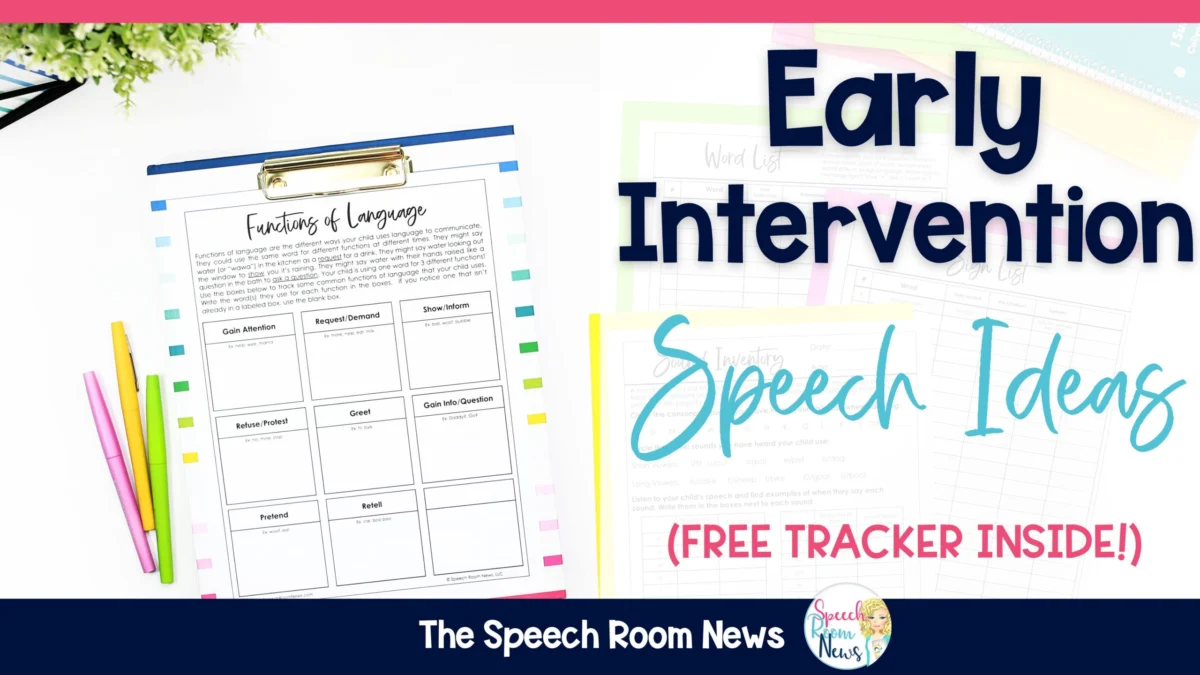
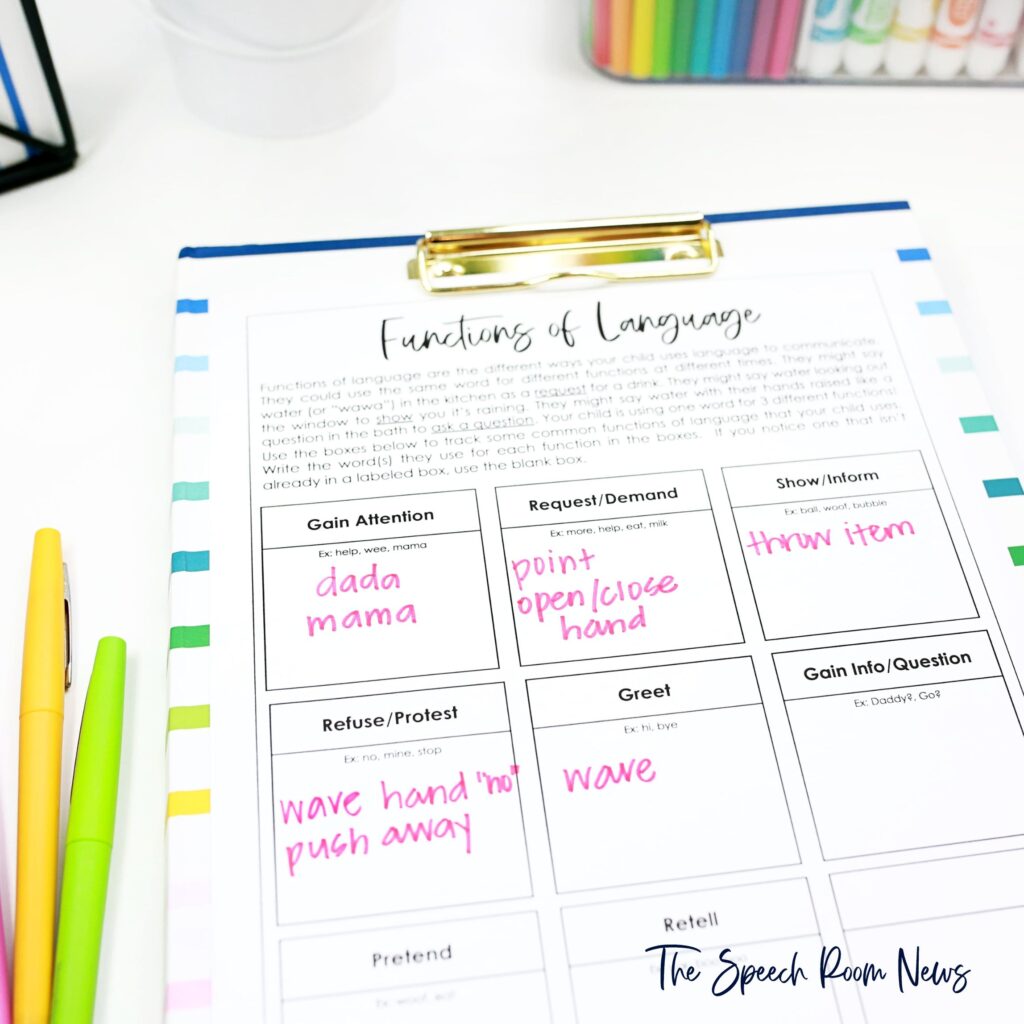
Many resources, including free "First Words Trackers," are available to help parents systematically record their child’s vocalizations and emerging vocabulary. These tools typically include sections for recording the date a sound or word was first heard, the context, and any approximations. This tangible evidence not only aids professionals but also empowers parents by transforming their observations into actionable data.
Integrating Therapy into Daily Life: Practical Strategies

One of the most effective approaches to early intervention involves integrating speech and language practice into a child’s daily routines. Routines provide predictable contexts that facilitate learning through repetition and consistent exposure to specific vocabulary and social expectations. This naturalistic approach helps children learn in meaningful situations, making the acquisition of new skills more functional and sustainable.
Consider these practical activities that leverage everyday moments:
1. Snack Time: A Prime Communication Opportunity
Snack time is an ideal setting for encouraging communication, as it often involves highly motivating items. Instead of a full meal, use a small bowl of favorite snacks to create "communication temptations."
- Modeling and Repetition: As you pour snacks into a bowl, model language descriptively: "Look! I’m pouring some crunchy crackers into the bowl. Yum! I love to eat crackers. You like to eat crackers too. Mmmm, crackers!" Use varied intonation and facial expressions.
- Creating a Communication Temptation: Offer a small amount of the snack and then pause. Look at your child expectantly, waiting for a response. Instead of immediately giving more, prompt: "Do you want more cracker?" or "What do you want?"
- Celebrating Approximations: If your child points, gestures, or makes a sound approximation (e.g., "cra-cra" for cracker), acknowledge and celebrate it enthusiastically. "Yes! You want cracker! Good job!" Then, provide the item. Continue to model the correct word.
- Expanding Utterances: If your child says "more," you can expand it: "More cracker? Great idea!" This provides a richer language model.
2. Brushing Teeth: Building Language in the Mirror
Time spent in front of the mirror offers unique opportunities for connection and language building, especially through turn-taking and descriptive language.
- Explain and Describe: Rather than simply stating "Brush your teeth," explain the what and why: "It’s time to brush your teeth! We brush and clean our teeth so they stay healthy. We want healthy teeth so we can eat all kinds of foods."
- Interactive Narration: Narrate the process, using positional words and action verbs: "Let’s get your green toothbrush. Can you find the toothpaste? Squeeze just a little bit out. Now what do we do? Yes! Let’s brush the front teeth. Now what? Time to brush the back teeth! You brushed your teeth. Now let Mommy brush them too. I am brushing the front and the back. I go up and down and make sure I get all your teeth. We did it! Time to rinse our teeth and our brush so they stay clean."
- Turn-Taking: Engage in reciprocal actions like making silly faces, blowing kisses, or pointing to body parts in the mirror, fostering early social communication skills.
- Singing: Incorporate simple songs about brushing teeth to make it fun and embed vocabulary.
3. Bath Time: Sensory-Rich Language Learning
Bath time is often a relaxed, sensory-rich environment perfect for language stimulation.
- Descriptive Vocabulary: Describe actions and objects: "Splish, splash! The water is warm. Here’s your yellow duck. He’s floating! Let’s get the soap. It’s bubbly! Rub, rub, rub your arm. Now your leg."
- Action Verbs and Prepositions: Focus on verbs ("pour," "splash," "wash," "squeeze") and prepositions ("in," "out," "up," "down"). "Put the cup in the water. Now pour the water out."
- Questioning: Ask simple questions related to actions or objects: "Where’s the soap?" "What does the duck say?"
- Anticipation and Requesting: Create routines that build anticipation, like asking, "Ready for the bubbles?" and waiting for a response before adding them.
Navigating Concerns and Accessing Professional Support
For parents who suspect a speech or language delay, the first step is to consult with their pediatrician. The pediatrician can rule out any underlying medical issues, provide initial guidance, and offer referrals to specialists. Depending on the child’s age and the severity of the concerns, referrals might be made to:
- Early Intervention Programs: In many regions, government-funded early intervention programs (often for children from birth to three years old) provide comprehensive services, including speech therapy, at little to no cost to families. These programs are typically accessed through local school districts or health departments.
- Private Speech-Language Pathologists: For those seeking additional or alternative services, private SLP clinics are an option, often covered by health insurance.
- Developmental Pediatricians: These specialists can provide a broader developmental assessment, especially if other developmental concerns are present.
It is crucial for parents to advocate for their child and not hesitate to seek multiple opinions if they feel their concerns are not being adequately addressed. Early identification and intervention are consistently linked to better long-term outcomes, reducing the need for more intensive support later in life.
Conclusion: A Brighter Future Through Early Action
The journey of speech and language development is complex and deeply personal for every child and family. While the path may present challenges, the profound impact of early intervention speech therapy offers a beacon of hope. By understanding typical developmental milestones, recognizing warning signs, and actively engaging in therapeutic strategies within daily routines, parents become powerful catalysts in their child’s communication growth. The collaborative effort between dedicated Speech-Language Pathologists and informed, empowered parents creates a robust support system that not only addresses immediate communication challenges but also lays a strong foundation for a child’s overall well-being, academic success, and social integration throughout their life. Investing in early intervention is an investment in a child’s future, ensuring they have the voice and the tools to navigate and thrive in the world around them.
