

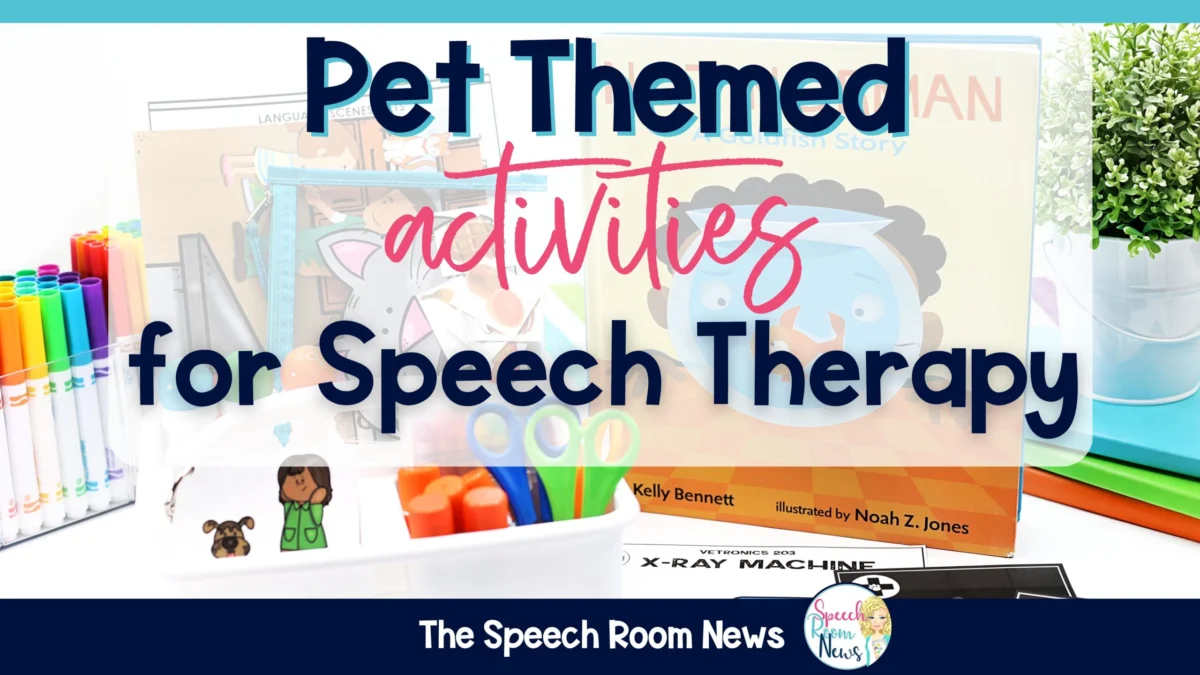
Speech-language pathologists (SLPs) are increasingly adopting thematic approaches to their intervention strategies, recognizing the profound impact of contextualized learning on student engagement and skill acquisition. Among the myriad themes available, pet-centric lessons have emerged as a particularly versatile and effective choice, offering year-round applicability and a rich foundation for addressing a broad spectrum of communication goals. This pedagogical shift underscores a commitment to maximizing therapeutic efficiency while fostering a dynamic and stimulating learning environment for children with speech and language disorders.
Pedagogical Rationale for Thematic Speech Therapy
The integration of themes into speech and language therapy is rooted in well-established educational principles that emphasize the importance of context, relevance, and engagement. For young learners, especially those with communication challenges, abstract concepts can be difficult to grasp. Thematic units provide a coherent framework that connects various activities and vocabulary items under a unifying concept, thereby reducing cognitive load and facilitating deeper understanding. When children are immersed in a theme they find interesting, their motivation to participate, attend, and interact significantly increases, leading to more robust learning and better generalization of skills.

A primary benefit of year-round themes, as opposed to holiday-specific ones, lies in their reusability and sustained relevance. Non-holiday themes like "pets" can be revisited multiple times throughout the academic year, allowing SLPs to introduce new concepts or reinforce previously taught skills within a familiar and beloved context. This approach not only streamlines lesson planning and material preparation, thereby saving valuable time for clinicians, but also offers a cost-effective solution as resources can be leveraged repeatedly. The consistent exposure to a theme in different modalities helps solidify learning and promotes a deeper conceptual understanding, which is crucial for students across various developmental stages.
The Universal Appeal of a "Pets Theme"
The "pets theme" holds a unique position in speech therapy due to its universal appeal and inherent capacity to evoke strong emotional connections in children. Most children have direct or indirect experiences with pets, whether through family animals, friends’ pets, or popular media. This familiarity provides a natural entry point for discussion and learning, making the therapeutic content immediately relevant and relatable. The theme encompasses a vast vocabulary related to animal types, characteristics, sounds, actions, care routines, and associated objects, offering abundant opportunities for language development.
Moreover, the emotional bond children often form with animals can be a powerful motivator in therapy. Discussing or interacting with pet-related materials can create a sense of comfort and joy, making therapy sessions feel less like work and more like play. This positive emotional climate is conducive to learning, as it reduces anxiety and encourages spontaneous communication. The versatility of the pet theme allows for its adaptation to various age groups and ability levels, from preschoolers focusing on basic vocabulary and articulation to older children working on complex narrative skills or social pragmatic language through role-playing scenarios like a veterinary clinic.

Evolution and Modernization of Thematic Resources
Historically, speech-language pathologists dedicated considerable time to independently developing and curating themed materials tailored to their students’ needs. This often involved creating visual aids, adapting commercial resources, and designing custom activities. While this personalized approach remains valuable, the digital age has ushered in a new era of resource availability and collaboration within the SLP community. Platforms such as TeachersPayTeachers have become central hubs where clinicians can share, purchase, and access a vast array of pre-made, high-quality thematic kits.
These comprehensive kits are designed to alleviate the burden of material preparation, offering ready-to-use printables, interactive digital activities, and detailed lesson plans. The increasing sophistication of these resources reflects an understanding of the diverse needs within speech therapy, providing tools that target articulation, phonology, expressive and receptive language, social communication, and early literacy skills. The emergence of such integrated resources signifies a positive trend towards supporting SLPs with efficient, evidence-informed tools that allow them to allocate more time to direct intervention and less to administrative tasks.
Core Components of a Pet-Themed Therapy Program

A well-structured pet-themed speech therapy program typically incorporates a variety of multimodal activities designed to engage students and address specific communication goals. These components draw upon literature, interactive media, hands-on play, sensory experiences, and creative expression.
1. Literature Integration for Language Development:
Books serve as foundational tools for developing narrative skills, vocabulary, comprehension, and social-emotional understanding. Pet-themed stories provide rich contexts for targeting specific language objectives:
- Not Norman by Kelly Bennett: This humorous tale about a boy’s initial disappointment with a goldfish named Norman, and his eventual realization of Norman’s unique value, offers excellent opportunities for discussing emotions (disappointment, appreciation, love), perspective-taking, problem-solving, and descriptive language. SLPs can target vocabulary related to different pets and their characteristics, sequencing events in a story, and making predictions about the plot.
- Some Pets by Angela DiTerlizzi: With its vibrant illustrations and diverse representation of children and their animal companions, this book is ideal for expanding vocabulary related to various pet types, actions, and attributes. It facilitates discussions about responsible pet ownership and provides opportunities for categorizing animals and identifying common traits.
- Lola Gets a Cat by Anna McQuinn: Lola’s journey from dreaming about a cat to understanding the responsibilities involved offers a relatable narrative for exploring cause and effect, understanding routines, and developing inferential skills. It’s also excellent for targeting action verbs associated with pet care and discussing the distinction between fantasy and reality.
- Interactive Vocabulary Books: Resources like "Interactive Vocabulary Book about Pets" provide structured opportunities for explicit vocabulary instruction. These books often cover categories (e.g., "pets that fly," "pets that swim"), descriptive attributes (e.g., "fluffy," "scaly"), and functions (e.g., "a dog barks," "a cat purrs"), which are critical for building a robust semantic network.
2. Interactive Media and Digital Tools for Articulation and Phonology:
Digital resources have revolutionized the way SLPs address articulation and phonology goals, offering engaging and high-repetition practice.
- Feed the Dog Articulation Boom Cards: This interactive online game leverages gamification to motivate students. Children "feed" the digital dog virtual food items, each representing a target articulation sound. The immediate auditory feedback (a "crunch" sound) reinforces correct productions and maintains engagement. This format allows for hundreds of repetitions within a single session, critical for motor learning in articulation therapy, and can be customized to target all speech sounds across various word positions and complexity levels. It also lends itself to targeting action verbs ("feed"), descriptive language ("hungry dog"), and turn-taking.
3. Play-Based Learning with Pet-Themed Toys:
Hands-on play is paramount in early childhood speech therapy, providing a naturalistic context for language use.

- Critter Clinic Toy Vet Set: This popular toy, featuring small doors, locks, stuffed animals, and veterinary tools, is exceptionally versatile. It fosters imaginative play, allowing children to engage in role-playing scenarios that target a multitude of language goals:
- Vocabulary: Names of animals, body parts, veterinary tools (stethoscope, thermometer), medical actions (examine, bandage, heal).
- Verbs: Open, close, lock, unlock, care for, treat, listen, check.
- Prepositions: In, out, on, under, beside (e.g., "Put the cat in the clinic," "The dog is on the table").
- Sentence Structure: Simple sentences ("The dog is sick," "I will fix it"), complex sentences ("The vet needs to check the cat because it has a cough").
- Social Communication: Role-playing (vet, pet owner), asking and answering questions, expressing empathy, turn-taking, problem-solving.
- Following Directions: Multi-step commands (e.g., "First, open the cage, then give the dog a shot").
- Hape Family Pet Houses: This set, with its small pet figures and accessories, is excellent for developing descriptive language, spatial concepts, and narrative play. SLPs can use it to target:
- Descriptive Language: Colors, sizes, textures of pets and their homes.
- Prepositions: Positioning pets "in" their houses, "on" the mat, "under" the bed.
- Categorization: Sorting pets by type or habitat.
- Action Verbs: Petting, feeding, sleeping, playing.
- Narrative Development: Creating stories about the pets’ daily lives, problems, and adventures.
4. Music and Movement for Early Language Skills:
Pet-themed songs are highly effective for engaging young learners, fostering phonological awareness, and expanding vocabulary. The repetitive nature of many children’s songs makes them ideal for practicing animal sounds, identifying word patterns, and learning action words. Examples like "I Have a Pet," "Do You Have a Pet?", "I Love Dogs," and "Wag Your Tail" encourage vocal imitation, rhythmic participation, and the acquisition of basic vocabulary and verbs related to pets. These activities also promote gross motor skills and provide a joyful, low-pressure environment for communication practice.
5. Craft and Sensory Activities for Multi-Sensory Learning:
Integrating crafts and sensory play taps into different learning modalities, enhancing engagement and providing tangible outcomes.
- Clifford the Big Red Dog Craft: Crafts like a paper plate Clifford craft, inspired by the beloved character, combine fine motor skill development with expressive language. While creating, children can follow multi-step directions, name colors and shapes, and describe their artwork. Linking the craft to the Clifford book series further reinforces narrative comprehension and character description.
- Pet-Themed Sensory Bins: A sensory bin filled with rice, beans, or shredded paper, hiding small pet figurines and accessories, offers a rich tactile experience. This activity is perfect for targeting descriptive language ("I feel something soft," "I see a pointy black ear"), requesting ("More rice, please"), prepositions ("The cat is under the rice"), and categorization. The act of searching and discovering hidden items naturally prompts conversation and descriptive utterances.
Broader Impact and Implications for Speech-Language Pathology
The strategic use of comprehensive, year-round themes like "pets" in speech therapy has several significant implications. Firstly, it enhances the consistency and coherence of therapy, providing a stable learning environment that aids generalization of skills. When children can connect what they learn in therapy to their experiences outside the clinic, the functional application of their communication abilities improves dramatically.

Secondly, the availability of well-designed, pre-packaged thematic kits empowers SLPs, particularly those with heavy caseloads or limited planning time, to deliver high-quality, engaging therapy. This efficiency allows clinicians to dedicate more mental energy and time to individualized assessment, intervention, and progress monitoring, ultimately benefiting student outcomes. The cost-effectiveness of reusable themes also helps optimize budget allocations for educational resources.
Thirdly, these themed approaches often lend themselves to greater parental involvement. When therapy activities are fun and relatable, parents are more likely to engage in carryover activities at home, reinforcing learned skills in natural contexts. This collaborative approach between SLPs and families is critical for sustained progress.
In conclusion, the adoption of engaging, versatile themes such as "pets" represents a sophisticated evolution in speech-language pathology practices. By providing a rich, motivating, and neurologically advantageous context for learning, these thematic units are not merely supplementary activities but fundamental components that drive significant progress in articulation, language, and social communication skills, ensuring that every child has the opportunity to unlock their full communicative potential. The ongoing development and sharing of such innovative resources within the professional community continue to shape and elevate the standards of speech-language intervention.
