

Years ago, a sermon delivered a profound, if initially unsettling, insight into the complexities of human interaction. The speaker addressed the ubiquitous presence of "difficult people" in our lives – individuals we often find ourselves wishing to avoid, whether they be family members, neighbors, colleagues, or casual acquaintances. The pastor’s pivotal statement, etched into the memory of many attendees, was a stark reminder: "When I talk about difficult people, remember – someone is thinking about you." This simple yet potent observation serves as a crucial pivot point, shifting the focus from outward identification of challenging personalities to an introspective examination of our own potential to be perceived as difficult. It poses a fundamental question that underpins the fabric of social harmony: How do we cultivate genuine love and understanding for those with whom we struggle to connect?
This deeply personal and universally relatable quandary has been a subject of contemplation for thinkers across disciplines. The renowned Christian apologist C.S. Lewis, in his seminal work Mere Christianity, grappled with this very issue. He candidly admitted to experiencing a lack of personal affection for certain individuals, making the concept of loving them seem paradoxical. His breakthrough came not through a sudden surge of positive emotion towards others, but through an honest appraisal of his own internal landscape. Lewis realized that there were moments when he, too, disliked himself – his actions, his shortcomings, his perceived failures. Yet, even in these instances of self-disapproval, he continued to strive for his own well-being, seeking self-improvement, forgiveness, and personal growth. This self-reflection led him to a critical distinction: liking and loving, while often intertwined, are not synonymous. Love, he posited, can transcend personal preference and begin with a conscious decision to actively seek the good of another, irrespective of our feelings towards them.
This perspective resonates powerfully within a Christian framework, where the commandment to "love your enemies" is a cornerstone. This directive becomes more comprehensible when love is understood not merely as an emotional response, but as a volitional act. Biblical love, in this context, is a deliberate choice to act with integrity and benevolence towards others, even when it demands personal sacrifice and when the recipient has seemingly done nothing to merit such consideration. In practical terms, this translates to everyday actions: assisting a stranded motorist, offering support to an overwhelmed colleague, or extending a small kindness to someone facing financial hardship at a checkout counter. These acts are often motivated by a recognition of shared humanity and an empathetic response to another’s need, mirroring the kind of help we would hope to receive ourselves.
The implications of this nuanced understanding of love extend significantly into the realm of influence. Dr. Robert Cialdini, a pioneering social psychologist and author of the seminal work Influence: The Psychology of Persuasion, offers a framework that can illuminate how we navigate these interpersonal dynamics. While Cialdini’s principles are often discussed in the context of persuading others, they also provide invaluable insights into how we can alter not only how others respond to us but also how we perceive them.
One of Cialdini’s core principles is Liking. While commonly interpreted as strategies to make ourselves more likable, an equally crucial application of this principle lies in actively cultivating our own genuine liking for others. This involves a conscious effort to identify commonalities. These shared elements, whether a mutual passion for a particular sports team, a shared hobby, similar family dynamics, or a commitment to a common cause, can serve as bridges across perceived divides. While they may not erase fundamental differences, these commonalities can significantly diminish the psychological distance between individuals.
Furthermore, the power of genuine compliments cannot be overstated. By intentionally seeking out and acknowledging positive attributes in others – a specific strength, a thoughtful gesture, or an admirable character trait – we begin to see beyond the superficial irritations that often color our initial judgments. This shift in focus, even if it doesn’t immediately alter our emotional state, profoundly reshapes our perspective. This practice aligns with the concept of unity, which delves deeper into interpersonal connection by emphasizing shared identity. Even when faced with a family member with whom we may not enjoy spending time, the inherent bond of kinship can inspire sacrifices and acts of support that we might not extend to an unrelated individual.
This sense of shared identity, however, is not confined to familial relationships. It can extend to our affiliations with organizations, communities, professions, nations, or religious groups. The more we perceive another person as "one of us" rather than "one of them," the more naturally we tend to care about their well-being. As Cialdini elaborates in his book Pre-suasion, the act of aiding a family member, for instance, triggers significant activity in the brain’s self-reward centers, suggesting that by helping a loved one, we are, in a sense, aiding ourselves. This innate psychological mechanism underscores the profound impact of perceived shared identity on our capacity for empathy and altruism.
The principle of Reciprocity also offers an unexpected avenue for transforming difficult relationships. While typically understood as a response to receiving help, consciously choosing to give first can fundamentally alter our own internal landscape and, consequently, our perception of others. When we invest our time, attention, or energy into another person, we begin to see them as individuals worthy of that investment, fostering a sense of value and encouraging a reciprocal exchange.
It is crucial to emphasize that embracing these principles does not necessitate the endorsement of destructive behavior, the abandonment of healthy boundaries, or the tacit acceptance of harmful actions. Loving someone does not equate to permitting mistreatment. Rather, it means refusing to reduce an individual solely to the aspects of their personality or behavior that we find challenging. It is about acknowledging their full humanity, even amidst our difficulties.
The iconic question posed by Tina Turner, "What’s love got to do with it?" finds a resounding answer in a broader, more profound context. In many philosophical and spiritual traditions, and certainly in the eyes of many faith perspectives, love is the central, driving force that underpins our interactions and defines our humanity.
This framework invites a personal reflection: Who are the individuals in your life who present a challenge to your capacity for liking or easy connection? What might shift in your perception and interaction if, instead of waiting for warmer feelings to emerge organically, you deliberately chose one small, tangible action to seek that person’s good? And, in a reciprocal turn, who might be employing similar strategies to foster a more positive connection with you? These questions, central to both personal growth and societal harmony, underscore the active, intentional nature of building bridges in a world often marked by division.
The practical application of these principles can be observed in various contexts. Consider workplace dynamics. A study published in the Journal of Applied Psychology found that employees who actively engaged in prosocial behaviors – helping colleagues, sharing knowledge, and offering support – reported higher job satisfaction and stronger team cohesion, even when working with individuals they didn’t personally prefer. This suggests that the act of investing in others, regardless of personal affinity, yields tangible benefits for both the giver and the receiver, fostering an environment conducive to greater influence and positive outcomes.
Furthermore, research in social psychology consistently demonstrates the impact of shared experiences on relationship building. A longitudinal study conducted by researchers at the University of Michigan, tracking interpersonal relationships over a decade, revealed that individuals who participated in shared activities, particularly those involving problem-solving or collaborative effort, reported significantly higher levels of trust and mutual regard, even in the absence of pre-existing strong personal bonds. This underscores the power of "unity" as a potent catalyst for bridging divides and fostering understanding.
The concept of "difficult people" is not a static categorization but a fluid perception influenced by our own internal states and external circumstances. What one individual finds challenging, another may navigate with ease, highlighting the subjective nature of interpersonal friction. This inherent variability suggests that the strategies for managing these relationships are not one-size-fits-all but require adaptability and a willingness to engage in self-awareness.
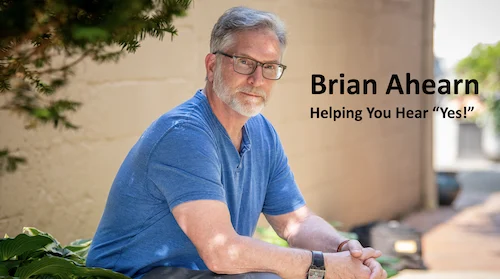
The author, Brian Ahearn, a recognized expert in the field of ethical influence and Chief Influence Officer at Influence PEOPLE, often emphasizes the practical application of Cialdini’s principles in real-world scenarios. His work, including his book Influence PEOPLE, provides actionable strategies for individuals seeking to improve their interpersonal effectiveness. Ahearn’s endorsement by Robert Cialdini himself, as one of the few Cialdini Method Certified Trainers globally, lends significant weight to his insights. His extensive experience coaching and consulting across diverse industries highlights the universal applicability of these principles, demonstrating that even in the most challenging professional environments, a conscious effort to understand and apply principles of influence can lead to improved outcomes and more harmonious relationships. His TEDx Talk on "Pre-suasion," viewed by over a million people, further illustrates the broad interest in understanding the subtle psychological underpinnings of human interaction and persuasion.
The implications of mastering the art of loving those we find difficult extend beyond personal well-being to encompass broader societal benefits. In an era increasingly characterized by polarization and division, the ability to find common ground, extend empathy, and practice intentional kindness towards those with whom we disagree is paramount. This not only fosters more productive dialogue but also contributes to a more cohesive and resilient society. The foundational understanding that our own perceptions and actions play a significant role in shaping our interpersonal experiences empowers us to become agents of positive change in our immediate circles and, by extension, in the wider community. The ongoing dialogue about how we navigate these complex relationships, informed by psychological research and philosophical inquiry, remains a critical endeavor for fostering a more understanding and connected world.
