

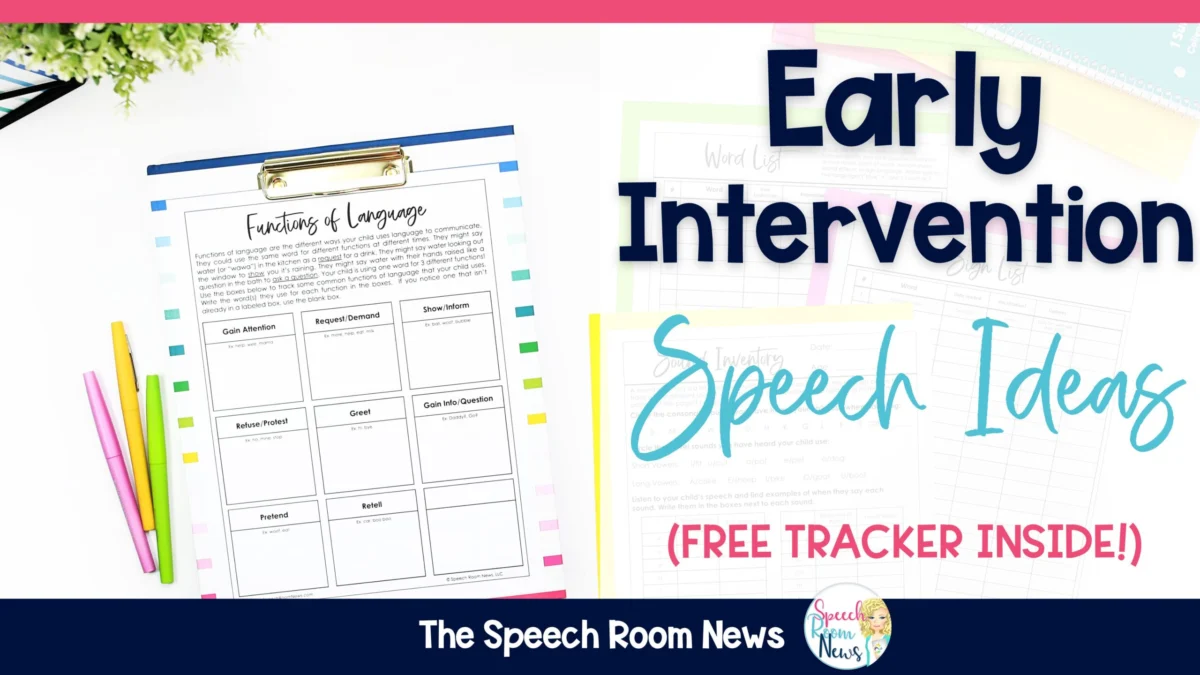
The early years of a child’s life represent a period of remarkable growth and development, particularly in the realm of communication. Within this critical window, the power of early intervention speech therapy emerges as an indispensable tool, profoundly shaping a child’s trajectory in language acquisition, social interaction, and cognitive development. For parents navigating the complexities of their child’s early speech, and for speech-language pathologists (SLPs) dedicated to fostering communication, understanding the foundational principles and practical applications of early intervention is not merely beneficial—it is essential. This comprehensive examination delves into the crucial role of timely support, offers insights into developmental milestones, and provides actionable strategies for caregivers.
Understanding the Landscape of Early Speech Development
Speech and language development is a complex, sequential process that unfolds rapidly from birth through early childhood. Typically, infants begin with pre-linguistic skills such as cooing, babbling, and gestures, which lay the groundwork for their first words. By 12 months, many children start to utter their first words, often simple nouns or exclamations. The vocabulary rapidly expands between 18 and 24 months, with children combining two words into simple phrases and demonstrating an understanding of basic commands. By the age of two, a child’s expressive vocabulary can range from 50 to 300 words, and they are typically combining words into short sentences.
However, this developmental path is not uniform for all children. While individual variances are common, certain milestones serve as important benchmarks. For instance, a lack of babbling by 9 months, no clear words by 16 months, or an inability to combine two words by 24 months often signal potential areas of concern. These indicators are not definitive diagnoses but rather prompts for closer observation and, crucially, professional consultation. Experts in pediatric development emphasize that early identification of deviations from typical milestones is paramount, as it opens the door to timely support that can mitigate long-term challenges.
The Critical Imperative of Early Intervention
The significance of early intervention (EI) in speech and language development cannot be overstated. Research consistently demonstrates that the human brain exhibits remarkable plasticity during the early years, making it highly receptive to learning and intervention. This period, often referred to as a "critical window," allows for neurological pathways related to speech and language to be established or re-routed more effectively than at later stages. Delaying intervention can lead to a cascade of developmental issues, affecting not only communication skills but also social-emotional regulation, academic readiness, and overall quality of life.
According to the Centers for Disease Control and Prevention (CDC), approximately 1 in 12 (7.7%) U.S. children aged 3-17 years have had a disorder of voice, speech, language, or swallowing in the past 12 months. The American Speech-Language-Hearing Association (ASHA) further highlights that speech and language disorders are among the most common disabilities in young children. Studies comparing children who received early intervention versus those who did not consistently show that early intervention leads to significantly better outcomes, including improved language scores, enhanced social skills, and a reduced need for more intensive services later in life. The "wait and see" approach, once common, is now largely discredited by the scientific community due to the irrefutable evidence supporting prompt action.
Early intervention programs typically involve a multidisciplinary team, including speech-language pathologists, occupational therapists, physical therapists, and developmental psychologists, working collaboratively with families. The focus is on providing individualized support within the child’s natural environment, recognizing that parents and caregivers are primary facilitators of learning.
From Professional Insight to Personal Experience: The SLP Mom’s Perspective
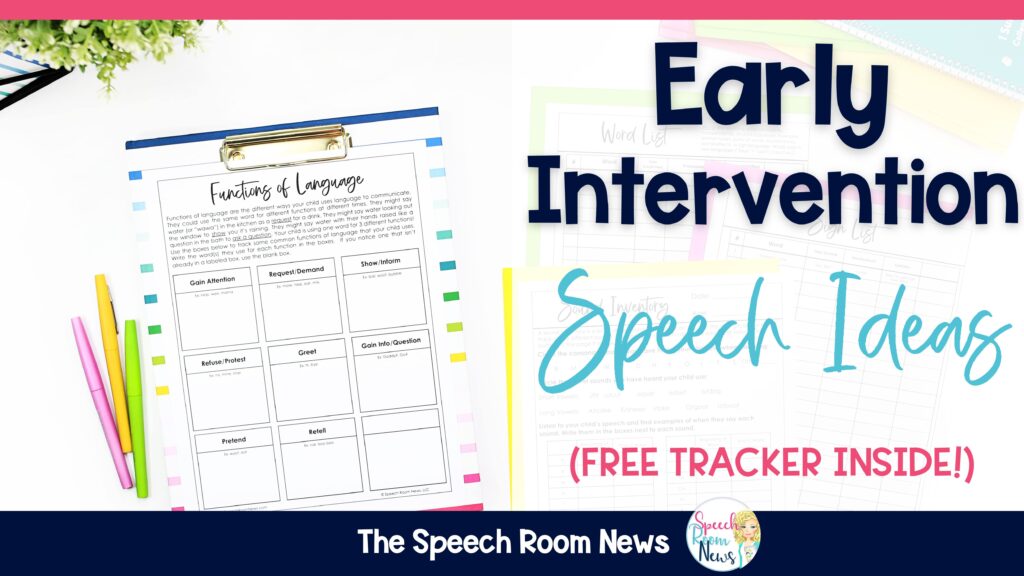
Even seasoned professionals in the field of speech-language pathology can find themselves navigating the emotional complexities of developmental delays when it involves their own children. The experience of a speech pathologist becoming a parent to a "late talker" offers a poignant illustration of the universal anxieties and challenges faced by families. Despite a deep understanding of developmental stages and intervention strategies, the personal journey can shift perspectives dramatically.
This dual role often transforms the theoretical knowledge into tangible, lived experience. What once might have been an academic understanding of "babbling" or "first words" becomes a deeply personal milestone anxiously awaited. When these milestones do not materialize as expected, the professional lens is replaced by the parental one, leading to a renewed appreciation for the raw data of a child’s progress. This unique perspective underscores the importance of objective tracking, even for those with expert knowledge. As one SLP-turned-parent noted, "Once I found myself on the other side of the table as an SLP mom of a late talker, I looked at documenting those first words through a totally different lens." This personal journey often fuels the creation of practical tools and resources, born from a desire to empower other parents facing similar situations.
The Power of Data: Tracking Progress in Early Speech Development
For both parents and therapists, diligently tracking a child’s speech sounds and words is a cornerstone of effective early intervention. This systematic data collection provides an objective record of a child’s progress, offering invaluable insights that subjective observation alone cannot. Without concrete data, the subtle yet significant changes in a child’s expressive language over time can be easily overlooked or misremembered.
Tracking begins with documenting early vocalizations, moving from simple cooing and babbling to identifiable sounds and sound combinations. Key elements to monitor include:

- Early Sounds: Which consonants and vowels is the child attempting? Are they consistent?
- Syllable Shapes: As development progresses, children typically move through various syllable structures. Tracking whether a child is producing consonant-vowel (CV) words like "mama," vowel-consonant (VC) words like "up," CVCV words like "dada," or consonant-vowel-consonant (CVC) words like "cat" provides a clear picture of phonological development.
- First Words: Documenting when specific words emerge, the context in which they are used, and their consistency.
- Word Approximations: Recognizing and noting attempts at words, even if not perfectly articulated, as these represent significant communicative intent.
This detailed data serves multiple critical functions. For parents, it provides a tangible record of their child’s growth, which can be immensely reassuring during periods of concern. It also equips them with concrete information to share with their child’s speech therapist during coaching sessions, allowing for more precise adjustments to intervention plans. For SLPs, tracking sheets are vital diagnostic and progress-monitoring tools, enabling them to identify patterns, pinpoint specific areas of difficulty, and tailor therapy strategies to the child’s evolving needs. Specialized tools, such as "First Words Trackers," are designed to simplify this process, providing structured pages for parents to record observations systematically. Families who engage in intentional tracking often express surprise at the actual number of sounds and words their child is producing, highlighting the value of a structured approach.
Identifying Late Talkers: When to Seek Professional Guidance
While every child develops at their own pace, recognizing the signs of a potential speech delay is crucial for timely intervention. A "late talker" is generally defined as a child aged 18-30 months who has a limited vocabulary for their age (e.g., fewer than 50 words by 24 months) and does not combine words, but who shows typical development in other areas such as understanding, play skills, social skills, and motor skills. However, a significant portion of late talkers do not "catch up" on their own and may require intervention.
Key indicators that warrant professional evaluation include:
- Lack of eye contact or joint attention by 9-12 months.
- No babbling by 9-12 months.
- Lack of gestures (e.g., pointing, waving bye-bye) by 12 months.
- No single words by 16 months.
- No two-word spontaneous phrases (not just imitating or repeating) by 24 months.
- Difficulty understanding simple instructions by 24 months.
- Difficulty imitating sounds or words by 24 months.
- Loss of any speech or language skills at any age.
If any of these red flags are present, medical professionals consistently advise parents to consult their pediatrician. The pediatrician can provide an initial assessment and, if necessary, refer the child for a comprehensive speech and language evaluation by a qualified SLP. Additionally, parents can often directly contact their local early intervention program (typically managed by the state or local school district) to inquire about eligibility for free or low-cost evaluation and services. These programs are designed to provide support for children from birth to three years of age, ensuring that interventions begin during the most impactful developmental window.
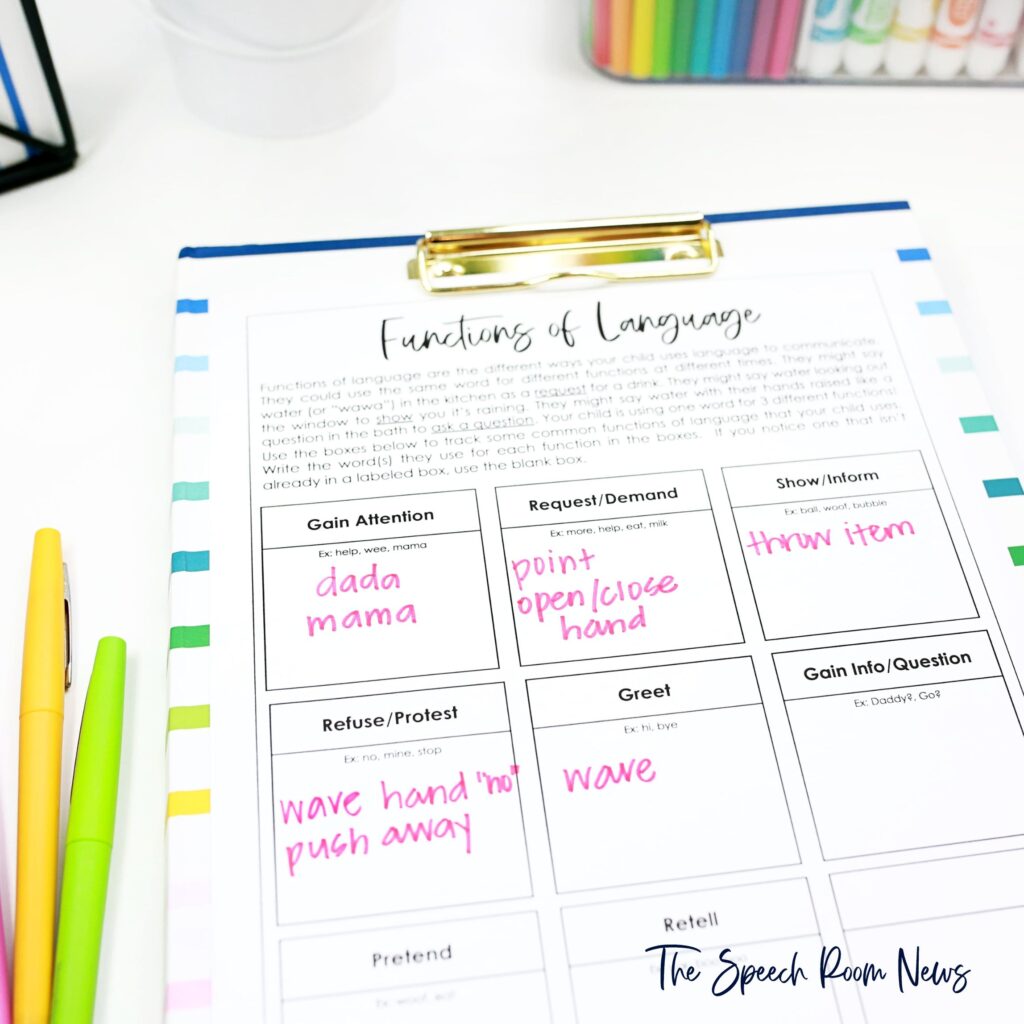
Integrating Therapy into Daily Life: Practical Activities for Parents
Effective early intervention extends beyond formal therapy sessions; it thrives within the everyday interactions and routines of a child’s life. By integrating speech and language strategies into daily activities, parents can create a language-rich environment that fosters consistent learning and generalization of skills. Daily routines are particularly effective because they offer predictable patterns, allowing for repeated exposure to specific vocabulary, social expectations, and actions. This repetitive exposure naturally builds language comprehension and expression.
Here are examples of how to transform routine moments into powerful learning opportunities:
1. Eating a Snack: A Communication Temptation
Snack time presents an ideal scenario for eliciting communication. Instead of a full meal, a small bowl of highly desired snacks can create a "communication temptation."
- Preparation: Pour the snack into a clear bowl. Model descriptive language: "Look, I’m pouring some [snack name] into the bowl. Yum! I love to eat [snack name]. You like to eat [snack name] too. Mmmm [snack name]."
- Engagement: Hold the snack slightly out of reach or offer only a small amount. Look expectantly at your child and wait for a response. Ask, "Do you want [snack name]?"
- Response & Reinforcement: If the child uses a word approximation (e.g., "cracker" for "cracker"), a gesture (pointing), or a sound, celebrate it enthusiastically. Respond immediately by giving them the snack. This reinforces the connection between communication and desired outcomes. If they don’t respond verbally, simply model the word again and give them a small piece, continuing to provide ample language models without pressure. The goal is imitation and spontaneous use over time.
2. Brushing Teeth: Building Language in the Mirror
Time spent in front of the mirror offers a unique opportunity for connection, self-awareness, and language building through social routines.

- Explain and Describe: Verbally describe every step of the process. "It’s time to brush your teeth. We brush and clean our teeth so they stay healthy. We want healthy teeth so we can eat all kinds of foods."
- Model and Involve: "Let’s get your green toothbrush. Can you find the toothpaste? Squeeze just a little bit out. Now what do we do? Yes! Let’s brush the front."
- Use Positional Words: Incorporate spatial concepts. "Now what? Yes—time to brush the back! You brushed your teeth. Now let mommy brush them too. I am brushing the front and the back. I go up and down and make sure I get all your teeth."
- Celebrate Completion: "We did it! Time to rinse our teeth and our brush so they stay clean."
- Interactive Play: Encourage imitation of facial expressions in the mirror (e.g., "open mouth wide," "smile," "stick out tongue"). Use sounds like "ahhh" for opening the mouth.
These activities emphasize the principles of modeling, imitation, joint attention, and expanding vocabulary within meaningful contexts. The contrast between a richly described routine ("It’s time to brush your teeth. We brush and clean our teeth so they stay healthy…") and a simple command ("Brush your teeth.") highlights the profound difference in language input a child receives. Creating these "language baths" throughout the day significantly accelerates language acquisition.
Broader Implications and Support Systems
The long-term benefits of robust early intervention extend far beyond improved communication skills. Children who receive timely and effective speech therapy are more likely to achieve academic success, develop stronger social-emotional competencies, and experience enhanced self-esteem. By addressing communication challenges early, the need for more intensive and costly interventions in later school years can be significantly reduced, yielding both individual and societal benefits.
Societally, robust early intervention programs reflect a commitment to public health and educational equity. Governments and healthcare systems play a vital role in funding and supporting these initiatives, ensuring accessibility for all families regardless of socioeconomic status. Parent advocacy groups, community organizations, and online platforms also form crucial support networks, offering resources, shared experiences, and encouragement for families navigating the challenges of speech delays. The collaborative effort between parents, therapists, educators, and policymakers is essential for fostering an environment where every child has the opportunity to unlock their full communicative potential. Ongoing research continues to refine intervention strategies, incorporating advancements in neuroscience and child development to make therapies even more targeted and effective.
In conclusion, the journey of a child’s speech development is a dynamic and individual one, yet the guiding light of early intervention remains constant. By understanding typical milestones, recognizing warning signs, diligently tracking progress, and transforming daily routines into intentional language-building opportunities, parents and caregivers become powerful agents in their child’s communicative growth. The critical window of early childhood offers an unparalleled opportunity to lay a strong foundation for language, ensuring that every child has the voice they need to connect with the world around them.
