

The landscape of pediatric speech and language therapy is continually evolving, with a growing emphasis on incorporating engaging, hands-on tools that can captivate young learners while effectively targeting critical developmental milestones. Among these innovative resources, magnetic tiles have garnered significant attention from speech-language pathologists (SLPs) and early childhood educators alike. These colorful, geometric shapes, known for their strong magnetic connections and inherent versatility, are proving to be far more than just a popular toy; they are a dynamic medium for addressing a wide array of speech and language goals in children aged one and up. This detailed exploration delves into ten key applications of magnetic tiles, highlighting their capacity to foster communication, cognitive skills, and social interaction within therapeutic settings.
The Evolving Landscape of Pediatric Therapy
Historically, speech therapy often relied on more didactic, drill-based methods, utilizing flashcards, worksheets, and direct instruction. While effective for certain aspects of language acquisition, these traditional approaches sometimes struggled to maintain the attention and motivation of young children, particularly those with diverse learning needs or short attention spans. In recent decades, a paradigm shift has occurred, moving towards play-based, child-led, and multisensory interventions. This evolution is underpinned by extensive research in child development, which consistently demonstrates that children learn most effectively when actively engaged, exploring, and interacting with their environment. Play, being the natural language of childhood, provides a rich, low-pressure context for learning and skill development, making therapeutic goals more attainable and enjoyable. The integration of open-ended toys like magnetic tiles aligns perfectly with this contemporary therapeutic philosophy, offering endless possibilities for creative expression and targeted skill practice.
Magnetic Tiles: A Foundation for Holistic Development
Magnetic tiles, often recognized by parents as a staple in children’s playrooms, possess inherent qualities that make them exceptionally well-suited for therapeutic applications. Their vibrant colors, varied shapes (squares, triangles, pentagons, etc.), and satisfying magnetic click offer sensory input that can be highly motivating. The ease with which they connect and disconnect allows for rapid construction and deconstruction, accommodating diverse skill levels and attention spans. Furthermore, their durability ensures longevity, making them a worthwhile investment for both home and clinical environments. While the initial cost of quality magnetic tile sets can be a consideration, their extensive utility across multiple age groups and developmental stages offers significant long-term value, often outweighing the upfront expense. Clinicians frequently seek grants or incorporate them into wish lists, recognizing their profound impact on therapy outcomes.
Ten Pillars of Speech and Language Development with Magnetic Tiles
-
Fostering Social-Cooperative Communication
Magnetic tiles serve as an exceptional catalyst for promoting social interaction and cooperative play among students. Group activities involving building structures, such as a collaborative "castle" or a "city," naturally necessitate back-and-forth communication. Children are encouraged to discuss their ideas, negotiate roles ("You build the base, I’ll add the roof"), share materials, and provide instructions or requests ("Can I have a blue square?"). This process inherently cultivates crucial social skills such including turn-taking, active listening, problem-solving in a group context, and conflict resolution. By engaging in shared imaginative play, students practice initiating conversations, responding appropriately, and maintaining reciprocal dialogue, all while enhancing their expressive and receptive language skills within a meaningful and motivating context. -
Mastering Spatial Relationships: The Power of Prepositions
Abstract concepts like prepositions (e.g., on, under, beside, between, in front of, behind) can be challenging for young children to grasp through verbal instruction alone. Magnetic tiles provide a tangible and interactive medium for teaching these spatial relationships. An SLP can instruct a child to place a tile "on" another tile, "under" a bridge built from tiles, or "between" two larger structures. The physical manipulation of the tiles allows students to concretely visualize and experience the meaning of each preposition, reinforcing the concept through kinesthetic learning. This hands-on approach helps bridge the gap between abstract linguistic concepts and their real-world applications, leading to a deeper and more robust understanding of spatial language, which is fundamental for following directions and describing environments.
-
Sharpening Cognitive Skills: Sorting by Shape and Color
Categorization and differentiation are foundational cognitive skills that are directly linked to language development. Magnetic tiles, with their distinct shapes and vibrant colors, offer an engaging platform for practicing sorting. Students can be prompted to group all the "red" tiles together, separate the "squares" from the "triangles," or even sort by a combination of attributes, such as "big blue squares." This activity not only enhances their vocabulary related to colors and shapes but also strengthens their ability to identify similarities and differences, follow multi-step instructions, and develop early classification skills. Furthermore, therapists can extend this by having students build "sorting bins" with the tiles themselves, adding another layer of engagement and purpose to the categorization task. -
Articulating Sounds with Purpose
Integrating targeted speech sounds into magnetic tile activities transforms articulation practice from a repetitive drill into an exciting, purposeful game. For instance, if the target sound is /k/, an SLP might encourage a child to build a "castle" or a "kitchen." As the child places each tile, they can be prompted to name the object they are creating or use words containing the /k/ sound, such as "corner," "connect," "color," or "block." The act of building provides a natural context for repeated sound production, often reducing the self-consciousness associated with traditional articulation drills. This functional context helps generalize newly acquired sounds into spontaneous speech, making the practice more meaningful and effective. -
Navigating Irregular Verbs Through Narrative Play
Irregular verbs (e.g., go/went, see/saw, build/built, fall/fell) pose a significant challenge for language learners due to their unpredictable past tense forms. Magnetic tiles offer a dynamic way to practice these verbs through storytelling and sequence building. Children can create a scene, such as a tower that "fell," a car that "went" down a ramp, or a character that "built" a house. As they manipulate the tiles, they are encouraged to narrate the actions using the correct irregular verb forms. This narrative approach embeds the target verbs in a meaningful context, aiding memorization and promoting spontaneous use. The visual and tactile nature of the activity provides scaffolding for understanding the sequence of events and the associated verb tense.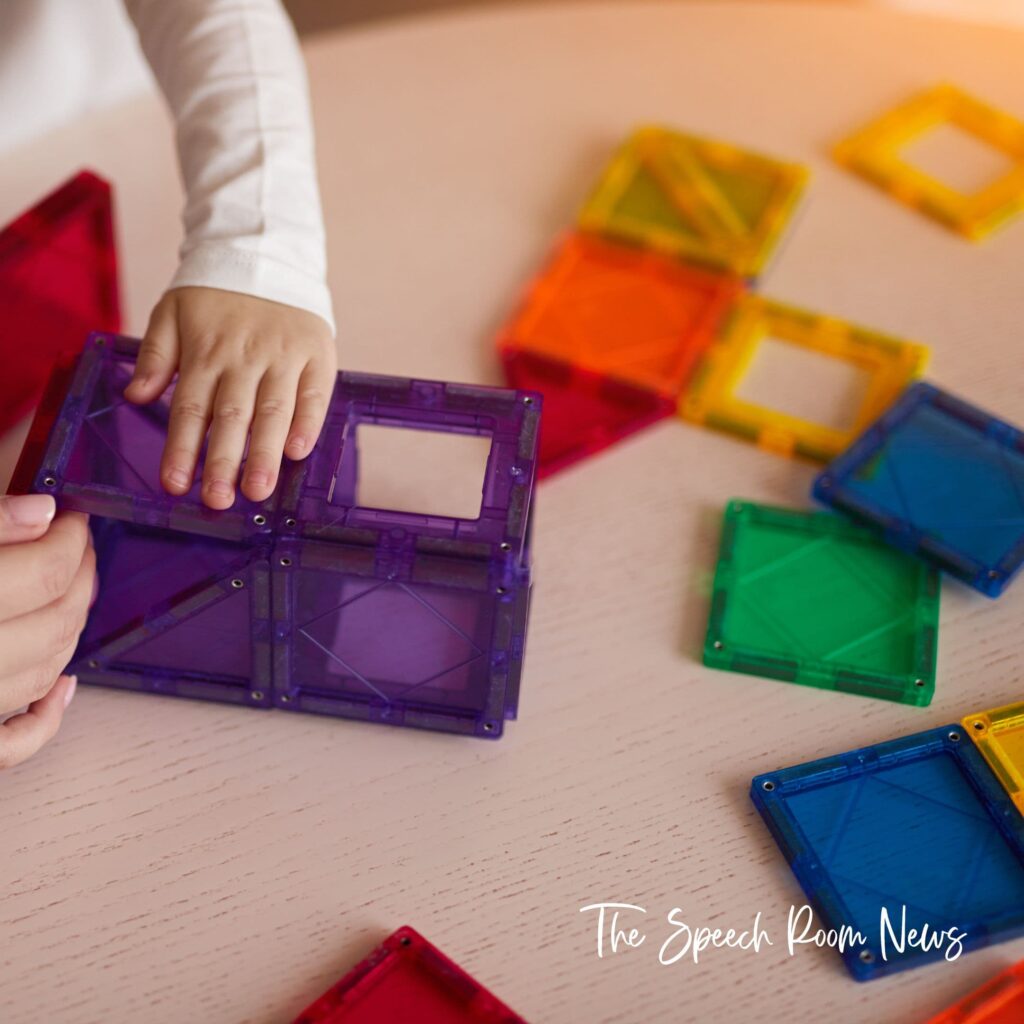
-
Building Foundational Executive Functioning Skills
Executive functions are a set of cognitive skills that control and regulate other abilities and behaviors, crucial for goal-directed action. Tasks involving magnetic tiles inherently engage these skills. Children must plan their structures, considering which shapes and colors to use, how to connect them, and what the final outcome will be. Setting parameters, such as a time limit or a specific design challenge, further hones planning, organization, and problem-solving abilities. Children learn to sequence steps, monitor their progress, and adapt their strategies if a structure isn’t working as intended. This process also fosters working memory, attention, and inhibitory control as they focus on the task and resist distractions, all while verbalizing their thought processes. -
Demystifying Regular Plurals
Understanding and using regular plurals (e.g., one car, two cars; one block, many blocks) is a fundamental aspect of grammatical development. Magnetic tiles offer a clear visual representation of quantity that aids in this learning process. An SLP can present one square tile and then add several more, prompting the child to say "one square" and then "many squares." They can count "two triangles," "three rectangles," and so on. As children build structures, they can describe the quantity of each shape used, such as "I used five squares" or "We need more triangles." This direct visual feedback, combined with verbal practice, reinforces the grammatical rule for forming regular plurals and helps children generalize this concept into their descriptive language. -
Unlocking Comprehension with WH Questions
WH questions (who, what, where, when, why) are essential for gathering information, understanding narratives, and engaging in effective communication. Magnetic tiles provide a rich, dynamic context for practicing both answering and asking these questions. As children build, an SLP can ask, "Where does this piece go?" "Who is building the tallest tower?" "What are we making next?" or "Why did that tower fall?" The dynamic nature of the play allows for spontaneous questions and answers, encouraging critical thinking and problem-solving. Children can also be prompted to ask their own WH questions about the creations, thereby strengthening their expressive language and inquiry skills.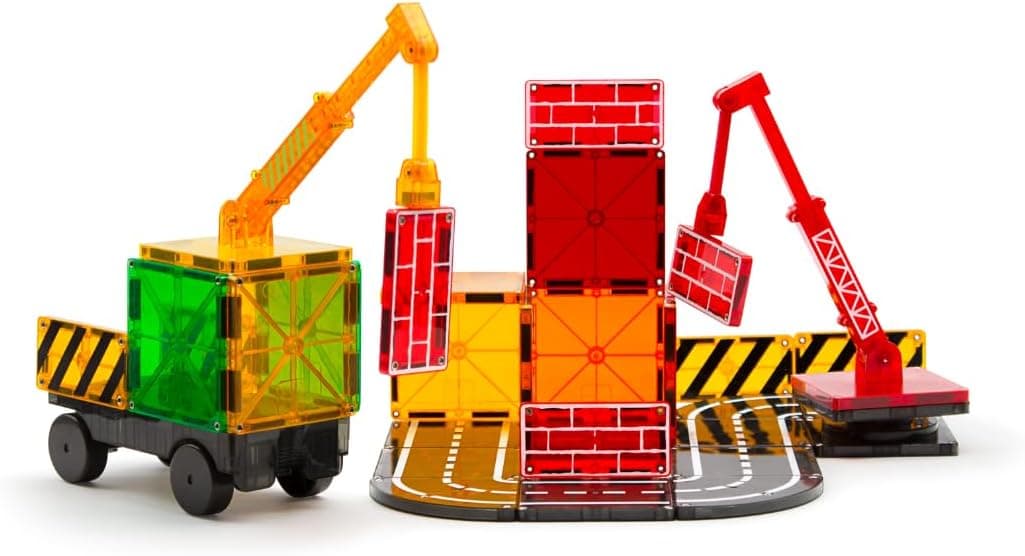
-
Cultivating Self-Referential Language: The Pronoun "I"
Many young children, particularly those with language delays, struggle with the correct use of self-referential pronouns like "I." Magnetic tile activities offer a natural and repetitive context for practicing "I" statements. As a child selects and places each tile, they can be prompted to say, "I have a green triangle," "I am building a house," or "I want more tiles." The direct correlation between the child’s action and the first-person pronoun reinforces its correct usage. This highly personalized interaction makes the abstract concept of "self" in language more concrete and accessible, aiding in the development of independent and accurate self-expression. -
Empowering Communication: Integrating AAC Core Words
For children who use Augmentative and Alternative Communication (AAC) systems, magnetic tiles can be a powerful tool for reinforcing core words. Core words (e.g., more, on, off, up, down, go, stop, want, help) are high-frequency words that form the foundation of communication across various contexts. During magnetic tile play, an SLP can model the use of these core words on an AAC device or communication board. For example, when a child wants more tiles, they can be prompted to select "more" on their device. When placing a tile, they can indicate "on" or "up." When a structure collapses, they might use "down" or "fall." This integration allows for practical, meaningful exposure to core words within an engaging activity, facilitating their generalization into other communicative settings and fostering greater independence in expressing needs and ideas.
Beyond the Therapy Room: Broader Implications
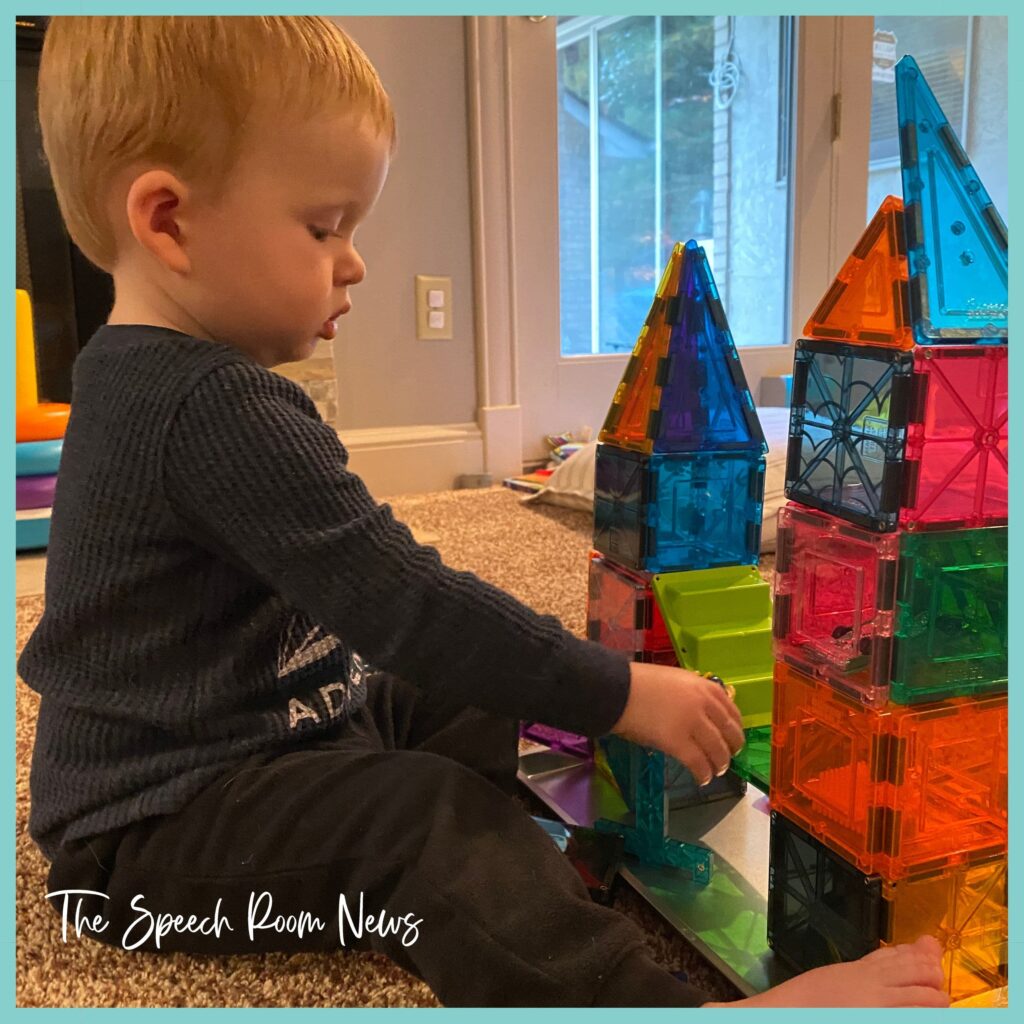
The utility of magnetic tiles extends beyond the direct therapeutic session. Their appeal to a wide age range and their open-ended nature make them an ideal toy for parents to use at home. When therapists recommend such versatile tools, they bridge the gap between clinic and home, encouraging continuity of learning and practice in natural environments. This parental engagement is crucial for reinforcing therapeutic gains and fostering a language-rich home environment. Furthermore, magnetic tiles are inherently inclusive, offering tactile engagement that can benefit children with various developmental profiles, including those on the autism spectrum, children with fine motor challenges, or those with attention-deficit/hyperactivity disorder (ADHD), by providing a structured yet flexible play experience.
The Investment in Development
While the initial investment in a quality set of magnetic tiles may seem substantial, their multifaceted benefits in speech and language development position them as a cost-effective and enduring therapeutic resource. Unlike single-purpose toys or materials, magnetic tiles can be adapted to target numerous goals across different developmental stages, ensuring long-term value. Their durability means they withstand rigorous use in busy therapy rooms and homes, providing years of engagement. The shift towards play-based, child-centered interventions underscores the importance of such tools, making magnetic tiles not just a toy, but a vital component in the modern speech-language pathologist’s toolkit. Their capacity to make learning enjoyable and effective solidifies their place as an innovative staple in pediatric therapy.
Conclusion
The integration of magnetic tiles into speech and language therapy represents a tangible example of how simple, engaging playthings can be transformed into powerful therapeutic instruments. By leveraging their inherent versatility and appeal, speech-language pathologists can create dynamic, multisensory learning environments that effectively address a broad spectrum of communication goals, from foundational articulation and grammar to complex social and executive functioning skills. As the field continues to prioritize child-centered, play-based interventions, magnetic tiles stand out as a testament to the profound impact that imaginative play can have on fostering robust speech and language development in young children.
