

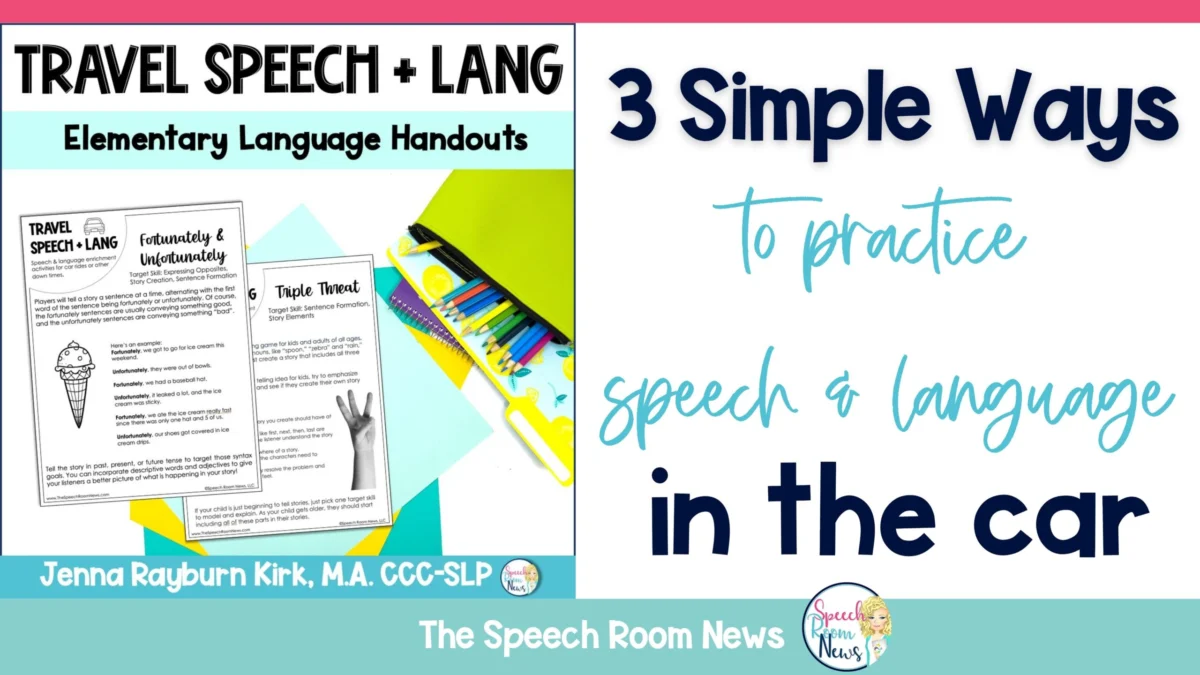
The modern family often navigates a demanding schedule, making dedicated time for children’s developmental activities a significant challenge. However, a growing body of evidence and expert consensus highlights the untapped potential within routine daily activities, particularly the ubiquitous car ride, for fostering crucial speech and language skills. This approach shifts the paradigm from structured therapy sessions alone to integrating intentional practice into the fabric of everyday life, offering a seamless and often more engaging learning experience for children.
The Strategic Advantage of the Vehicular Classroom
For parents and Speech-Language Pathologists (SLPs) alike, the car environment presents a uniquely advantageous setting for language development. Unlike the home, which is often replete with visual and auditory distractions, the confined space of a vehicle naturally minimizes external stimuli. This focused environment enhances a child’s attention and receptivity to verbal interaction. Furthermore, the inherent structure of a commute, often involving predictable routes and durations, provides a consistent, scheduled opportunity for practice that might otherwise be overlooked in a busy day. This consistent exposure is vital for skill acquisition and generalization.
Beyond the practical benefits, car conversations foster a natural, back-and-forth rhythm of communication. This reciprocal exchange is fundamental to developing conversational turn-taking, active listening, and responsive dialogue. As children engage with their surroundings, they are exposed to a rich tapestry of vocabulary related to road signs, passing scenery, and social observations, providing an organic context for semantic expansion. This holistic approach not only maximizes valuable time but also transforms potentially mundane journeys into dynamic, interactive learning adventures, effectively combating "boredom" and cultivating a positive association with language practice.
The Imperative of Early Language Development and Parental Involvement
Early childhood is a critical window for speech and language acquisition, laying the foundation for literacy, academic achievement, and social-emotional competence. Data from the National Institute on Deafness and Other Communication Disorders (NIDCD) indicates that approximately 8 to 9 percent of young children have a speech sound disorder. Early intervention is paramount, and while professional therapy is often necessary, consistent reinforcement at home significantly amplifies its effectiveness.
Speech-Language Pathologists frequently emphasize the concept of "carryover," where skills learned in a clinical setting are practiced and generalized in natural environments. Parents are unequivocally the child’s primary language facilitators, and their active involvement in daily practice is a cornerstone of successful intervention. Recognizing the time constraints faced by many families, SLPs are increasingly advocating for practical, integrated strategies that empower parents to support their child’s speech and language goals without adding undue burden to their already packed schedules. Utilizing the car ride exemplifies such a strategy, transforming otherwise passive travel time into an active, productive learning opportunity.
Structured Play: Three Foundational Car Activities for Language Enrichment
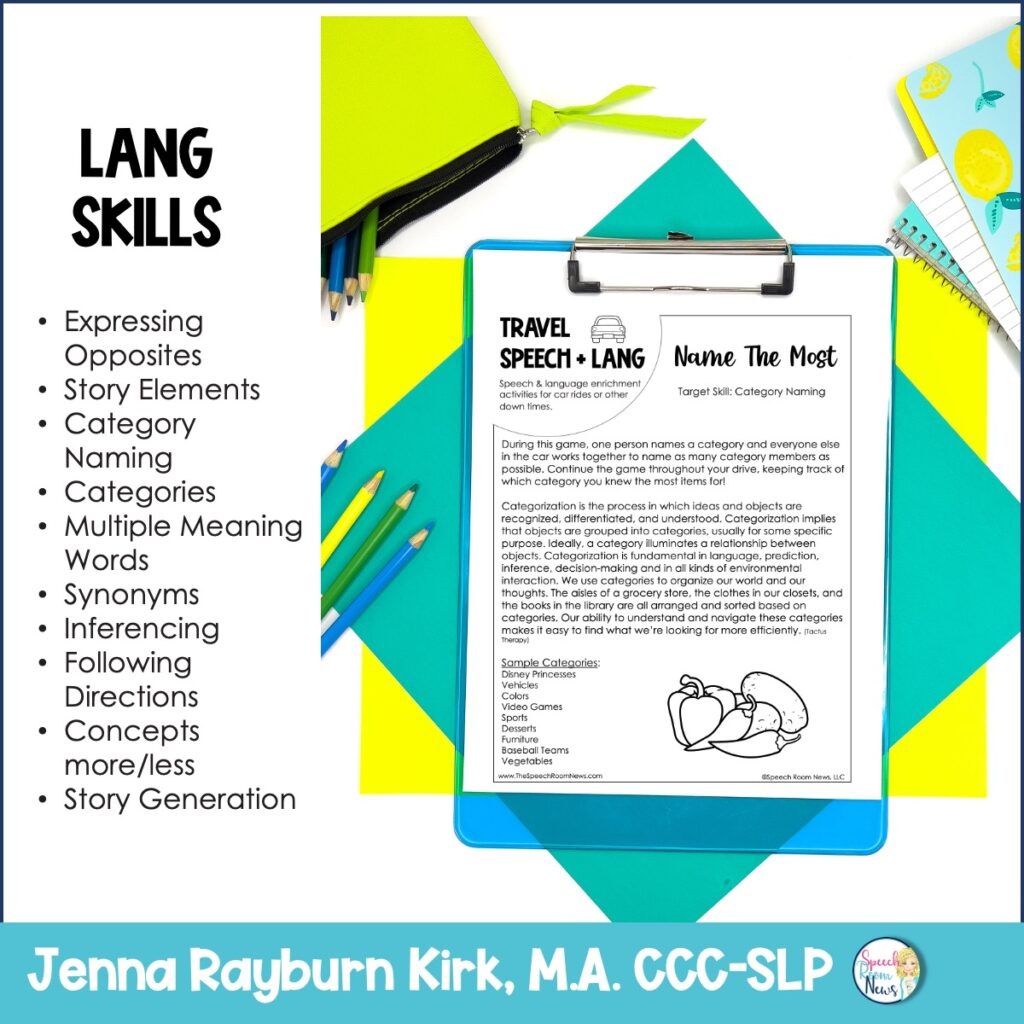
To translate these principles into actionable strategies, experts have developed simple yet effective games designed to target specific speech and language objectives within the car. These activities are particularly beneficial for children with speech or language delays, offering subtle yet impactful ways to embed therapeutic practice into daily routines.
1. The Grocery Game: Cultivating Question Formation and Conceptual Understanding
Objective: To enhance question formation skills, expand vocabulary, and develop understanding of semantic categories and functions.
The ability to form grammatically correct and semantically appropriate questions is a fundamental linguistic milestone. It enables children to seek information, clarify understanding, and engage actively in conversations. The Grocery Game leverages this by having one player (often the parent initially) silently choose an item found in a grocery store. Other participants then ask questions to deduce the item.
Grammar Target Skill: Question formation (e.g., "Is it in the produce section?", "Does it start with a ‘B’?", "Can you eat it for breakfast?"). This activity specifically targets the correct word order for interrogative sentences and encourages the use of various question types (yes/no, ‘wh’-questions like "What color is it?", "Where do you find it?").
Expanded Language Skills Targeted:
- Functions: "Does it melt?", "Do you drink it?", "Is it used for cleaning?" — This probes a child’s understanding of an object’s purpose and actions associated with it.
- Actions: "Do you bite it?", "Do you peel it?", "Can you spread it?" — Encourages verb usage and understanding of processes.
- Categories: "Is it a fruit?", "Is it a type of dairy product?", "Is it something from the bakery?" — Develops classification skills, essential for organizing vocabulary and understanding relationships between words.
- Associates: "Is it something that goes on bread?", "Does it go with cereal?", "Do you use a spoon to eat it?" — Fosters understanding of contextual relationships and common pairings, expanding semantic networks.
Parental Facilitation: Parents can model diverse question structures, provide cues if a child struggles, and expand on the child’s responses (e.g., if a child asks, "Eat?" for "Does it melt?", the parent can rephrase: "That’s a good question! You’re asking about what you do with it. Does it melt?"). This scaffolding helps solidify learning without making the activity feel like a formal lesson. Studies have shown that parental modeling and expansion of utterances significantly contribute to a child’s language growth.
2. Red Light Race: Articulation Practice through Auditory Bombardment
Objective: To improve articulation of target speech sounds through repeated exposure and production within a fun, timed context.
Articulation disorders, where children have difficulty producing specific speech sounds, can impact intelligibility and communication confidence. Red Light Race ingeniously integrates articulation practice into brief, natural pauses during a commute. When the car stops at a red light, players take turns naming as many items as possible that contain a pre-selected target sound (e.g., /s/, /r/, /th/) within a chosen category.
Therapeutic Mechanism: The core principle at play here is auditory bombardment, a clinically recognized technique where the child is repeatedly exposed to the target sound produced correctly by an adult. This heightened auditory awareness helps the child internalize the correct production. The parent’s role in modeling the target sound consistently is crucial.
Example Categories (with varying target sounds):
- For /s/ sound:
- Animals: snake, lions, horse, seal, octopus
- Foods: soup, salad, peas, justice (juice), sausage
- Clothing: socks, dress, shirt, pants
- Things outside: sun, sky, trees, grass, house
- For /r/ sound:
- Animals: rabbit, bear, tiger, frog, rhinoceros
- Foods: rice, carrot, bread, strawberry, grapes
- Colors: red, green, brown, orange, gray
- Vehicles: car, truck, train, airplane, motorcycle
- For /sh/ sound:
- Animals: fish, sheep, shark
- Foods: dish, shrimp, push (puree), shake
- Clothing: shirt, shoes, shorts
- Things in a house: washer, brush, shower
Adaptation: This game is highly adaptable. For younger children or those with more significant delays, the parent can provide more examples and accept approximations. For older children, the challenge can be increased by requiring more words per light or introducing more complex categories. The playful, competitive element (counting items) adds motivation without creating undue pressure.
3. Triple Threat: Fostering Sentence Formation and Narrative Skills
Objective: To develop complex sentence structures, enhance narrative coherence, and stimulate imaginative thinking.
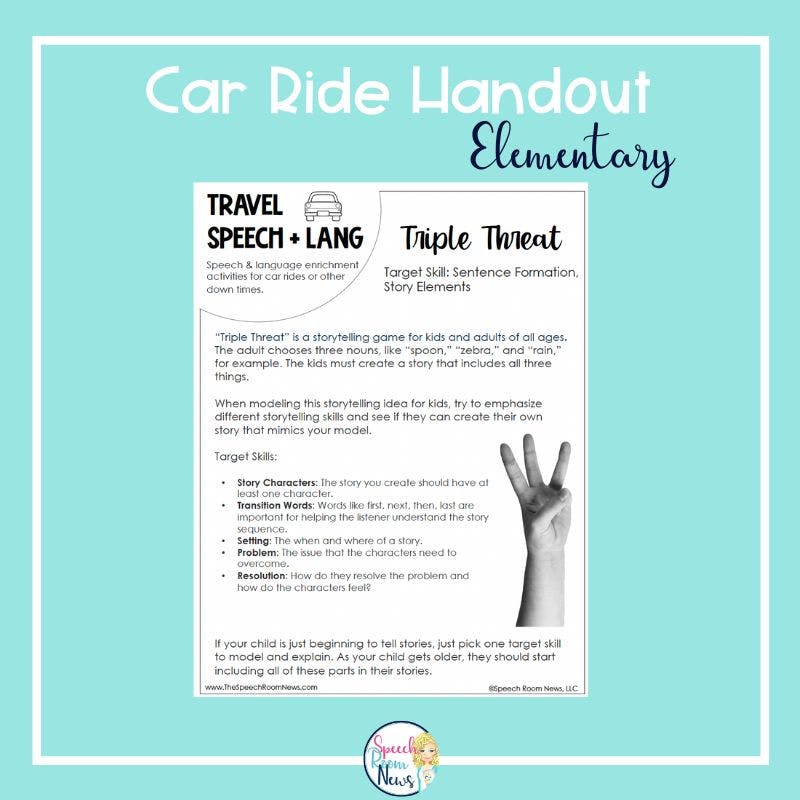
Narrative skills—the ability to tell a coherent story—are critical for academic success, social interaction, and cognitive development. They involve sequencing events, understanding cause and effect, and using descriptive language. Triple Threat challenges children to create a story using three seemingly unrelated nouns provided by the adult. For instance, the adult might say "dog, milk, and bike."
Skills Targeted:
- Sentence Formation: Children must construct grammatically correct sentences to weave the nouns into a narrative. This encourages the use of various sentence structures (simple, compound, complex).
- Story Grammar: As they construct a story, children naturally begin to incorporate elements of story grammar: characters, setting, initiating event, rising action, climax, falling action, and resolution.
- Sequencing: The activity requires logical ordering of events, a key component of narrative development and understanding temporal relationships.
- Vocabulary Expansion: Children are encouraged to use descriptive words (adjectives, adverbs) to enrich their stories and connect the disparate nouns.
- Descriptive Language: "The fluffy dog eagerly drank the cold milk before racing after the shiny red bike."
- Cause and Effect: "The dog drank too much milk, so he couldn’t pedal the bike very fast."
- Problem-Solving and Creativity: The challenge of connecting three unrelated items sparks creative thinking and problem-solving through narrative construction.
Parental Support: Parents can guide the child by asking "wh-" questions (who, what, where, when, why, how) to prompt further detail, model expanded sentences, or even create a collaborative story where each person adds a sentence. The emphasis is on imaginative fun, reducing pressure and encouraging spontaneous language production.
Broader Impact and Implications
The integration of speech and language practice into daily car rides offers a multifaceted approach to developmental support. For parents, it provides a practical, guilt-free method to contribute significantly to their child’s progress without requiring additional time commitments. This can alleviate some of the stress associated with therapy adherence and transform mundane commutes into cherished bonding moments.
From a developmental perspective, consistent, low-pressure practice in natural environments enhances generalization of skills, making the transition from clinical settings to everyday communication more fluid. This sustained exposure reinforces learning, builds confidence, and fosters a positive attitude towards communication. Long-term implications extend beyond speech clarity and vocabulary, impacting literacy development, problem-solving abilities, and overall academic readiness. Children who are strong communicators are better equipped to navigate social situations, express their needs, and engage effectively with their world.
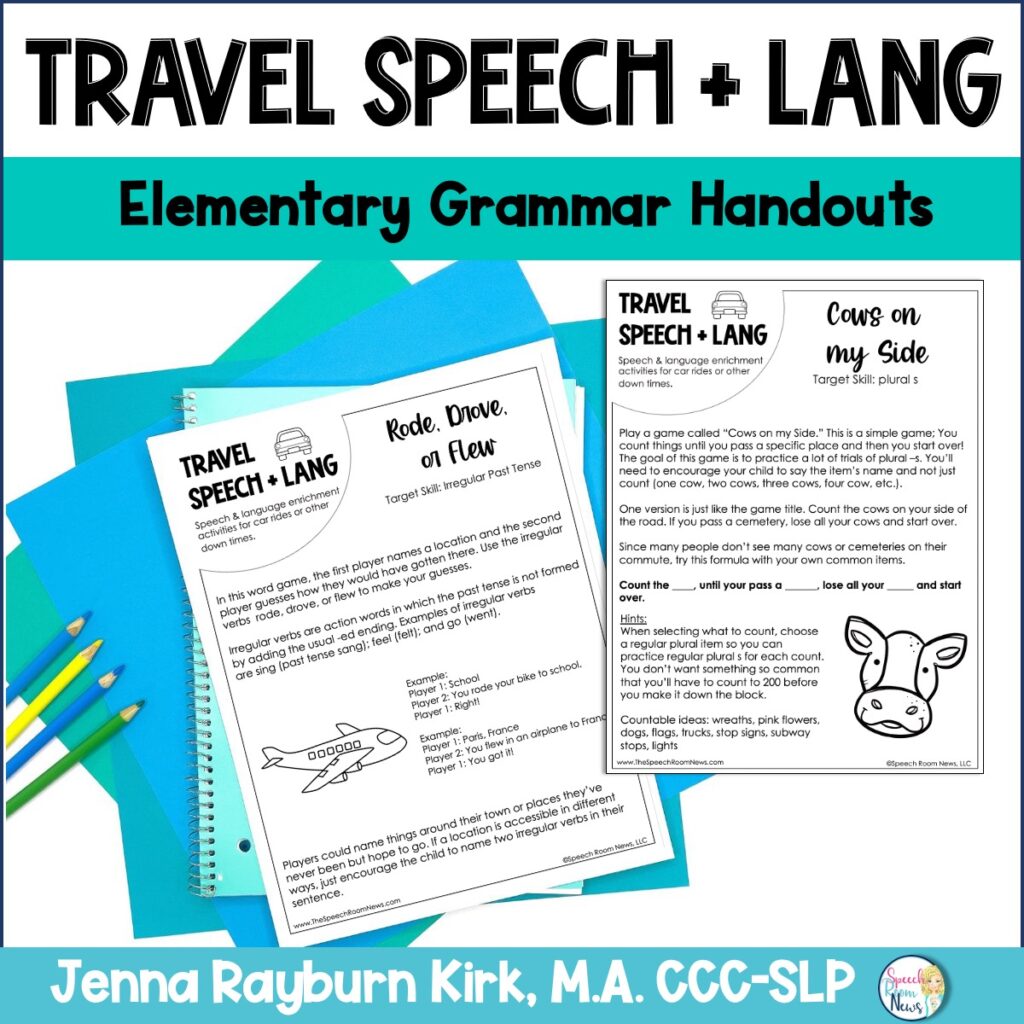
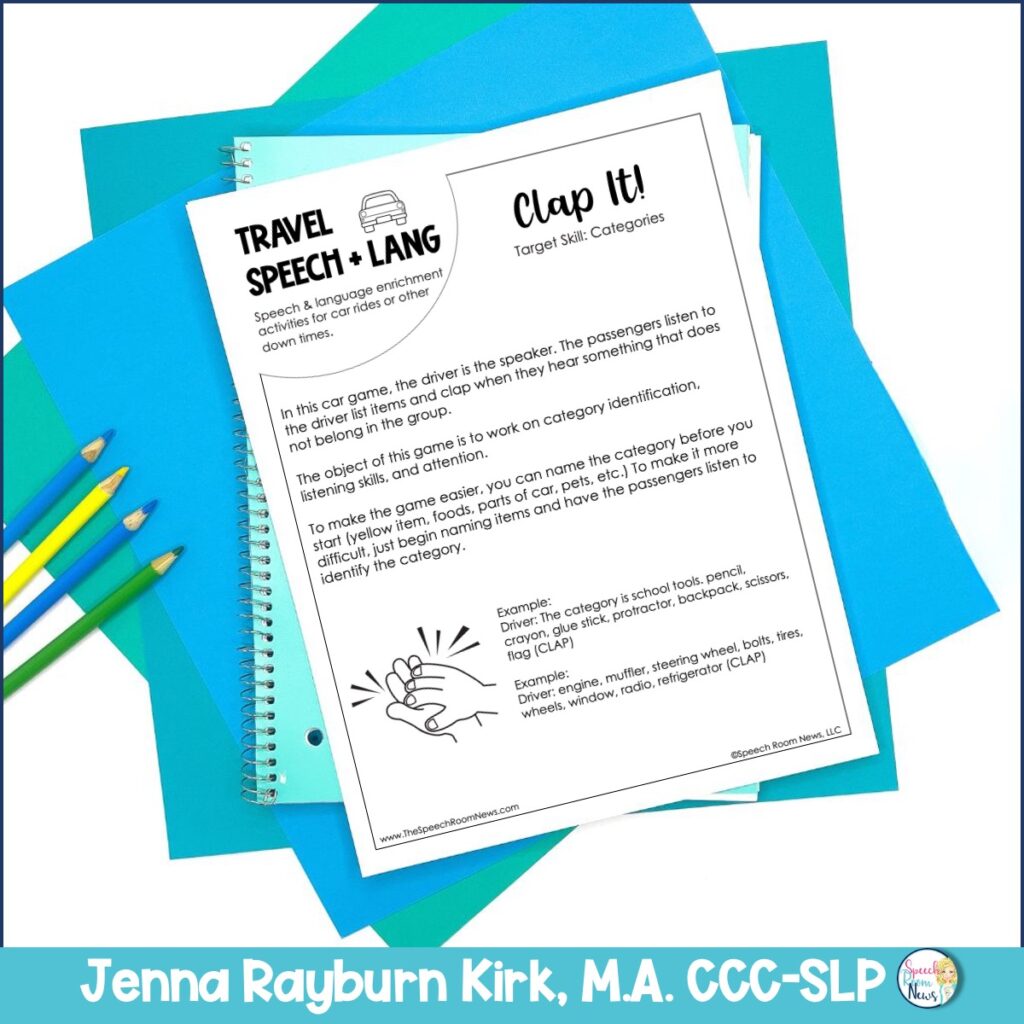
The "Travel Speech and Language Bundle," mentioned in the original context, serves as an exemplary resource for parents and SLPs seeking structured guidance for these activities. Comprising 30 parent handouts, it offers detailed explanations, practical examples, and customizable strategies for a wide array of speech and language goals. Such resources are invaluable in empowering families to become active partners in their child’s developmental journey, bridging the gap between clinical intervention and home-based practice.
As educational and therapeutic approaches increasingly emphasize holistic, integrated learning, the car ride emerges as a powerful, underutilized space for fostering essential communication skills. By embracing these simple, engaging strategies, families can transform ordinary journeys into extraordinary opportunities for growth, ensuring that every mile contributes to a child’s linguistic mastery and overall developmental success.
