

The Great Acceleration: Tracking the AI Adoption Curve
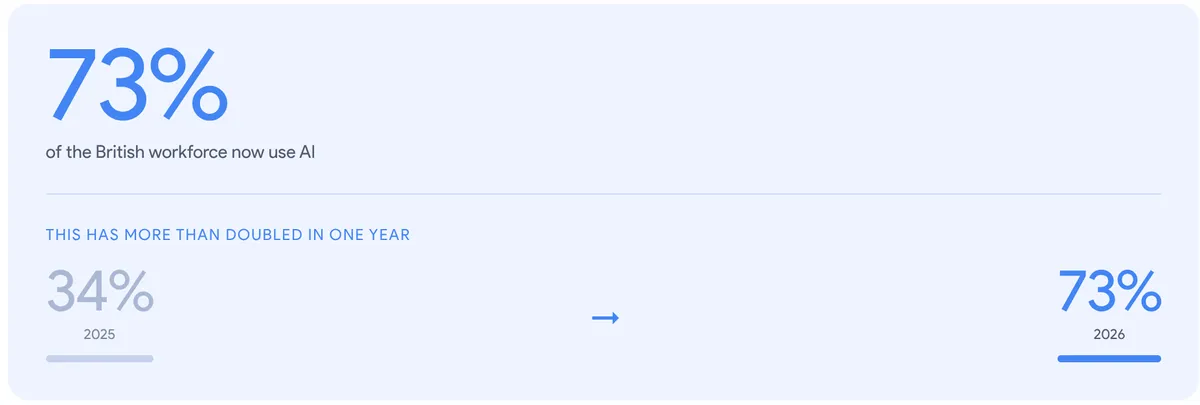
The transition from 2025 to 2026 marks what economists are calling the "Great Acceleration" of AI in the British Isles. The doubling of adoption rates suggests that AI has moved beyond the experimental phase into the mainstream operational fabric of UK businesses. Yet, the Public First research clarifies that "usage" is not a monolith. The workforce has been segmented into four distinct stages of proficiency, each with varying impacts on individual and national productivity.

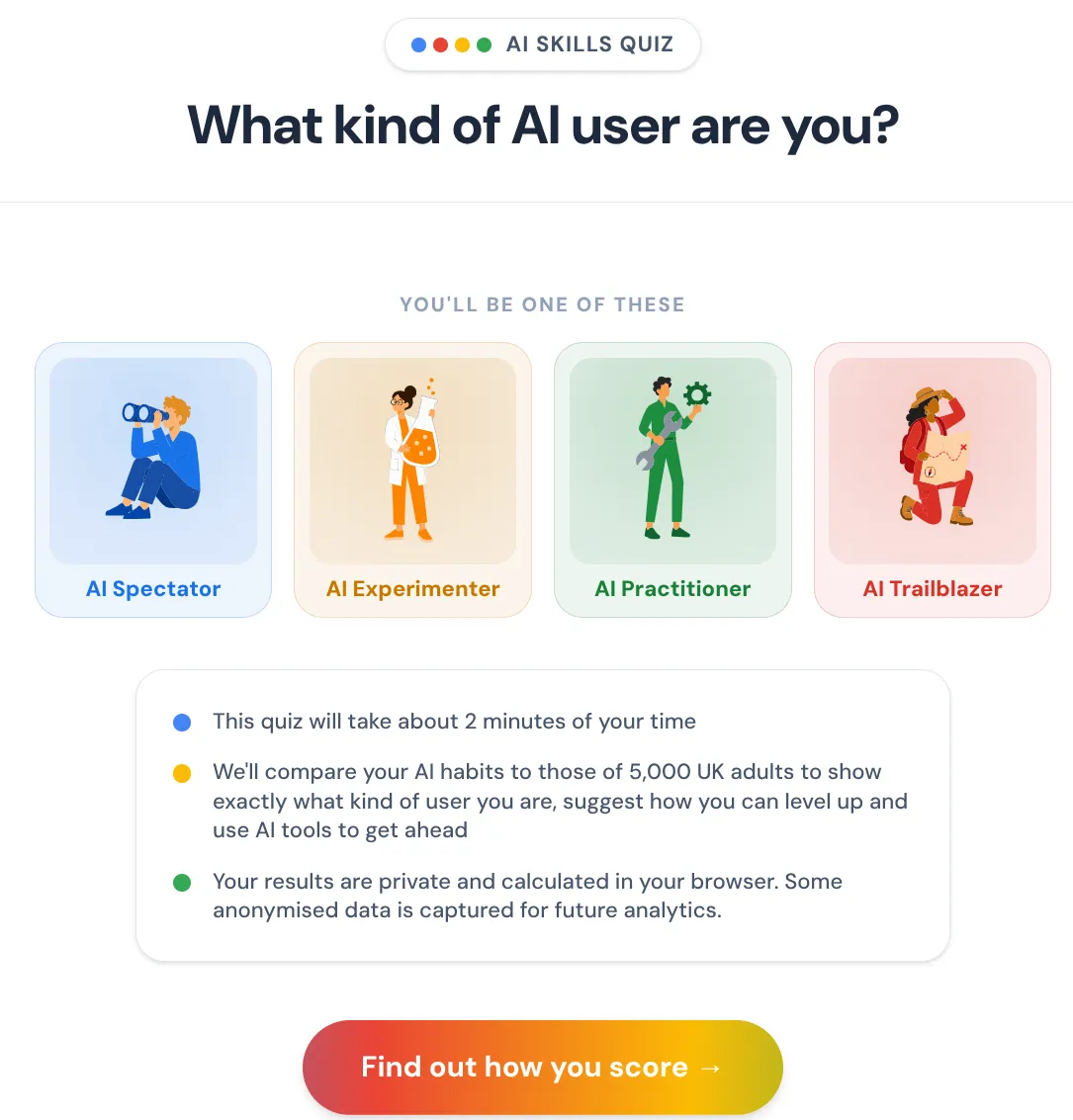
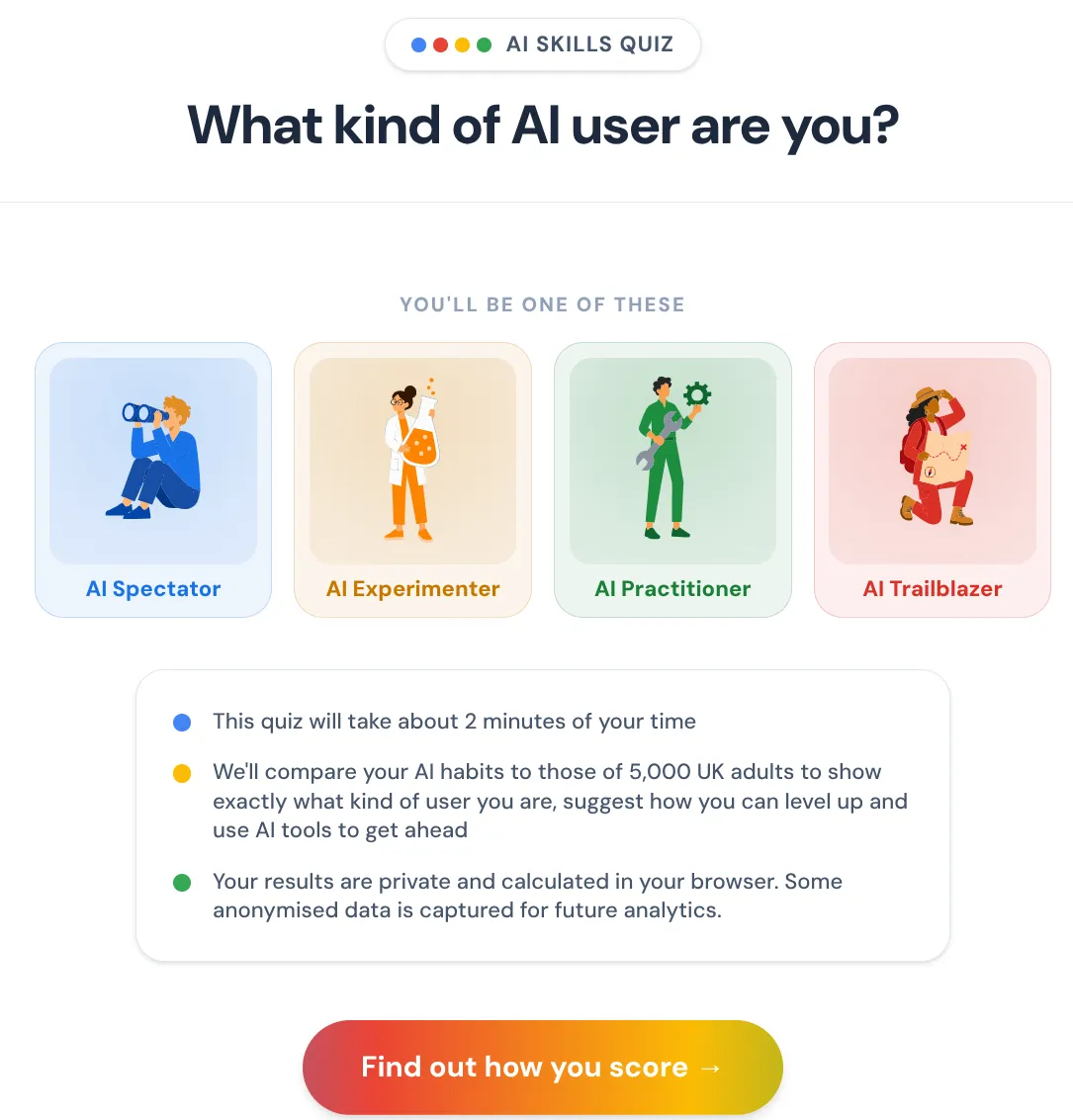
At the base of the pyramid are the "AI Spectators," who comprise 10% of the workforce. These individuals do not currently integrate AI into their daily professional lives, often due to a lack of access, rigid organizational structures, or personal skepticism. Above them are the "AI Experimenters" (38%), the largest single group. These workers use AI sporadically for low-stakes tasks, such as drafting basic emails or asking general information queries. While they are aware of the technology, they have yet to integrate it into their core workflows.
The "AI Practitioners" (37%) represent the engine room of current adoption. These individuals use AI regularly for research, drafting complex documents, and problem-solving. However, it is the final 15%—the "AI Trailblazers"—who are redefining the benchmark of modern work. These users employ AI for creative automation, complex data synthesis, and the deployment of autonomous agents to handle repetitive administrative cycles.

The Trailblazer Advantage: A New Metric for Career Success
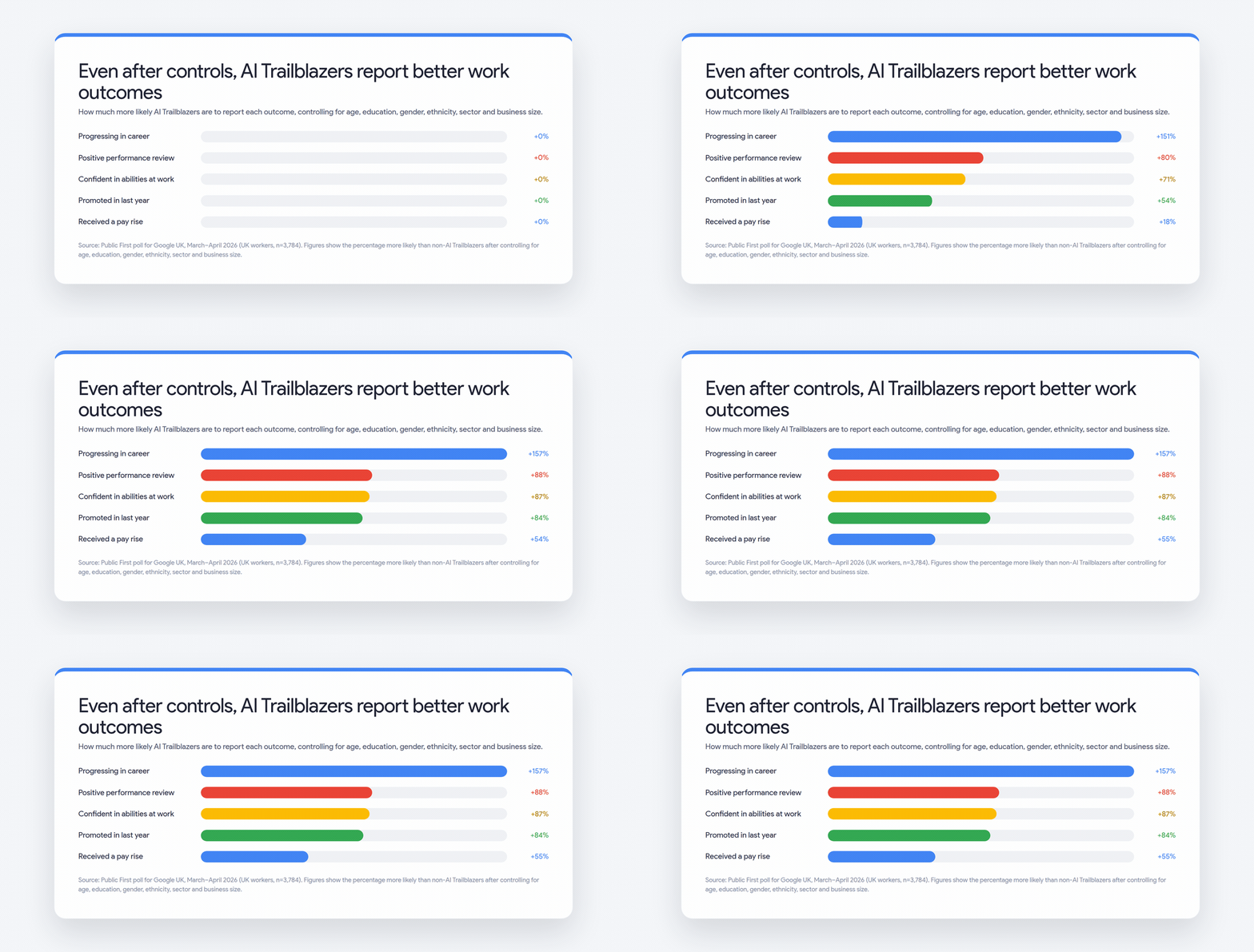
The disparity in outcomes between Trailblazers and other segments is stark. The study found that even after controlling for variables such as age, sector, gender, ethnicity, and education level, deeper AI engagement is a primary driver of professional momentum. AI Trailblazers report saving an average of nearly eight hours per week across their personal and professional lives. In a standard five-day workweek, this effectively grants these individuals an "extra day" of productivity compared to their peers.
This time-saving translates directly into competitive advantages. Trailblazers are significantly more likely to receive positive performance reviews and secure salary increments. The ability to offload cognitive "drudge work" to AI allows these professionals to focus on high-value strategic thinking, creative output, and leadership—skills that remain in high demand and short supply.
However, the report warns that this advantage is currently concentrated in specific demographics. Deeper AI usage remains unevenly spread across geographical regions and age groups, with younger professionals in urban tech hubs like London and Manchester currently dominating the Trailblazer category. If left unaddressed, this divide could exacerbate existing regional and social inequalities within the UK economy.
Overcoming the Barriers to Universal AI Literacy
To transition the remaining 85% of the workforce toward the Trailblazer level, the report identifies three primary categories of barriers: behavioral, cognitive, and organizational.

Behavioral barriers often stem from a "perfectionist" mindset, where workers fear that using AI might be perceived as a shortcut or a sign of diminishing skill. Cognitive barriers involve a lack of "prompt engineering" knowledge or an inability to identify which tasks are best suited for AI intervention. Organizational barriers are perhaps the most systemic, involving company cultures that lack clear guidelines on AI use or fail to provide the necessary tools and training for their staff.
Kate Alessi, Vice President and Managing Director of Google UK & Ireland, emphasizes that these disparities are addressable. "Reaching this advanced level doesn’t require deep technical knowledge or coding expertise," Alessi noted in the report’s release. "The challenge is converting everyday experimentation into a level of AI literacy that unlocks career progression."
To bridge this gap, Public First has launched an interactive "AI Skills Quiz." This diagnostic tool is designed to allow workers to benchmark their current proficiency against national averages and receive actionable advice on how to elevate their usage. This initiative is part of a broader strategy to democratize AI skills, ensuring that the productivity gains of the technology are not reserved for a tech-savvy minority.
Economic Impact: The £140 Billion Contribution
The macro-economic implications of AI adoption are substantial. In 2025, Google’s suite of products and services—including Search, Android, Cloud, and YouTube—supported an estimated £140 billion in economic activity across the United Kingdom. This figure is roughly equivalent to the entire economy of Greater Manchester.
A significant portion of this impact, approximately £60 billion, was generated by small and medium-sized businesses (SMBs). These enterprises are increasingly leveraging AI to compete with larger corporations, using automated tools for marketing, inventory management, and customer service. Furthermore, Google’s tools are currently saving British workers an aggregate of 51 million hours per week. To put this in perspective, this is approximately equal to the weekly output of the entire National Health Service (NHS) workforce.
The potential for further growth is immense. If the UK can successfully move a larger percentage of its workforce into the "Practitioner" and "Trailblazer" categories, the resulting boost in productivity could provide the solution to the UK’s long-standing "productivity puzzle"—the stagnation of output per hour worked that has plagued the economy since the 2008 financial crisis.

The Road to 2030: Public-Private Partnerships
The push for national AI literacy is being bolstered by a strategic partnership between Google and the British Government. The "AI Works for Britain" initiative is a centerpiece of this collaboration, building upon the foundations of the Google Digital Garage program, which has already provided digital skills training to over 1.2 million people in the UK over the last decade.
The government has set an ambitious target of training 10 million workers in AI-specific skills by 2030. This goal is viewed as essential for maintaining the UK’s status as a global technology leader and ensuring that the workforce is resilient in the face of automation.
"Together, we can close the adoption gap, build a nation of AI Trailblazers, and help every worker unlock their full potential," the report concludes. The focus is shifting from simply "using" AI to "mastering" it, with the understanding that the next era of British prosperity depends on the ability of the average citizen to harness the power of machine learning.
Analysis of Implications and Future Outlook
The findings of the Google and Public First study suggest that the UK is in the midst of a "quiet revolution." While the headlines often focus on the risks of AI—such as job displacement or ethical concerns—the data indicates that for the majority of workers, AI is functioning as an augmentative tool rather than a replacement.
The primary risk identified is not the loss of jobs to AI, but the loss of competitive edge to those who use AI more effectively. This creates a moral and economic imperative for both the public and private sectors to invest heavily in upskilling. If the "Trailblazer" gap continues to widen, it could lead to a two-tier labor market where career progression is tied more to technological fluency than to traditional experience.
In the long term, the successful integration of AI could lead to a more flexible and efficient economy. By reclaiming millions of hours from administrative tasks, the UK workforce could see a shift toward more human-centric roles, emphasizing empathy, complex negotiation, and high-level innovation. The timeline to 2030 will be the ultimate test of whether Britain can truly transform itself into a nation of AI Trailblazers or if the current momentum will remain confined to a privileged few.
