

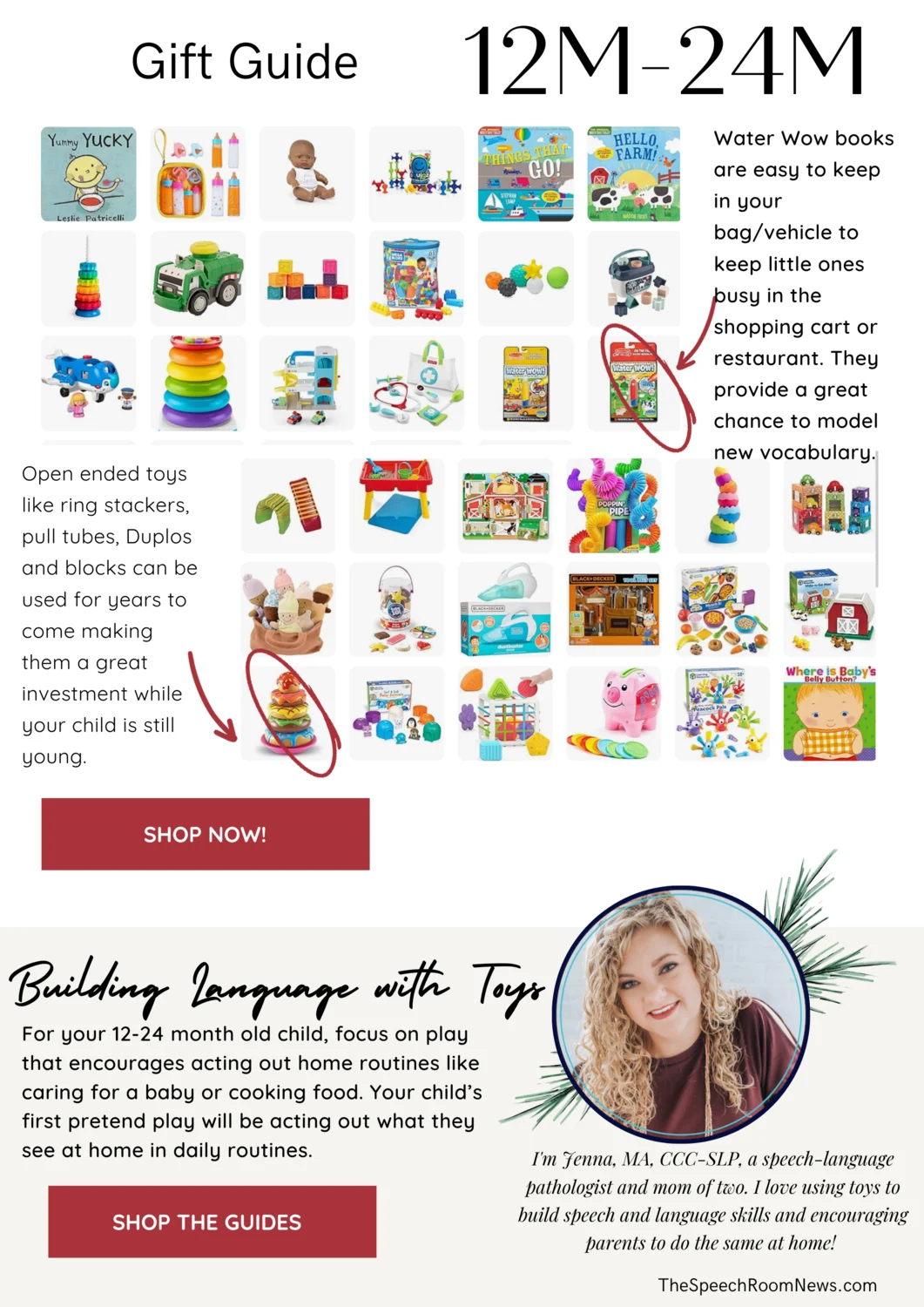
Jenna Kirk, MA, CCC-SLP, a distinguished pediatric speech-language pathologist and mother, has released a comprehensive series of holiday gift guides designed to assist parents and caregivers in selecting toys that actively foster speech and language skills in children. The initiative, accessible through curated Amazon Gift Guides and a downloadable PDF, addresses a growing demand for expert recommendations amidst an overwhelming market of children’s products, particularly during the peak holiday shopping season. Kirk’s unique perspective, informed by her professional expertise and personal experience raising a child with Childhood Apraxia of Speech (CAS), positions these guides as a valuable resource for families seeking to integrate developmental support into everyday play.
The release of these guides underscores a critical shift in parental awareness, moving beyond purely entertainment-focused toy selection to a more intentional approach that prioritizes developmental benefits. As children navigate crucial stages of linguistic and cognitive growth, the quality and type of play experiences significantly impact their ability to communicate effectively. Kirk’s recommendations are grounded in established principles of speech-language pathology, aiming to transform gift-giving into an opportunity for enriching a child’s developmental journey.
The Crucial Role of Play in Early Language Acquisition
Child development experts universally agree that play is not merely a pastime but a fundamental mechanism through which children learn about the world, develop social skills, and acquire language. For infants, toddlers, and preschoolers, play provides the primary context for exploring sounds, words, and communication patterns. Interactive play, in particular, facilitates critical pre-linguistic and linguistic skills such as joint attention (sharing focus on an object or event), turn-taking, symbolic representation (using objects or actions to represent others), and problem-solving.
Research consistently demonstrates that children who engage in rich, interactive play environments exhibit stronger vocabulary acquisition, more complex sentence structures, and enhanced narrative abilities. A 2017 study published in Pediatrics highlighted that parent-child play involving object manipulation and shared attention significantly correlated with improved language outcomes. In contrast, passive entertainment, such as excessive screen time, has been linked to potential delays in speech and language development due to its one-way communication nature and reduced opportunities for verbal interaction. The American Academy of Pediatrics, among other authoritative bodies, advocates for play-based learning as a cornerstone of healthy child development, emphasizing the need for toys that encourage imagination, creativity, and social engagement.

Understanding Speech and Language Challenges
The impetus behind Kirk’s guides is particularly pertinent given the prevalence of speech and language disorders in pediatric populations. According to data from the Centers for Disease Control and Prevention (CDC), approximately 1 in 12 (7.7%) U.S. children aged 3–17 years have had a disorder of speech, voice, or language in the past 12 months. Childhood Apraxia of Speech (CAS), a specific speech sound disorder that Kirk’s own child experiences, involves difficulties in planning and programming the movements needed for speech, leading to inconsistent and often unintelligible pronunciation. Other common challenges include expressive language delays (difficulty communicating thoughts and ideas), receptive language delays (difficulty understanding language), and articulation disorders.
Early identification and intervention are paramount for children facing these difficulties. Speech-language pathologists play a vital role in diagnosing and treating these disorders, often employing play-based therapy techniques to make learning engaging and effective. Kirk’s guides serve as an extension of this therapeutic philosophy, empowering parents to continue fostering speech and language development within the home environment through thoughtfully chosen toys. By selecting toys that align with therapeutic goals, families can reinforce skills learned in therapy, create language-rich play scenarios, and ultimately accelerate a child’s progress.

Principles Guiding Expert Toy Selection
When curating her recommendations, Kirk focuses on several key principles that distinguish developmentally beneficial toys from those with limited educational value. These principles align with best practices in pediatric speech-language pathology:
- Open-Ended and Versatile Play: Toys that can be used in multiple ways encourage creativity, imagination, and diverse language use. Examples include building blocks, magnetic tiles, dollhouses, and animal figurines. Unlike single-purpose electronic toys that dictate interaction, open-ended toys invite children to invent scenarios, assign roles, and narrate their play, thereby expanding their vocabulary and narrative skills.
- Interactive Potential: The most valuable toys are those that facilitate interaction between children and caregivers or among peers. Board games, cooperative puzzles, art supplies for shared projects, and dramatic play sets naturally encourage turn-taking, negotiation, questioning, and descriptive language. These interactions are crucial for developing conversational skills and social pragmatics.
- Sensory Engagement: Toys that stimulate multiple senses—sight, sound, touch—can be particularly engaging for children and provide multiple avenues for language input. Tactile toys, musical instruments, and brightly colored objects can spark curiosity and provide natural opportunities for labeling and describing sensory experiences.
- Age-Appropriateness and Developmental Alignment: Kirk’s guides are meticulously sorted by age, reflecting the understanding that toys must match a child’s current developmental stage to be effective. For infants, toys focusing on cause-and-effect and sensory exploration (e.g., rattles, soft blocks) are crucial. Toddlers benefit from toys that encourage imitation, simple pretend play, and early vocabulary (e.g., shape sorters, toy vehicles). Preschoolers thrive with toys that support complex pretend play, problem-solving, and early literacy (e.g., elaborate dramatic play sets, early board games). School-aged children can engage with more strategic games, construction kits, and creative projects that demand planning and collaborative language.
- Durability and Safety: While not directly related to speech and language, the practical considerations of durability and safety ensure that toys can withstand regular play and are free from hazards, allowing for sustained and worry-free engagement.
- Minimizing Electronic Dominance: While some educational apps and electronic toys can have benefits, Kirk’s emphasis leans towards tangible, non-electronic toys that promote hands-on engagement and direct human interaction, which are more conducive to organic language development.
Navigating the Age-Specific Gift Guides

Jenna Kirk’s comprehensive guides offer age-specific recommendations, providing tailored suggestions for various developmental stages. For the youngest children (infants and toddlers), the focus often lies on sensory exploration and cause-and-effect toys. Examples might include large, soft building blocks that encourage stacking and knocking down, facilitating early concepts of action-reaction and simple vocabulary (e.g., "up," "down," "crash"). Nesting cups and shape sorters promote fine motor skills, problem-solving, and the naming of colors and shapes. Push-and-pull toys encourage mobility and can be used to narrate actions (e.g., "The car is going fast!").
As children transition into the preschool years, the guides shift towards toys that foster imaginative and dramatic play. Play kitchens, doctor kits, dollhouses, and various animal or character figurines become invaluable. These toys allow children to engage in symbolic play, create narratives, practice social roles, and expand their vocabulary related to actions, feelings, and social scripts. A play kitchen, for instance, offers endless opportunities for vocabulary related to food, cooking actions, and social interactions like "Would you like some soup?" or "Can I help you cook?"
For early elementary school-aged children, Kirk’s recommendations likely include cooperative board games, complex building sets, and creative art supplies. Board games are excellent for teaching rules, turn-taking, strategic thinking, and negotiating, all while practicing conversational skills. Craft kits or open-ended art supplies encourage descriptive language about colors, textures, and processes, as well as collaborative problem-solving if done with others. These toys support the development of more sophisticated language structures, narrative coherence, and social communication skills necessary for academic and peer interactions.

Beyond the Main Gifts: Thoughtful Stocking Stuffers
Kirk extends her expert advice to include stocking stuffers, emphasizing that even small items can contribute significantly to language development. These smaller, often portable items are perfect for encouraging brief, focused interactions and fine motor skills. Examples might include mini-puzzles that require descriptive language to complete, finger puppets that inspire impromptu storytelling and character voices, small craft kits that involve following instructions and describing steps, or even simple card games that prompt questions and responses. These compact gifts reinforce the idea that every play opportunity, regardless of size, can be leveraged for developmental growth, making language practice an integral part of daily life.
The Broader Impact of Informed Gifting

The implications of informed toy selection extend beyond individual children to entire family dynamics and the broader understanding of child development. By providing these accessible guides, Jenna Kirk empowers parents to make conscious choices that support their child’s speech and language journey. This proactive approach can reduce parental anxiety about developmental milestones and equip them with practical tools to create a stimulating home environment. When toys are chosen with purpose, play becomes a natural extension of learning, reinforcing therapeutic goals and fostering a love for communication.
Furthermore, these guides contribute to a broader public health message about the importance of early intervention. By highlighting the connection between specific types of play and language development, Kirk helps parents recognize potential areas of strength or challenge in their children. This heightened awareness can lead to earlier conversations with pediatricians and speech-language pathologists, facilitating timely referrals and interventions for children who may benefit from professional support.
The initiative also subtly influences the toy market, encouraging manufacturers to produce more developmentally appropriate and educationally valuable products. As consumer demand for "smart toys" that genuinely support growth increases, the industry is likely to respond by integrating more pedagogical principles into toy design.

In conclusion, Jenna Kirk’s holiday gift guides represent a valuable resource for families navigating the complexities of child development and holiday shopping. By offering expert, accessible recommendations for toys that build speech and language skills, Kirk not only simplifies the gifting process but also empowers parents to actively contribute to their children’s linguistic and communicative success. The emphasis on interactive, open-ended, and age-appropriate play underscores a fundamental truth in child development: play is the work of childhood, and thoughtful play is the foundation for a lifetime of effective communication. Families are encouraged to access these resources via the provided Amazon Gift Guides and the downloadable PDF to make informed choices this holiday season and beyond.
