

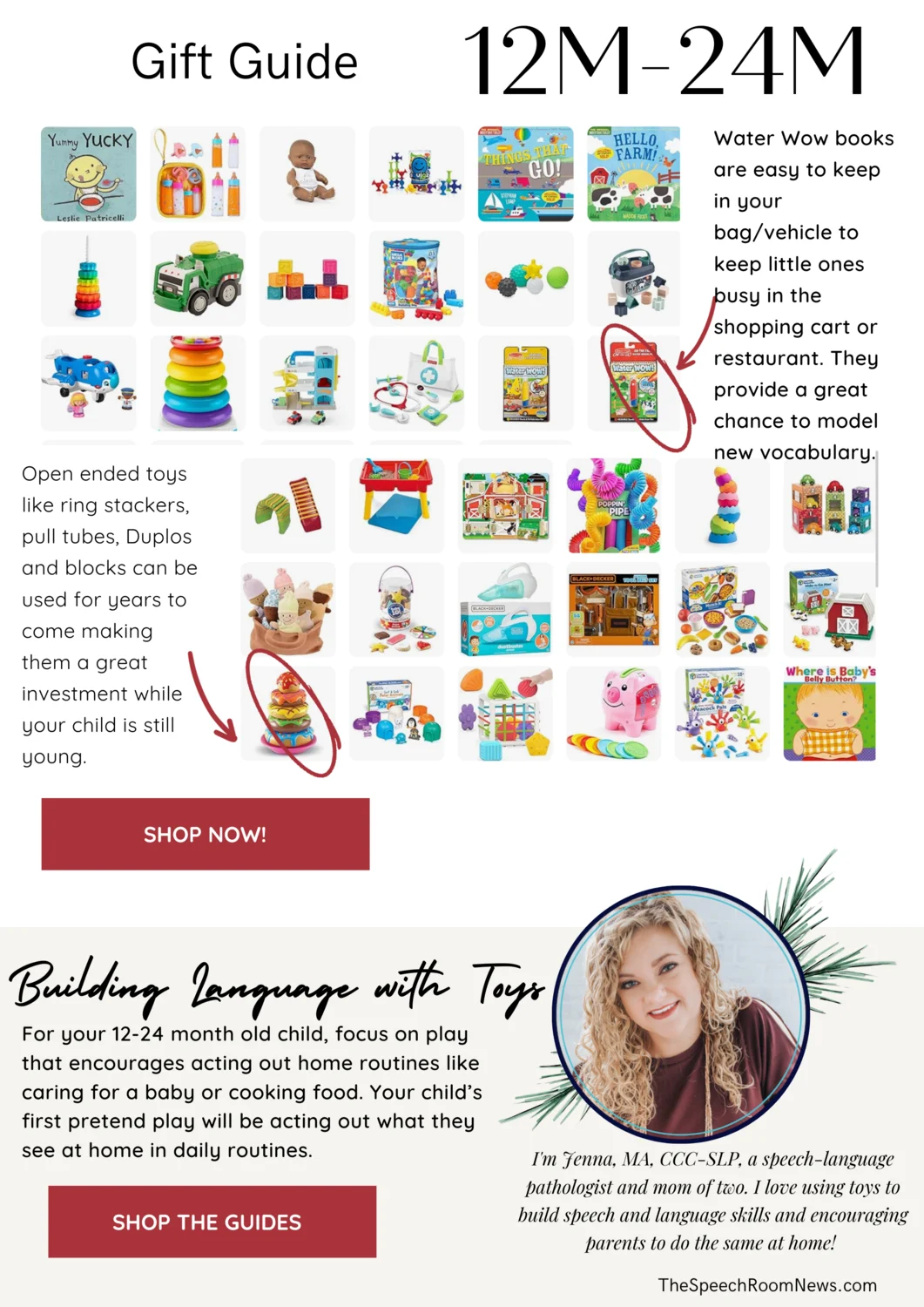
A leading pediatric speech-language pathologist, Jenna Kirk, MA, CCC-SLP, has released a series of meticulously curated holiday gift guides designed to empower parents and caregivers in fostering essential speech and language skills in children. The initiative, spearheaded by Kirk through her platform, The Speech Room News, provides age-sorted recommendations for toys and activities specifically chosen to promote communicative development, with a particular focus on inclusive play for children with speech sound disorders, including Childhood Apraxia of Speech.
The guides, accessible via Amazon storefronts and a downloadable PDF, represent a professional synthesis of therapeutic principles and practical parenting experience. Kirk, a mother of two, one of whom navigates Childhood Apraxia of Speech, brings a unique dual perspective to her recommendations, blending clinical expertise with firsthand understanding of the daily challenges and triumphs in supporting a child’s communication journey. This strategic compilation aims to simplify the often-overwhelming process of selecting gifts that are not only engaging but also educationally enriching, directly contributing to a child’s linguistic foundation.
The Foundational Role of Play in Speech and Language Development
The core philosophy underpinning Kirk’s gift guides is the undeniable importance of play in early childhood development, particularly concerning speech and language acquisition. Research consistently demonstrates that play is not merely recreation but a critical mechanism through which children learn to interact with their environment, understand social cues, develop problem-solving abilities, and, crucially, master language. Through imaginative play, children construct narratives, expand their vocabulary, practice conversational turn-taking, and refine their articulation.
Experts in child development emphasize that play-based learning offers a natural, low-pressure environment for children to experiment with sounds, words, and sentence structures. Unlike formal instruction, play intrinsically motivates children, making learning enjoyable and sustainable. This intrinsic motivation is especially vital for children who may face communication challenges, as it encourages repeated engagement and practice without the stigma or pressure often associated with therapeutic exercises. The ability of a toy to elicit interaction, spark curiosity, and facilitate shared attention between a child and a caregiver is often a stronger indicator of its developmental value than any explicit "educational" label.

Expertise at the Helm: The Role of a Speech-Language Pathologist
Jenna Kirk’s credentials as a pediatric Speech-Language Pathologist (SLP) are central to the credibility and efficacy of these guides. An SLP is a highly trained professional who diagnoses and treats communication and swallowing disorders. Their extensive education covers anatomy and physiology of speech, linguistics, child development, psychology, and therapeutic interventions. For parents navigating the complexities of their child’s speech and language development, an SLP serves as an invaluable resource, offering tailored strategies and evidence-based recommendations.
Kirk’s personal experience as a mother of a child with Childhood Apraxia of Speech (CAS) further enriches her professional perspective. CAS is a neurological speech sound disorder that affects the brain’s ability to plan the movements needed for speech. Children with CAS know what they want to say but have difficulty coordinating the mouth muscles (lips, jaw, tongue) to produce the sounds, syllables, and words. This condition requires intensive, individualized therapy, and parents often seek out tools and activities that can supplement clinical work at home. Kirk’s guides are implicitly informed by this specific need, ensuring that the recommended toys can be leveraged to support motor planning for speech, encourage vocalizations, and provide opportunities for repetitive practice in a fun, naturalistic setting. Her ability to translate complex therapeutic goals into accessible, playful activities is a significant advantage for families.

Key Principles Guiding Toy Selection for Speech and Language Enhancement
While the specific "few things" Kirk focuses on when shopping for toys are not explicitly detailed in the original excerpt, general principles upheld by speech-language pathologists worldwide likely inform her selections. These principles focus on maximizing opportunities for communication and cognitive growth:
- Promoting Open-Ended Play: Toys that have no single "right" way to play – such as blocks, dolls, art supplies, or dress-up clothes – encourage imagination, creativity, and diverse language use. They prompt children to describe, narrate, problem-solve, and interact, fostering a rich linguistic environment.
- Facilitating Interaction and Turn-Taking: The best language-building toys encourage back-and-forth engagement between a child and an adult or other children. Board games, cooperative building sets, and role-playing props naturally lend themselves to practicing conversational turn-taking, asking and answering questions, and negotiating.
- Encouraging Cause-and-Effect Understanding: Simple toys with clear cause-and-effect mechanisms (e.g., pop-up toys, musical instruments, stacking cups) help children understand sequences, predict outcomes, and develop early logical reasoning skills, which are foundational for understanding sentence structure and narrative.
- Stimulating Sensory Engagement: Toys that engage multiple senses (sight, sound, touch) provide richer learning experiences. Textured toys, musical instruments, and toys with varied colors and shapes offer more opportunities for descriptive language and concept development.
- Supporting Fine Motor Development: While not directly speech-related, fine motor skills are crucial for pre-writing, self-help skills, and even indirectly for articulation readiness. Manipulating small objects, puzzles, and craft materials strengthens hand-eye coordination and dexterity.
- Encouraging Pretend and Symbolic Play: This is paramount for language development. Pretend play allows children to take on roles, create imaginary scenarios, and use objects to represent other things. This process is deeply linked to the development of abstract thought and narrative skills.
By adhering to these principles, the selected toys move beyond mere entertainment to become powerful tools for developmental growth.

Tailored Recommendations for Diverse Developmental Stages
The utility of Kirk’s guides is significantly enhanced by their age-sorted categorization. Speech and language development follows a predictable, albeit varied, trajectory, with different milestones typically achieved at various ages.
- Infants (0-12 months): Toys for this age group might focus on sensory exploration, cause-and-effect, and encouraging early vocalizations (cooing, babbling). Examples could include rattles, soft blocks, mirrors, and activity mats, which prompt interaction and sound production.
- Toddlers (1-3 years): This period is marked by an explosion of vocabulary and the emergence of two- and three-word phrases. Toys that encourage imitation, simple problem-solving, and imaginative play are key. Puzzles, shape sorters, animal figures, and push-pull toys can facilitate naming objects, following simple directions, and expanding descriptive language.
- Preschoolers (3-5 years): Preschoolers develop longer sentences, engage in more complex pretend play, and begin to grasp early narrative skills. Dollhouses, play kitchens, construction sets, and simple board games are excellent for fostering storytelling, social interaction, asking "wh" questions (who, what, where, why), and understanding prepositions.
- School-Aged Children (5+ years): At this stage, children refine their conversational skills, expand their vocabulary for academic and social contexts, and develop complex narrative abilities. More intricate board games, science kits, chapter books, and creative writing tools can support critical thinking, advanced vocabulary, and coherent storytelling.
This age-specific approach ensures that the recommended toys are developmentally appropriate, maximizing their potential to stimulate the relevant emerging skills at each stage.

The Broader Implications: Early Intervention and Long-Term Success
The release of these expert-curated gift guides underscores the broader societal recognition of the importance of early intervention in speech and language development. Statistics from organizations like the American Speech-Language-Hearing Association (ASHA) indicate that approximately 5% of children have a noticeable speech disorder by the first grade. Moreover, language disorders affect 7-10% of preschool children. Without timely intervention, these challenges can have far-reaching implications, impacting literacy, academic performance, social-emotional development, and even future career prospects.
Early and targeted support, often initiated through play, can significantly mitigate these risks. Studies show that children who receive early intervention for speech and language difficulties demonstrate better outcomes in school and in social settings. By providing accessible, professionally vetted resources, Kirk’s initiative empowers parents to be proactive partners in their child’s development, turning holiday gift-giving into a meaningful investment in their child’s future communication abilities. The convenience of pre-selected lists alleviates the burden on parents who may lack the specialized knowledge to identify truly beneficial toys, allowing them to make informed choices with confidence.

Community Engagement and Ongoing Resource Development
Beyond the curated lists, Jenna Kirk encourages community engagement, inviting parents and caregivers to share their own favorite speech- and language-building toys in the comments section. This collaborative approach fosters a supportive network, allowing for the continuous sharing of insights and discovery of new resources. It also highlights Kirk’s commitment to creating dynamic, evolving content that reflects the collective experience and wisdom of her audience.
The initiative represents a valuable contribution to the resources available for families seeking to enrich their children’s language environments. By combining professional expertise with a practical, user-friendly format, Jenna Kirk’s holiday gift guides provide a clear pathway for parents to make informed choices that celebrate both the joy of play and the profound impact of effective communication.
