

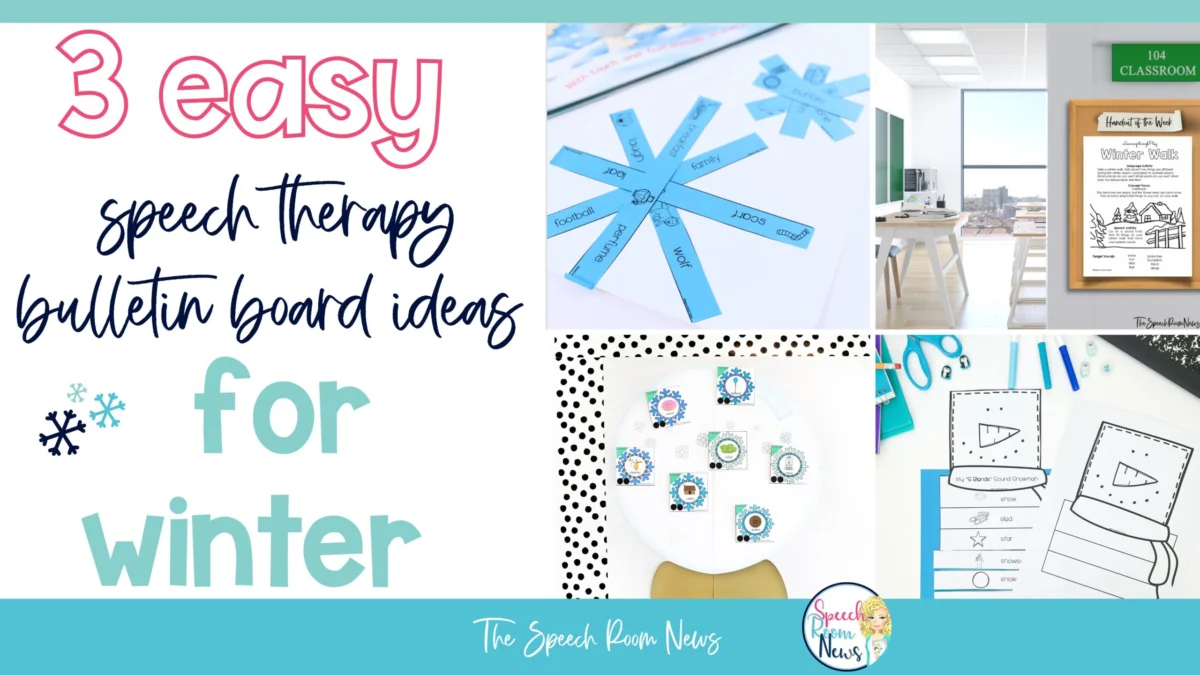
Speech-Language Pathologists (SLPs) are increasingly adopting strategic and themed bulletin board designs within their therapy environments, particularly during seasonal transitions such as winter, to enhance student engagement, reinforce learning, and foster a more communicative atmosphere. This approach moves beyond mere decoration, integrating visual aids as integral components of therapeutic intervention. The methodology centers on three core categories: demonstrative, interactive, and functional bulletin boards, each serving distinct pedagogical and communicative purposes. This deliberate planning allows SLPs to adapt their therapy spaces to seasonal themes, ensuring freshness and continued interest for students and their families.
The rationale behind these categorized bulletin boards is rooted in educational psychology and speech-language pathology best practices. Demonstrative boards celebrate student achievements and provide visual cues for learning. Interactive boards facilitate active participation and multisensory engagement, crucial for complex speech and language acquisition. Functional boards serve as vital conduits for parent education and home-practice strategies, bridging the gap between clinical settings and daily life. By rotating these themes throughout the academic year, SLPs streamline preparation while maximizing the therapeutic impact of their physical space, particularly evident during busy periods like the winter months when new students or returning families may benefit from an inviting and informative introduction to speech therapy.
The Pedagogical Framework: Categories of Engagement
The structured categorization of bulletin boards reflects a deeper understanding of how visual and spatial elements contribute to the therapeutic process. This systematic approach ensures that every display serves a clear purpose, aligning with individual therapy goals and broader educational objectives.

Demonstrative Bulletin Boards: Showcasing Progress and Inspiring Peers
Demonstrative bulletin boards are designed primarily to display student-created work, transforming the therapy room into a gallery of achievement. This strategy is highly effective in fostering a sense of accomplishment, pride, and ownership among students. For SLPs, these boards offer a low-prep, high-impact method to visually track progress and reinforce learned skills.
Crafting for Articulation and Language Development
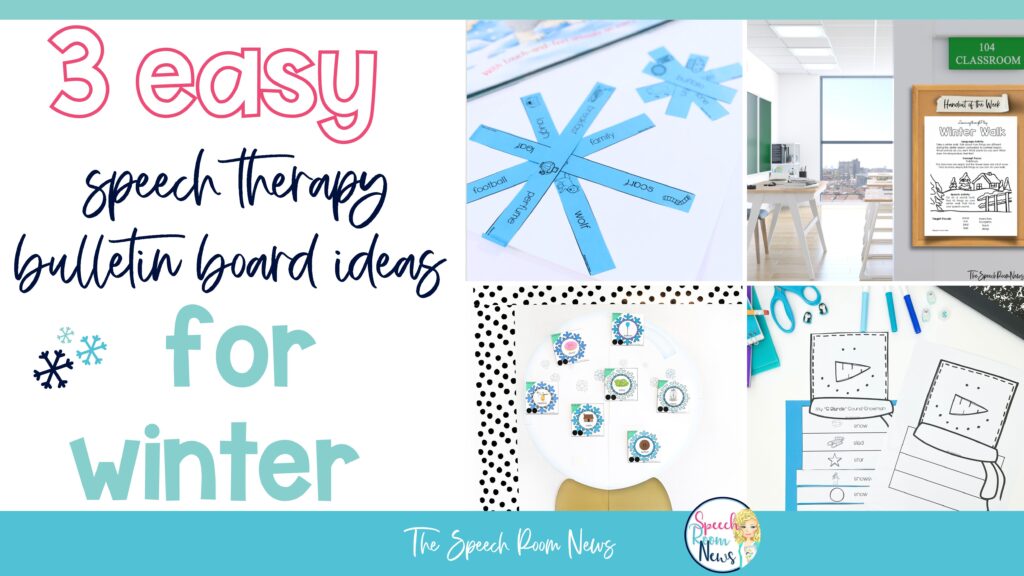
One highly effective demonstrative approach involves integrating simple crafts into therapy sessions. These "fake crafting" activities, as some SLPs refer to them due to their minimal complexity, are not merely art projects but structured opportunities for targeted speech and language practice. For instance, a "Snowflake Paper Strip Craft" allows students to practice articulation targets or language concepts while engaging in a hands-on activity. Before assembling their snowflakes, students might be required to produce their target words a set number of times or use descriptive language to explain the process.
The "Year-Round Craft Paper Strip Art for Articulation and Language" resource exemplifies this efficiency. By utilizing consistent paper strip mechanics across various themes, SLPs reduce prep time significantly. For winter, blue paper strips can be used to create snowflakes, with students practicing target sounds or vocabulary words printed on each strip before cutting and gluing. This tactile engagement, combined with repetitive verbal practice, strengthens neural pathways associated with speech production. For students with fine motor challenges, printing on cardstock provides increased paper resistance, aiding in cutting precision and promoting independent participation. Research in developmental psychology underscores the importance of such multisensory activities in consolidating learning, particularly for children with speech and language impairments who often benefit from visual, auditory, and kinesthetic input.
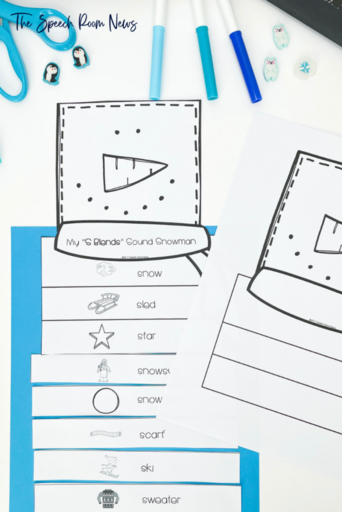
Similarly, the "Snowman Articulation Chop" craft offers another practical application. Students practice specific articulation words or phrases as they cut out strips of paper, which are then assembled to form a snowman. This activity seamlessly integrates fine motor skill development (cutting) with speech practice (articulation drills). The visual outcome – a personalized snowman – serves as a tangible representation of their therapeutic effort. Adding elements like coloring a carrot nose or creating a construction paper hat further enhances engagement, allowing for additional opportunities to practice color vocabulary, spatial concepts, or following multi-step directions. Displaying these unique snowmen on a bulletin board not only brightens the therapy space but also provides a continuous visual reminder of the learned sounds and words, promoting generalization of skills.
The psychological benefit of seeing one’s work displayed prominently cannot be overstated. It acts as a powerful motivator, boosting self-esteem and encouraging continued effort. For younger students, it makes the abstract concept of "speech therapy" more concrete and enjoyable. For parents visiting the therapy room, these boards offer a glimpse into their child’s activities and progress, fostering a deeper connection to the therapeutic process.
Interactive Bulletin Boards: Dynamic Learning Beyond the Session
Interactive bulletin boards transform passive displays into active learning stations, providing opportunities for students to engage with therapeutic materials independently or while waiting for their sessions. This category is particularly valuable for reinforcing concepts learned during direct therapy and promoting carryover in a less structured environment.
Falling Flakes: Apraxia and Phonology in Action
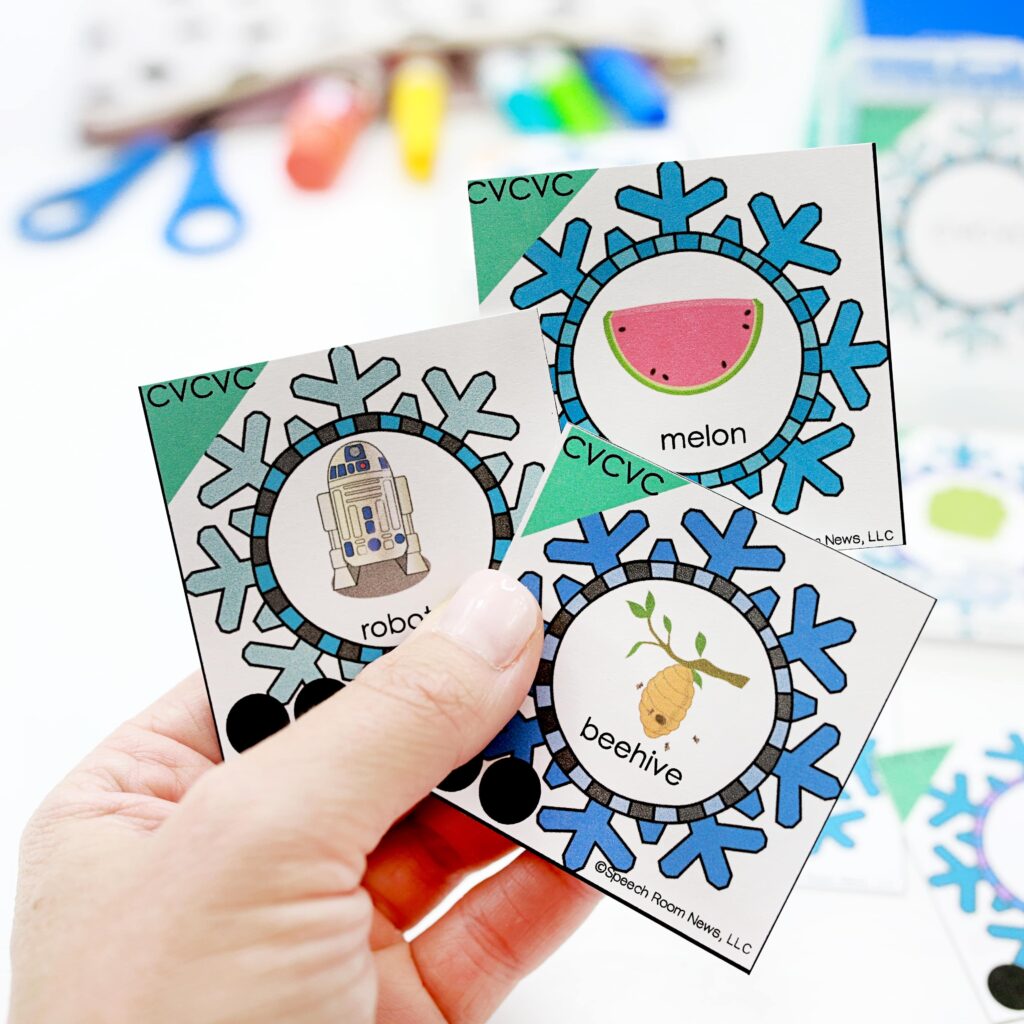
The "Falling Flakes: Apraxia Snowflakes" set is a prime example of an interactive bulletin board designed for targeted intervention. Childhood Apraxia of Speech (CAS) involves difficulties with motor planning for speech, making multisensory input critical. Each snowflake card in this set features an image and a word, with a black dot in the bottom left corner indicating the number of syllables. Students are encouraged to touch these dots as they produce the sound, providing a kinesthetic cue that supports motor planning. The cards are further organized by color and syllable pattern in the top left corner, aiding SLPs in quick selection and students in visual discrimination.
The interactive component involves a poster-sized snow globe affixed to the bulletin board, equipped with velcro dots. Students attach and remove snowflake cards, practicing their target words in a playful, self-directed manner. This approach leverages the principles of distributed practice and active recall, strengthening neural pathways for speech production. The visual and tactile nature of attaching snowflakes helps to externalize the internal process of speech planning, making it more accessible for children with apraxia.

Similarly, the "Falling Flakes: Phonology Activities" set targets phonological disorders, which involve patterns of sound errors. This resource utilizes minimal pairs – pairs of words that differ by only one sound (e.g., "fan" and "van") – to highlight phonemic contrasts. Each snowflake card presents an image and word, organized by color and pattern. Like the apraxia set, it integrates with a poster-sized globe and velcro dots, allowing students to physically manipulate the snowflakes as they practice differentiating sounds. The act of placing a snowflake representing "cap" next to one representing "cat" helps children visually and kinesthetically grasp the subtle differences in sounds, which is often challenging in auditory-only drills. Additional posters within the set offer thematic variety, ensuring the board remains fresh and engaging throughout the winter months.
The benefit of interactive boards extends beyond individual practice. They can spark conversations among students, encourage peer modeling, and even serve as informal assessment tools for SLPs observing students’ independent engagement. The playful nature of these boards can also reduce anxiety associated with therapy, making the learning environment more inviting and less intimidating.
Functional Bulletin Boards: Empowering Parents and Extending Learning Home
Functional bulletin boards shift the focus from student-led activities to parent education and home-based practice. These boards are strategically placed to capture the attention of caregivers, providing readily accessible resources and strategies to support their child’s communication development outside of therapy sessions. This category underscores the critical role of parental involvement in generalizing skills and achieving long-term therapeutic success.
Learning Through Play: Bridging Therapy and Home Life
The "Winter Speech and Language Packet: Learning Through Play" exemplifies the core concept of a functional bulletin board. Instead of complex theoretical explanations, these handouts offer practical, easily implementable ideas for parents to integrate communication practice into everyday winter activities. The concept of "learning through play" is widely endorsed by developmental psychologists and pediatricians, as it provides a natural, low-pressure context for language acquisition and skill reinforcement. Children are more motivated to communicate when engaged in enjoyable, familiar activities.
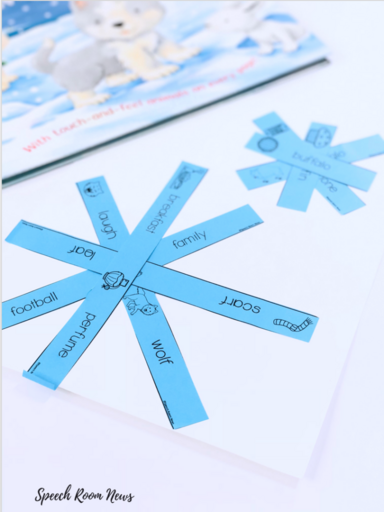
The handouts offer a wealth of ideas linked to common winter pastimes, such as:
- Snowball Fight: Encouraging descriptive language (e.g., "soft," "cold," "fast"), action verbs, and turn-taking.
- Snowman Building: Practicing sequencing (first, next, last), body parts, size concepts (big, medium, small), and requesting.
- Sledding: Focusing on action verbs (e.g., "slide," "go," "fall"), prepositions (up, down), and safety instructions.
- Snow Fort Construction: Promoting problem-solving, collaborative communication, and spatial vocabulary.
- Snow Angels: Working on body awareness, action verbs, and following directions.
- Hot Chocolate Preparation: Sequencing steps, sensory vocabulary (hot, sweet, warm), and requesting ingredients.
- Winter Clothing: Identifying clothing items, practicing categories, and describing attributes (e.g., "fuzzy mittens").
- Winter Walk: Observing and describing the environment, practicing adjectives, and asking questions.
- Ice Skating: Discussing actions, feelings, and social interactions.
- Making Cookies: Following recipes, counting, and using descriptive language for tastes and textures.
These activities are designed to be intuitive for parents, requiring minimal special equipment or training. By making these suggestions readily available on a bulletin board, SLPs empower parents to become active partners in their child’s therapy. Studies consistently demonstrate that consistent home practice significantly correlates with improved outcomes in speech and language therapy.
Crucially, the availability of a "SPANISH VERSION" of this packet addresses the vital need for culturally and linguistically responsive services. In diverse communities, providing resources in multiple languages ensures that all families can access and utilize the information effectively, removing language barriers that might otherwise hinder parental engagement. This inclusive approach reinforces the idea that therapy extends beyond the clinic walls and into the fabric of daily family life.
Broader Implications and Strategic Planning for SLPs
The thoughtful implementation of these bulletin board categories carries significant implications for the efficiency of speech-language pathology practices, the overall therapeutic environment, and the broader educational community.
Enhancing the Therapy Environment and Professional Efficiency
A well-designed bulletin board transforms a generic therapy room into a dynamic learning space. It sets a positive, engaging tone, making children feel more comfortable and motivated. For SLPs, who often manage large caseloads and diverse needs, these pre-planned, rotating bulletin board themes offer a strategic advantage. By having a system in place – rotating between demonstrative, interactive, and functional boards – SLPs can reduce last-minute preparation stress. For instance, planning for a new interactive board at the start of a season like winter, followed by a demonstrative board showcasing holiday crafts, and then a functional board with seasonal parent handouts, creates a coherent and manageable cycle.
This structured approach not only saves time but also ensures that the therapy environment consistently supports different facets of the therapeutic process: direct skill practice, independent reinforcement, and home-based generalization. It also serves as a subtle, continuous form of professional communication, informing visiting parents, teachers, and administrators about the scope and creativity of speech-language pathology services.
Fostering a Collaborative Ecosystem
These bulletin boards also act as subtle yet powerful tools for fostering collaboration within the educational ecosystem. Demonstrative boards openly celebrate student progress, which can be seen by other educators and specialists, promoting a shared understanding of student growth. Interactive boards, especially if placed in common areas or waiting rooms, can spark curiosity and conversation, demystifying speech therapy for the wider school community. Functional boards directly engage parents, strengthening the home-school connection and empowering families to actively participate in their child’s developmental journey.
The ability to provide accessible, practical information in formats like the "Learning Through Play" handouts, especially in multiple languages, underscores a commitment to equitable and inclusive educational practices. This proactive outreach can lead to greater parental compliance with therapy recommendations and a more holistic support system for children with communication needs.
Looking Ahead: The Evolving Role of Visual Aids
As educational technologies advance, the role of traditional visual aids like bulletin boards might seem antiquated to some. However, the tactile, hands-on nature of these boards offers a unique and invaluable complement to digital tools. For children, especially those with developmental differences, the concrete interaction with physical materials can be more grounding and less overwhelming than screen-based activities. Moreover, the creation and display of student work provide a tangible sense of accomplishment that digital displays often cannot replicate.
In conclusion, the strategic use of demonstrative, interactive, and functional bulletin boards by Speech-Language Pathologists during the winter season and throughout the year represents a sophisticated integration of environmental design with therapeutic objectives. These visual and tactile tools are not merely decorative; they are carefully considered components of a comprehensive approach to speech and language therapy, designed to maximize student engagement, reinforce learning, empower parents, and streamline the professional efforts of SLPs. Their continued relevance in an evolving educational landscape highlights the enduring power of thoughtful design in fostering effective communication development.
