

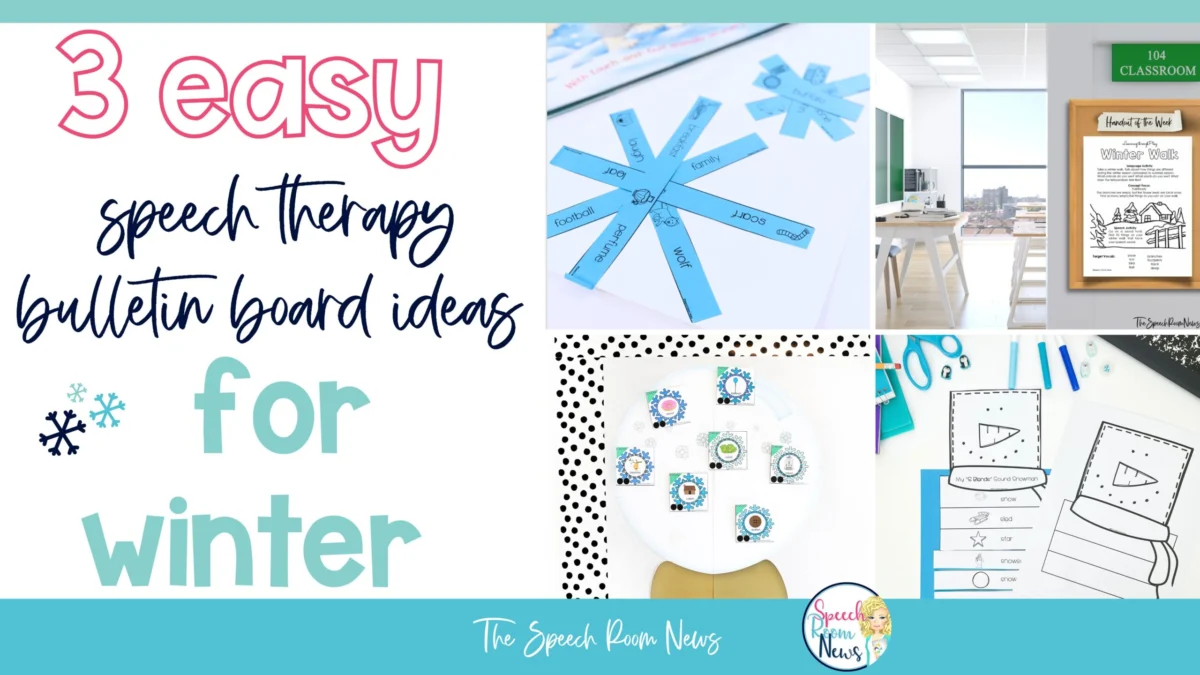
Speech-Language Pathologists (SLPs) are increasingly leveraging environmental design as a strategic component of their therapeutic practice, with bulletin boards emerging as dynamic tools for student engagement, skill reinforcement, and parent education, particularly during seasonal transitions like winter. This approach systematically categorizes bulletin board designs into three critical functions: demonstrative, interactive, and functional, each serving distinct yet complementary roles in the comprehensive delivery of speech and language therapy. These categories are not merely aesthetic choices but are rooted in pedagogical principles aimed at maximizing therapeutic outcomes and streamlining SLP workload management through proactive planning.
The Strategic Imperative for SLPs: Beyond Aesthetics
The contemporary landscape of speech-language pathology demands innovative solutions to persistent challenges, including managing diverse caseloads, maintaining high levels of student engagement, and effectively bridging therapy goals into students’ home environments. Research consistently indicates that a stimulating and well-organized therapeutic space can significantly impact learning efficacy and student motivation. For SLPs, the bulletin board transcends its traditional role as a mere decorative element, transforming into a potent instructional and informational medium. By meticulously planning and rotating these boards, SLPs can ensure that the visual environment remains fresh, relevant, and supportive of current therapeutic objectives, thereby fostering a continuous learning atmosphere. For instance, at the start of a new academic year or a new season, implementing an interactive or functional board can serve as an invaluable orientation tool for new students and families, demystifying speech therapy and generating initial enthusiasm.
Category 1: Demonstrative Bulletin Boards – Showcasing Progress and Articulation

Demonstrative bulletin boards serve as visual showcases of student achievement, displaying crafts and projects completed during therapy sessions. This approach not only celebrates individual progress but also provides tangible, consistent reminders of target sounds, words, or language structures. The act of creating these crafts itself integrates fine motor skills with speech practice, reinforcing learning through a multisensory experience.
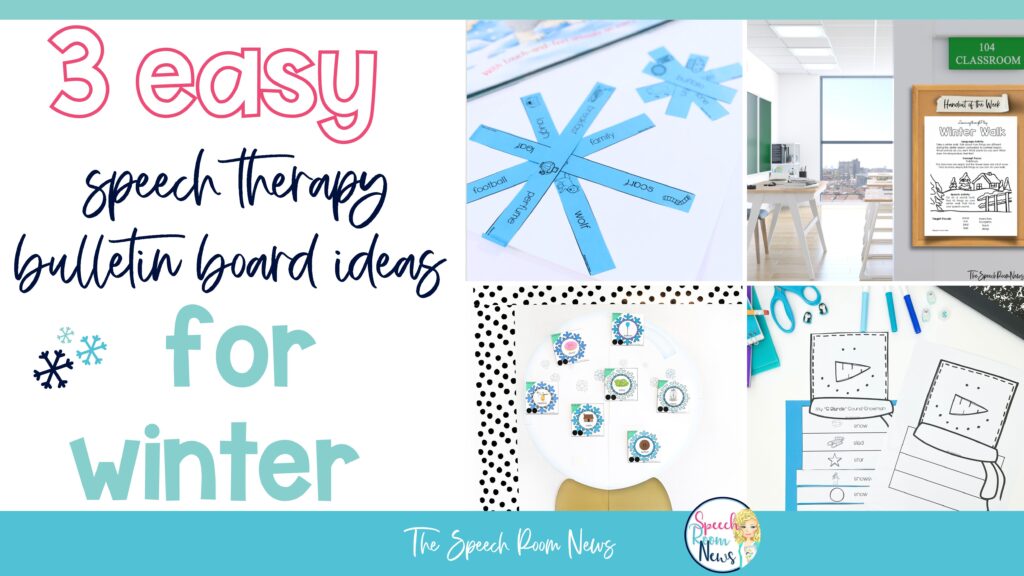
Snowflake Paper Strip Craft: Simplified Articulation Reinforcement
One highly effective and low-preparation demonstrative craft is the Snowflake Paper Strip Craft. This method, often referred to as "fake crafting" due to its simplicity, requires minimal setup and allows SLPs to focus on therapeutic goals rather than intricate craft logistics. Students utilize pre-cut paper strips, which can be easily adapted to include target words or images for articulation or language practice. For example, each strip could contain a word featuring a specific phoneme (e.g., /s/ blends for "strip," "snow," "slide") that students practice before cutting and assembling. The tactile process of cutting and gluing enhances fine motor skills, which, according to developmental psychologists, can indirectly support speech motor planning by improving overall coordination. Printing on colored computer paper or cardstock (the latter increasing paper resistance for students who need more support with cutting skills) further diversifies the sensory input and skill-building opportunities. Once the words are practiced, and the strips are assembled into a snowflake pattern, the finished product serves as a personalized visual aid, proudly displayed on the bulletin board. This visual reinforcement helps cement the practiced sounds and words in the students’ memory, making their learning visible to peers and staff.
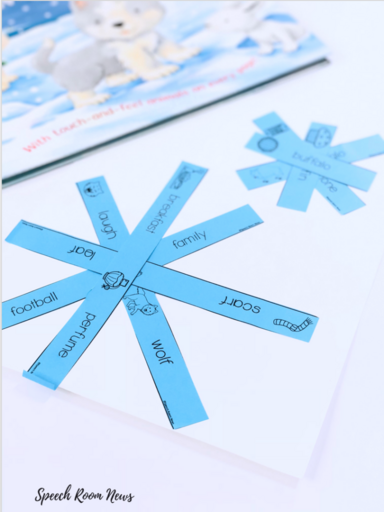
Snowman Articulation Chop: Integrating Phonological Awareness with Craft
Another highly engaging demonstrative activity is the Snowman Articulation Chop. This craft seamlessly blends articulation practice with phonological awareness by encouraging students to "chop" words into syllables or phonemes. Students are provided with two pages featuring target words or sentences relevant to their speech goals. After practicing these linguistic units, they cut the pages into strips, which are then combined to form a snowman figure. This activity is particularly beneficial for students working on multisyllabic words or phoneme segmentation. For instance, a student practicing the /k/ sound might cut strips with words like "carrot," "coat," "cold," and "cookie," articulating each word clearly before integrating it into their snowman. The simplicity of the craft allows for quick execution within a therapy session, maximizing time spent on speech production. The addition of simple elements like a colored carrot nose or a construction paper hat further personalizes the craft, increasing student ownership and motivation. Displaying these unique snowmen on the bulletin board provides a vibrant, student-centered exhibit of their hard work and progress, encouraging continued effort.
Implications of Demonstrative Boards: These boards foster a sense of accomplishment and ownership among students. They also serve as ongoing visual prompts, aiding in the generalization of skills outside the structured therapy session. For SLPs, they offer a low-prep, high-impact method for showcasing the therapeutic process and outcomes.
Category 2: Interactive Bulletin Boards – Engaging Students Actively in Learning
Interactive bulletin boards transform passive viewing into active participation, allowing students to physically manipulate elements on the board as part of their learning process. This hands-on approach is particularly effective for multisensory learners and those who benefit from kinesthetic engagement. Such boards capitalize on incidental learning opportunities, turning hallway waits or transitions into valuable practice time.
Falling Flakes: Apraxia Snowflakes – Multisensory Support for Motor Planning
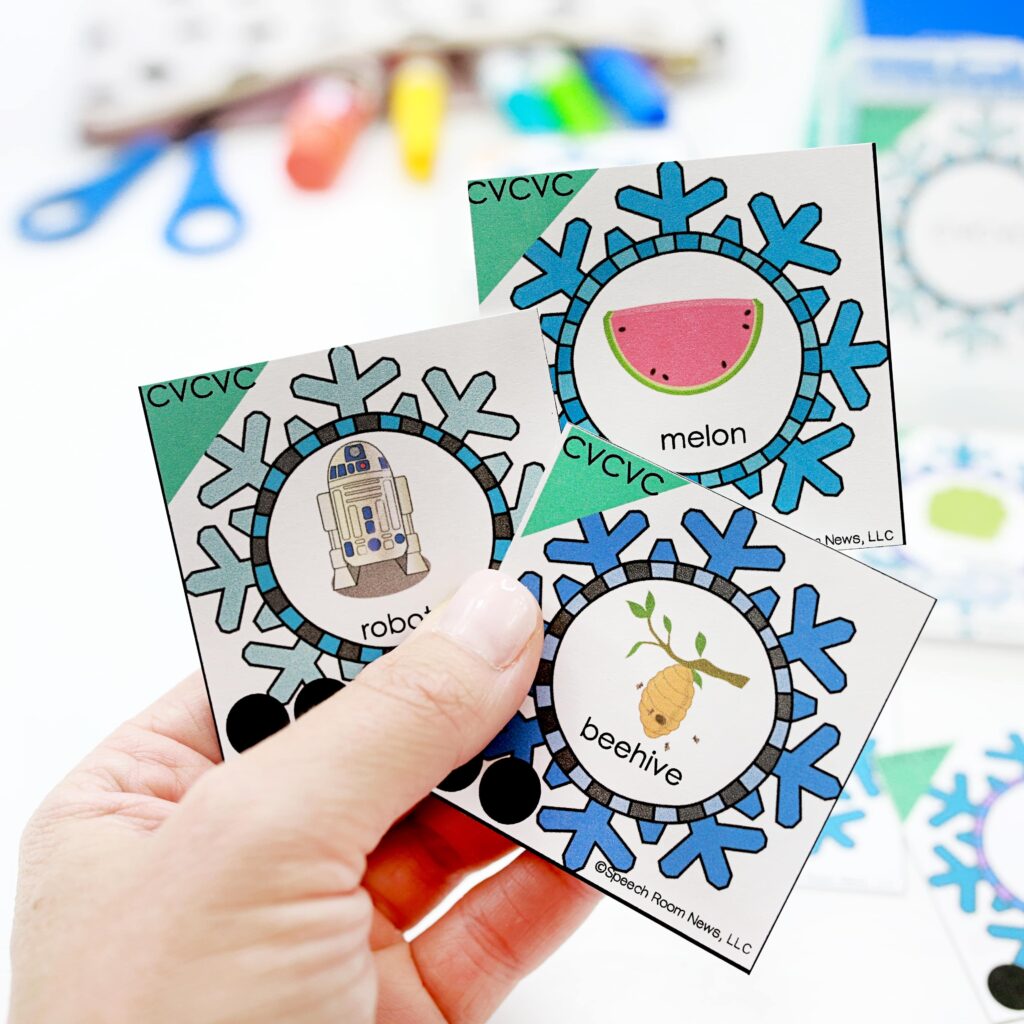
For students with Childhood Apraxia of Speech (CAS), where motor planning for speech is a primary challenge, the Falling Flakes: Apraxia Snowflakes set offers a highly structured and multisensory interactive experience. Each snowflake card features an image and a corresponding word, along with a black dot in the bottom left corner. These dots are crucial: they represent the number of syllables in the word and serve as tactile cues, guiding students to touch each dot as they produce the corresponding syllable. This multisensory input—visual (image/word), auditory (SLP model/self-production), and tactile (touching dots)—is vital for developing consistent motor plans for speech. The cards are also organized by color and syllable pattern in the top left corner, facilitating quick identification and targeted practice.

To create an interactive display, SLPs can print a poster-sized snow globe and affix 18 Velcro dots to it. Corresponding Velcro dots are placed on the back of the snowflake cards. Students can then attach or remove snowflakes from the globe, actively engaging with their target words. This not only reinforces speech sounds but also provides a dynamic way for students to track their progress or practice specific word patterns. Educational research, including studies published in journals like the Journal of Speech, Language, and Hearing Research, has consistently shown that multisensory interventions significantly enhance speech motor learning, particularly for children with CAS.
Falling Flakes: Phonology Activities – Reinforcing Phonemic Contrasts
Similar in concept but targeting phonological disorders, the Falling Flakes: Phonology Activities set utilizes minimal pairs to help students differentiate between sounds that cause meaning distinctions (e.g., "pat" vs. "bat"). Each snowflake card again features an image and word, with color and pattern coding for easy organization. This set, too, can be integrated into an interactive bulletin board using a poster-sized globe with 24 Velcro dots. Students actively engage by selecting, placing, and removing snowflake cards, practicing the minimal pairs as they manipulate the elements. For example, if a board focuses on the phonological process of fronting (e.g., substituting /t/ for /k/), students might place "tea" and "key" snowflakes, practicing the contrast.
The interactive nature of this board encourages repeated exposure and practice in a playful, self-directed manner. The inclusion of "other posters" within the set allows for thematic variety throughout the winter months, preventing monotony and keeping the content fresh. This continuous engagement helps in the generalization of newly acquired phonological skills, moving them from the therapy room to more spontaneous communication.
Broader Impact of Interactive Boards: These boards empower students with a sense of control over their learning, fostering independence and intrinsic motivation. They also create a "therapy-rich" environment that extends beyond scheduled sessions, making learning a continuous and accessible process.
Category 3: Functional Bulletin Boards – Bridging Therapy to Home and Community
Functional bulletin boards focus on providing practical resources and information, primarily for parents and caregivers, to facilitate the generalization of speech and language skills into daily routines. These boards act as vital communication hubs, reinforcing the critical role of parent involvement in sustained therapeutic progress.
Winter Speech and Language Packet: Learning Through Play Handouts
A prime example of a functional bulletin board resource is the Winter Speech and Language Packet: Learning Through Play handouts. This packet provides parents with actionable strategies to integrate speech and language practice into common winter activities. The handouts offer concrete examples of how everyday play can be transformed into meaningful therapeutic opportunities, thereby demystifying the carryover process for parents.
The packet covers a range of engaging winter activities, including:
- Snowball Fight: Encouraging descriptive language ("soft," "cold," "fast"), turn-taking, and requesting ("more," "my turn").
- Snowman Building: Practicing body parts, sequencing ("first, then, next"), and comparative adjectives ("bigger," "smaller").
- Sledding: Focusing on action verbs ("go," "slide," "fall"), prepositions ("up," "down"), and safety instructions.
- Snow Fort Construction: Promoting collaborative language, spatial concepts ("inside," "outside"), and problem-solving communication.
- Snow Angels: Encouraging body awareness, following directions, and imaginative play descriptions.
- Hot Chocolate Preparation: Sequencing, vocabulary related to ingredients, and expressive language for preferences.
- Winter Clothing: Naming items, describing textures, and practicing categorization.
- Winter Walk: Observing and describing environmental elements, practicing sensory vocabulary.
- Ice Skating: Discussing actions, emotions, and safety.
- Making Cookies: Sequencing, vocabulary, and requesting.
By placing these handouts on a functional bulletin board, SLPs make essential information readily available to parents. This approach aligns with best practices in family-centered therapy, which emphasize empowering caregivers as active participants in the therapeutic process. Studies by organizations like the American Speech-Language-Hearing Association (ASHA) consistently highlight that strong home-school collaboration and consistent practice at home are among the most significant predictors of positive therapy outcomes.
Cultural Responsiveness: The Spanish Version
Crucially, the availability of a Spanish version of the Winter Speech and Language Packet underscores a commitment to cultural responsiveness and linguistic diversity. In multilingual communities, providing resources in the primary language of the home removes significant barriers to engagement and ensures that all families can effectively support their child’s communication development. This inclusive approach not only strengthens the home-school connection but also respects the linguistic heritage of students and families, making therapy more accessible and equitable.
Implications of Functional Boards: These boards empower parents with practical tools, fostering greater involvement and consistency in home practice. They enhance the perception of the SLP as a supportive resource and strengthen the overall therapeutic ecosystem surrounding the child.
Strategic Implementation and Best Practices for SLPs
For these bulletin board strategies to be maximally effective, SLPs should adopt a cyclical planning approach. Annual or seasonal planning allows for the pre-preparation of materials, significantly reducing last-minute stress. Placing bulletin boards in high-traffic areas, such as waiting rooms or hallways adjacent to the therapy room, increases visibility and encourages incidental interaction. Furthermore, SLPs can explore collaborative opportunities with occupational therapists or general education teachers to create interdisciplinary boards that address a broader range of developmental skills, thereby enhancing the holistic support for students. These boards can also serve as informal assessment tools, allowing SLPs to observe student engagement and spontaneous practice outside structured sessions.
Conclusion: A Holistic Approach to Speech Therapy
The integration of demonstrative, interactive, and functional bulletin boards represents a sophisticated and holistic approach to speech-language pathology. These seemingly simple visual aids are, in fact, powerful pedagogical instruments that address multiple facets of therapy: student engagement, skill reinforcement, fine motor development, phonological awareness, and critical parent involvement. By transforming the therapeutic environment into an active learning space, SLPs can enhance the efficacy and reach of their interventions, ensuring that every student has the optimal opportunity to develop essential communication skills. As the winter season unfolds, these carefully designed bulletin boards will continue to serve as vibrant testaments to student progress and as invaluable resources for the entire school community.
