

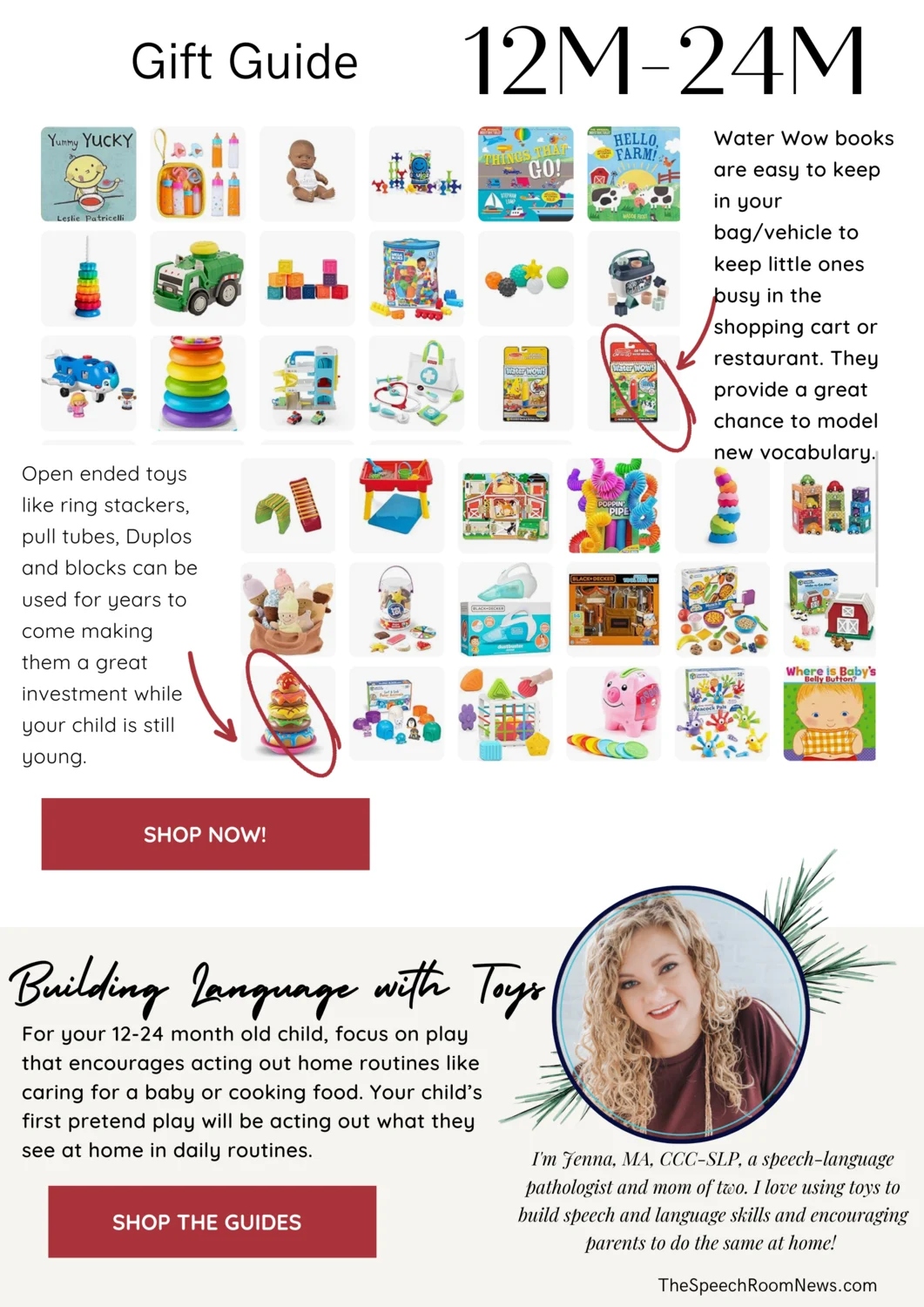
Pediatric speech-language pathologist Jenna Kirk, MA, CCC-SLP, has launched a comprehensive series of specialized holiday gift guides meticulously designed to empower parents, caregivers, and educators in selecting toys that actively foster speech and language development in children. These curated lists, accessible through Amazon and as a downloadable PDF, provide age-sorted recommendations, including specific suggestions for stocking stuffers, aiming to transform holiday gifting into an opportunity for enriching therapeutic play. Kirk’s initiative stems from her profound professional expertise and invaluable personal experience as a mother to two young children, one of whom navigates Childhood Apraxia of Speech (CAS), a complex and often challenging speech sound disorder. Her work highlights a significant and growing trend in early childhood development, where informed toy selection is increasingly recognized as a vital component of holistic child growth, particularly in supporting crucial communication skills.
The Foundational Role of Play in Language Acquisition
The importance of play in a child’s development cannot be overstated, particularly concerning the intricate process of language acquisition. Research consistently demonstrates that unstructured, imaginative play provides an exceptionally rich and dynamic environment for children to experiment with sounds, words, and complex grammatical structures. From infancy through early childhood, play serves as the primary mechanism through which children explore their world, interact with others, and develop essential cognitive and social-emotional skills, all of which are intrinsically linked to and foundational for robust language proficiency.
For instance, symbolic play, where children use objects to represent other things (e.g., pretending a banana is a phone or a block is a car), is a critical precursor to understanding abstract concepts and developing sophisticated narrative skills. This type of play allows children to step outside concrete reality, fostering imaginative thought and the ability to tell stories. Constructive play, involving building, creating, and manipulating objects (such as with LEGOs or blocks), often necessitates verbal planning, problem-solving discussions, and describing actions and intentions, thereby significantly expanding vocabulary, sentence complexity, and sequential thinking. Social play, whether cooperative with peers or parallel alongside them, inherently involves crucial communication skills such as turn-taking, negotiation, expressing desires, understanding and responding to social cues, and managing conflict—all fundamental aspects of pragmatic language. When children engage in these diverse forms of play, they are not merely entertaining themselves; they are actively building neural pathways, refining the complex cognitive processes required for effective communication, and internalizing the rules of language in a natural, engaging context. The American Speech-Language-Hearing Association (ASHA) frequently emphasizes the strategic integration of play into therapeutic interventions, underscoring its natural, highly motivating, and profoundly effective role in facilitating language growth across all developmental stages.

The Expert Perspective: Jenna Kirk’s Unique Approach to Toy Selection
Jenna Kirk’s credentials as a Master of Arts (MA) and holding the Certificate of Clinical Competence in Speech-Language Pathology (CCC-SLP) signify a profound and evidence-based understanding of speech and language disorders, typical developmental milestones, and effective therapeutic strategies. Her professional background provides the rigorous scientific and clinical foundation for her recommendations, ensuring that each toy suggested is not merely entertaining but also strategically chosen for its potential to elicit and reinforce specific linguistic skills and communicative behaviors.
Beyond her extensive professional training and clinical experience, Kirk’s personal journey as a mother, especially to a child diagnosed with Childhood Apraxia of Speech, imbues her guides with a deeply empathetic, practical, and relatable perspective. This unique dual insight—that of a seasoned clinician and a navigating parent—allows her to evaluate toys not just from a theoretical clinical standpoint but also from the tangible vantage point of a parent seeking effective, engaging, and manageable tools for home-based support and daily interaction. When selecting toys for her comprehensive guides, Kirk rigorously applies several key criteria that align with the best practices and principles in contemporary speech-language pathology:

- Open-Ended Play Potential: Toys that can be used in multiple, imaginative ways, without a single prescribed outcome, are highly valued. These encourage creativity, foster diverse imaginative scenarios, and prompt a wider range of language use as children generate their own narratives, roles, and problem-solving strategies.
- Interaction and Turn-Taking Facilitation: Toys that naturally prompt back-and-forth interaction between children and caregivers or among peers are crucial. These foster essential conversational skills, including active listening, appropriate responding, initiating dialogue, and maintaining conversational flow.
- Language Elicitation and Production: Priority is given to toys that actively encourage verbalization. This includes items that require descriptive language, problem-solving phrases, sound effects, labeling, asking questions, or giving instructions. Such toys naturally create opportunities for children to practice and expand their expressive language.
- Multi-Sensory Engagement: Toys that appeal to various senses (touch, sight, sound, and sometimes even smell or movement) can significantly enhance learning and memory. This is particularly beneficial for children with diverse learning styles, sensory processing needs, or specific developmental challenges, as multi-sensory input can reinforce linguistic concepts.
- Durability and Safety: Practical considerations are paramount, ensuring the longevity and safety of the toys for children of various ages and developmental stages. Toys must be robust enough to withstand repeated play and meet all safety standards.
- Age-Appropriateness and Developmental Fit: Matching toys to a child’s precise developmental stage is critical. Recommendations ensure toys are challenging enough to stimulate growth and learning but not so complex as to cause frustration or disengagement, striking a balance that promotes sustained interest and success.
These guiding principles are meticulously applied throughout Kirk’s selections, ensuring that parents receive recommendations for toys that are not only inherently fun and engaging but also genuinely supportive of their child’s unique communicative journey and overall developmental progress.
Addressing Specific Needs: Childhood Apraxia of Speech (CAS)
A significant and deeply personal aspect of Kirk’s motivation and specialized expertise stems directly from her experience with Childhood Apraxia of Speech (CAS). CAS is a complex neurological speech sound disorder in which the brain has significant difficulty planning, sequencing, and coordinating the precise motor movements needed for accurate speech production. Children with CAS understand what they want to say but struggle to get their mouth muscles (lips, tongue, jaw, palate) to produce the correct sounds, syllables, and words consistently. This often results in inconsistent errors, difficulty with prosody (the rhythm, stress, and intonation of speech), and significant challenges with the motor planning required for fluent speech. It is distinct from other speech sound disorders and typically requires specific, intensive, and individualized therapeutic approaches.

For children with CAS, play-based therapy can be particularly effective when strategically integrated with direct speech motor practice and focused drill work. Toys that encourage repetitive motor movements of the mouth (e.g., blowing bubbles, playing simple wind instruments, using whistles), facilitate the imitation of sounds and words, or provide opportunities for simplified, high-frequency word practice can be invaluable supplementary tools. For instance, certain toys might prompt specific sound productions through actions, or others might offer clear visual cues for mouth movements, thereby supporting the motor planning aspect of speech. Kirk’s profound personal insights into the daily realities, challenges, and triumphs of raising a child with CAS undoubtedly inform her selection of toys that offer these precise and targeted therapeutic benefits, making her guides uniquely helpful and reassuring for families facing similar diagnostic journeys. The integration of such specialized considerations, born from both professional training and lived experience, elevates her recommendations beyond general educational toys to genuinely therapeutic and supportive tools.
Structure and Accessibility of the Comprehensive Gift Guides
Recognizing the diverse needs and varying levels of familiarity among families, Kirk has structured her comprehensive gift guides for maximum utility, clarity, and ease of access. The primary organization method is by age group, a crucial factor in ensuring developmental appropriateness. This thoughtful segmentation ensures that a toy recommended for a toddler will be suitable for their current cognitive and physical abilities, while a recommendation for an older child will align with their more advanced developmental stage and interests. This age-based segmentation helps parents and gift-givers target their purchases effectively, avoiding toys that might be either too simple to engage or too complex to prevent frustration.

Furthermore, the inclusion of a dedicated section for "stocking stuffers" demonstrates a practical and thoughtful approach to holiday shopping, providing smaller, often more affordable items that can still offer significant therapeutic value. These might include compact sensory toys, small card games that encourage verbal interaction, simple puppets for role-playing, or items that promote fine motor skills and tactile exploration, all of which can easily integrate into daily routines, travel, and spontaneous play opportunities.
The guides are primarily hosted on Amazon, leveraging the platform’s unparalleled accessibility and convenience for online shopping. This allows parents to click directly from the curated list to product pages, streamlining the purchasing process during what is often a busy and demanding holiday season. In addition to the online Amazon storefront, Kirk has made the full set of recommendations available as a downloadable PDF document. This provides a versatile, offline, and printable resource that families can consult at their leisure, share easily with other caregivers (such as grandparents or babysitters), or use as a physical checklist while browsing in brick-and-mortar stores. The dual format caters to different user preferences and significantly enhances the overall utility and reach of the resource.

Broader Implications and the Trend of Purposeful Gifting
Jenna Kirk’s holiday gift guides are more than just a convenient list of toy recommendations; they represent a significant and timely contribution to the burgeoning movement of "purposeful gifting." In an era where consumers are increasingly conscious and discerning about the developmental impact of children’s products, expert-curated lists like these provide invaluable, evidence-informed guidance. Parents are often overwhelmed by the sheer volume and variety of toys available on the market and may understandably lack the specific knowledge or clinical background to discern which ones genuinely support crucial developmental milestones, particularly in complex areas like speech and language.
This initiative also powerfully underscores the critical and expanding role of speech-language pathologists beyond direct clinical intervention. By disseminating practical, evidence-informed advice through accessible and user-friendly channels, SLPs can proactively empower families to integrate therapeutic strategies and language-rich environments into their everyday lives. This approach helps bridge the often-present gap between formal therapy sessions and the home environment, fostering consistent language exposure, practice opportunities, and a supportive communicative atmosphere.

The widespread availability of such expert-developed guides can also contribute significantly to a broader public understanding of typical and atypical speech and language development. By highlighting specific toys and clearly explaining their therapeutic benefits, Kirk implicitly educates parents on what fundamental qualities to look for in toys that genuinely promote communication, interaction, and cognitive growth. This can lead to more informed purchasing decisions year-round, extending the positive impact far beyond the immediate holiday season. Child development experts and prominent parenting organizations frequently advocate for accessible resources that demystify developmental support, noting that such expert-led initiatives provide much-needed clarity, reassurance, and confidence for families navigating the complexities of child rearing. The ability to easily access well-researched and personally informed recommendations from a qualified professional who also understands the parental perspective is an undeniable asset for any family seeking to optimize their child’s developmental trajectory.
In conclusion, Jenna Kirk’s holiday gift guides are a timely, essential, and highly valuable resource, skillfully blending rigorous professional expertise with deeply practical parental insight. They serve not only as a convenient and efficient shopping aid but also as a powerful educational tool, promoting a deeper understanding of how intentional and thoughtful play can profoundly impact speech and language development. As families prepare for the upcoming holiday season, these meticulously prepared guides offer a clear and confident pathway to gifting joyfully and purposefully, ultimately contributing to the lifelong communication skills and overall well-being of children. The emphasis on intentional toy selection, particularly for children with specific developmental needs like CAS, exemplifies a proactive, integrated, and compassionate approach to supporting early childhood communication and fostering a foundation for future success.
