

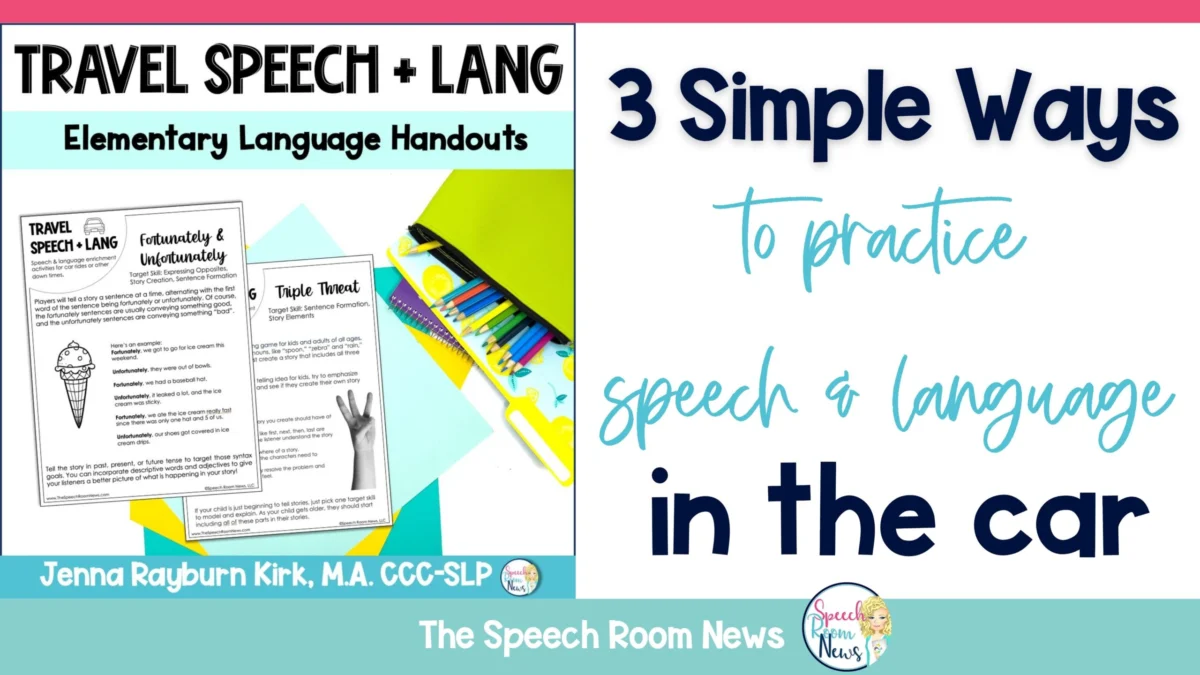
The daily routine often presents a myriad of challenges for parents striving to integrate crucial developmental practices into their children’s lives, particularly when it comes to speech and language skills. Amidst the rush of school drop-offs, errands, and extracurricular activities, finding dedicated, distraction-free time for targeted practice can seem an insurmountable task. However, a growing body of evidence and expert consensus points to an often-overlooked opportunity: the seemingly mundane car ride. Far from being mere transit time, these moments in the vehicle offer a unique, contained environment ripe for fostering communication, articulation, and cognitive language development. By intentionally transforming the commute into an interactive learning space, parents can not only maximize valuable time but also create an engaging, organic context for children to build essential linguistic abilities, effectively turning everyday journeys into powerful speech and language therapy sessions.
The Untapped Potential of the Daily Commute
For many families, the car serves as a significant setting in their daily lives, accumulating hours of shared time. Traditionally, this time might be filled with passive entertainment, such as screens or music, or simply quiet contemplation. However, Speech-Language Pathologists (SLPs) and developmental experts are increasingly advocating for a paradigm shift, encouraging parents to view car journeys as prime real estate for interactive communication. The inherent structure of a car ride, with its confined space and limited external stimuli, naturally minimizes distractions, allowing for focused interaction between parent and child. This contrasts sharply with the often chaotic environment of a home, where toys, siblings, and household chores can constantly vie for attention.
Furthermore, leveraging the commute to practice speech and language skills serves as an effective antidote to boredom, a common complaint among children during travel. By actively engaging children in conversation and games, parents can transform potential moments of restlessness into productive learning experiences. This proactive approach not only keeps children entertained but also stimulates their minds, promoting active listening, turn-taking, and expressive language. The natural rhythm of conversation within the car provides an authentic back-and-forth communication flow, mimicking real-world social interactions and laying a strong foundation for pragmatic language skills. Moreover, the dynamic scenery outside the car window—road signs, buildings, natural landscapes, and other vehicles—offers an unparalleled, real-world context for vocabulary expansion, fostering semantic development organically. Children are exposed to new words and concepts in a meaningful way, enhancing their understanding and use of language in context.
The Critical Role of Early Intervention in Speech and Language Development
Speech and language delays are a prevalent concern, with data from organizations like the National Institute on Deafness and Other Communication Disorders (NIDCD) indicating that approximately 5% of U.S. children experience a noticeable speech disorder by the first grade. These delays, if left unaddressed, can have far-reaching implications, affecting academic performance, social interactions, and emotional well-being. Early intervention, therefore, is paramount. Research consistently demonstrates that children who receive timely and consistent support for speech and language difficulties exhibit better long-term outcomes, including improved literacy skills, enhanced self-esteem, and greater success in social and academic settings.
The journey of addressing speech and language delays typically begins with early identification by parents, educators, or pediatricians, followed by a formal assessment by an SLP. This leads to the development of an individualized therapy plan, often involving regular sessions with the SLP. However, the effectiveness of formal therapy is significantly amplified by consistent practice and reinforcement in the home environment. This is where parents become invaluable partners in their child’s developmental progress. Integrating therapeutic strategies into daily routines, such as car rides, bridges the gap between structured therapy sessions and everyday life, promoting the generalization of newly acquired skills. This conceptual chronology of intervention—from identification to formal therapy to sustained home practice—underscores the importance of parental involvement as a continuous thread throughout a child’s linguistic development.
Three Engaging Strategies for On-the-Go Learning
Speech-Language Pathologists widely advocate for creative and practical ways to integrate speech and language practice into daily life, especially for children with identified delays. The following three activities exemplify how common car rides can be transformed into dynamic learning opportunities, subtly targeting critical skills without feeling like "work." These methods are not only effective but also empower parents to become active facilitators of their child’s communication growth, aligning with expert recommendations for consistent home support.
1. The Grocery Game: Mastering Question Formation
Objective: To enhance question formation skills, alongside vocabulary, categorization, and functional language.
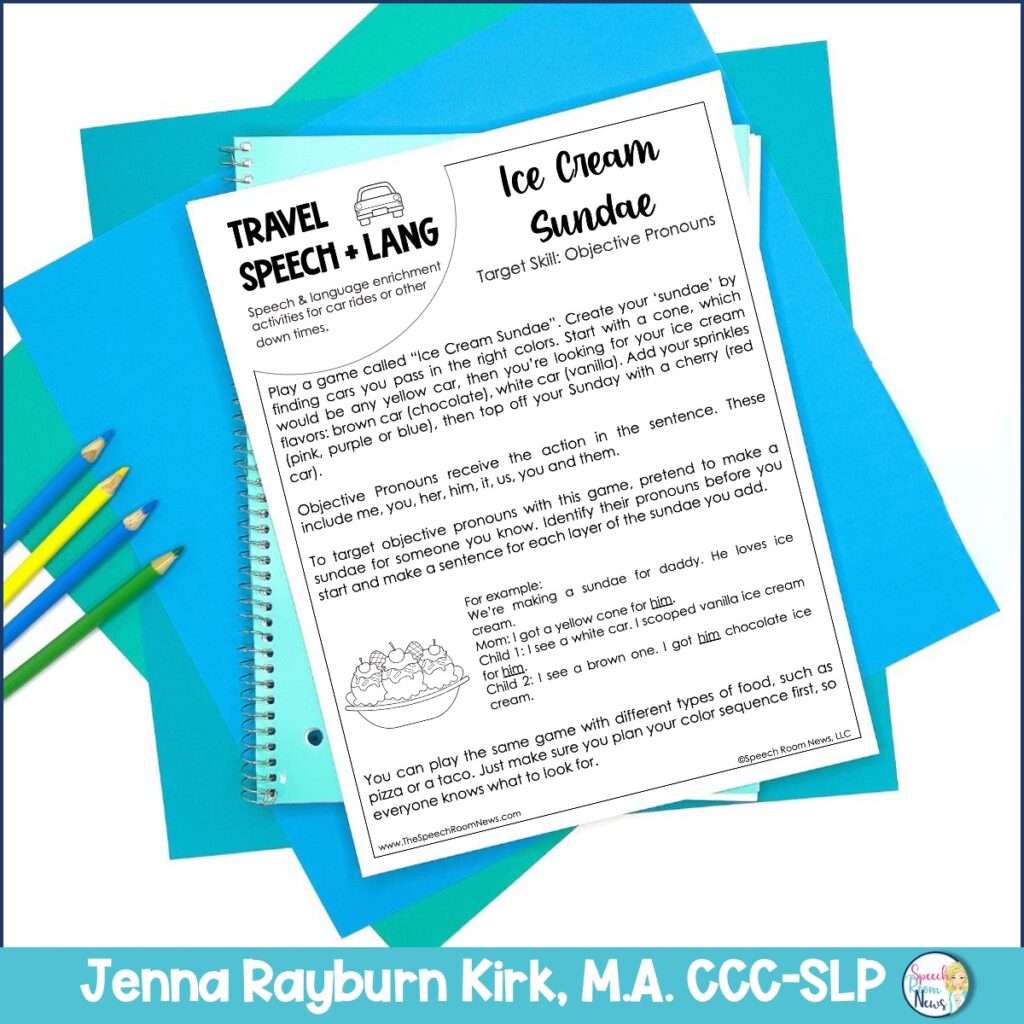
How to Play: One player secretly thinks of an item found in a grocery store. Other players in the car take turns asking yes/no questions to guess the item. The goal is to formulate grammatically correct questions that yield useful information.
Example Questions:
- "Is it in the freezer aisle?"
- "Is it a type of vegetable?"
- "Do you drink it?"
- "Can you cook it?"
- "Does it grow on a tree?"
Grammar Target Skill: The primary target is question formation, focusing on correct word order, auxiliary verbs (do, does, can, will), and intonation. This skill is fundamental for information-seeking, critical thinking, and engaging in effective conversations. Children learn to structure their thoughts into coherent inquiries, moving beyond simple one-word questions or statements.
Additional Language Skills Targeted: While focusing on question formation, this game naturally addresses a spectrum of other crucial language domains:

- Functions: (e.g., "Does it melt?", "Do you use it for baking?") This helps children understand the purpose and utility of objects.
- Actions: (e.g., "Do you bite it?", "Can you peel it?") This reinforces verb knowledge and association with objects.
- Categories: (e.g., "Is it a fruit?", "Is it a dairy product?") This develops semantic organization and classification skills, crucial for vocabulary retrieval and comprehension.
- Associates: (e.g., "Is it something that goes on bread?", "Is it often eaten for breakfast?") This builds connections between items, strengthening semantic networks and inferential reasoning.
Adaptation for Different Ages/Skill Levels: For younger children or those with more significant delays, the adult can model questions more frequently or provide categories to narrow down the choices (e.g., "Think of a fruit."). For older children, the game can be made more complex by allowing only a certain number of questions or requiring more specific descriptive questions. The game’s open-ended nature allows for flexible scaffolding, ensuring it remains challenging yet achievable for each child.
2. Red Light Race: Articulation Practice in Motion
Objective: To improve articulation of target speech sounds through repeated practice and auditory bombardment.
How to Play: When the car stops at a red light, players take turns naming as many items as possible within a chosen category, ensuring each named item contains a specific target sound. One person names, and another counts.
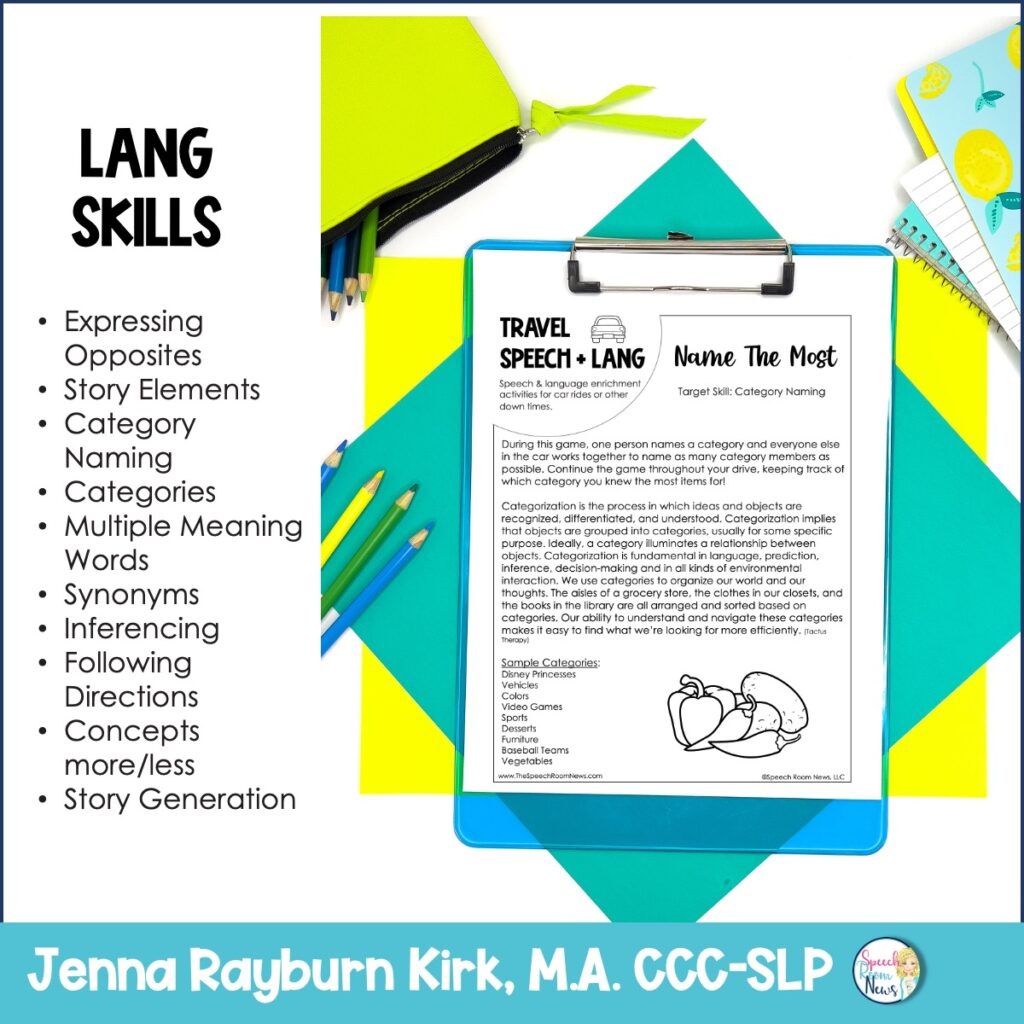
Importance of Articulation: Articulation disorders involve difficulties producing speech sounds correctly, impacting speech intelligibility. Consistent practice, especially with auditory bombardment (repeated exposure to the target sound), helps children develop phonological awareness and refine motor planning for speech production.
Modeling and Auditory Bombardment: The adult’s role in modeling the target sound correctly and frequently is vital. Hearing the sound produced accurately repeatedly helps the child attune their ear to the sound and internalize its correct production. For example, if the target sound is /s/, the adult might say, "Let’s find words with /s/ like ‘sun,’ ‘street,’ ‘stop sign.’"
Broad Categories to Get Started (and examples for /s/ sound):
- Animals: (e.g., snake, seal, squirrel, walrus, horse)
- Foods: (e.g., soup, sausage, salad, sweets, pretzels, carrots)
- Clothing: (e.g., socks, shoes, dress, pants, shirt)
- Things in a house: (e.g., sofa, sink, stairs, dresser, lamps)
- Places: (e.g., school, store, restaurant, museum, forest)
- Transportation: (e.g., bus, car, bicycle, scooter)
- Toys: (e.g., blocks, dolls, puzzles, slime, stickers)
- Colors: (e.g., blue, green, yellow, pink, brown, grey)
Target Speech Sounds: This activity can be adapted for any target sound, whether it’s initial /p/, medial /t/, final /k/, /r/ blends, or /th/ sounds. The flexibility makes it a powerful tool for individualized articulation therapy. For instance, if a child is working on the /r/ sound, categories could include "things that are red," "words ending in -er," or "animals with /r/."
Tracking Progress Informally: Parents can informally track progress by noting how many words the child produces with the target sound in a given red light cycle, and whether the production is accurate. This can provide valuable feedback for both the child and their SLP.
3. Triple Threat: Cultivating Narrative and Sentence Skills
Objective: To improve sentence formation, narrative skills, sequencing, and creative thinking.
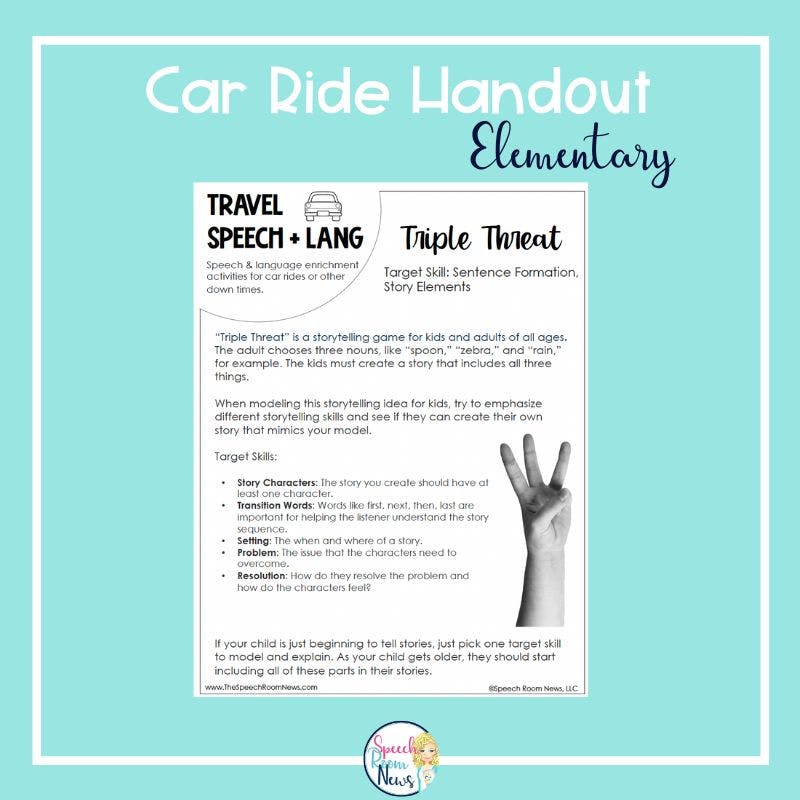
How to Play: The adult provides three unrelated nouns (e.g., "dog," "milk," and "bike"). The child’s task is to create a short story that incorporates all three items. The sillier the story, the better!
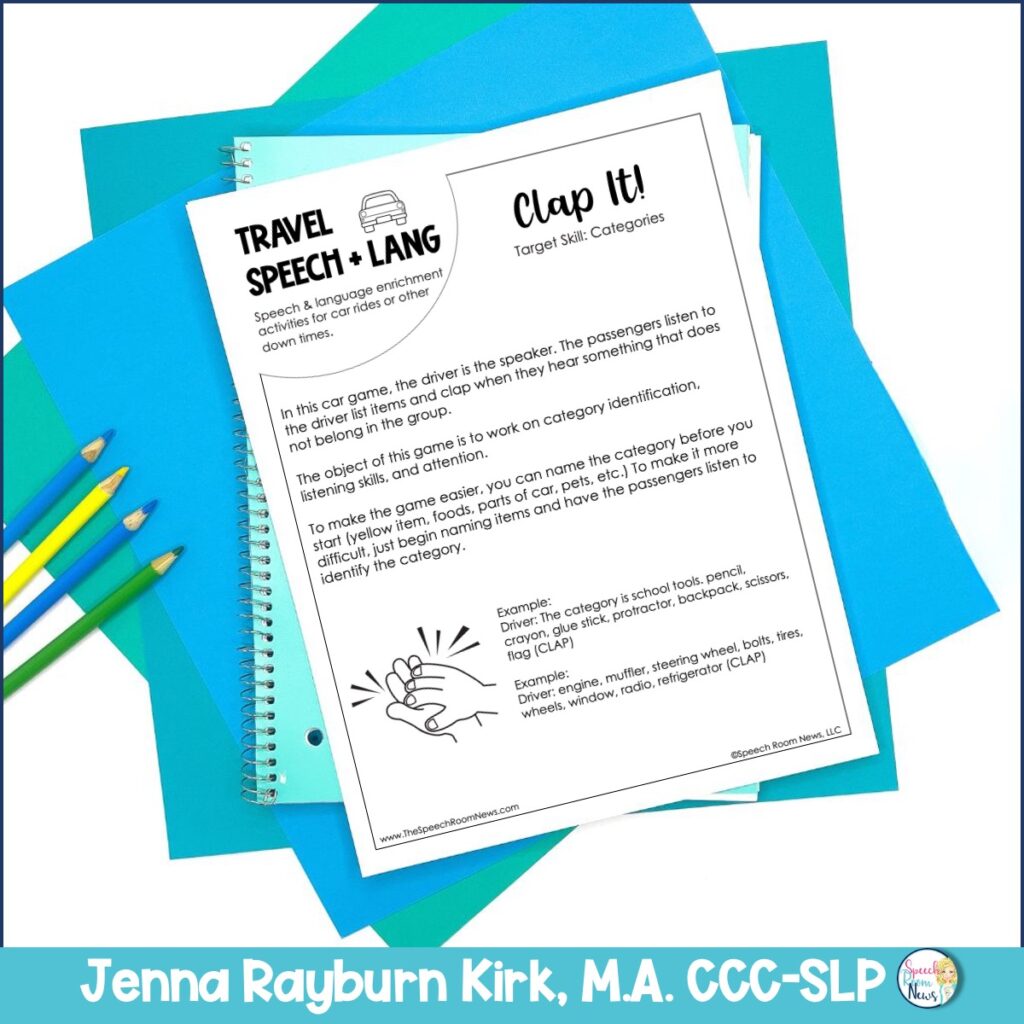
Significance of Sentence Formation and Story Retell:
- Sentence Formation (Syntax/Grammar): This activity encourages children to construct grammatically correct and increasingly complex sentences. They learn to combine words into phrases and clauses, practicing sentence structure and grammatical rules in a creative context.
- Narrative Skills: Storytelling is a crucial component of language development, supporting cognitive skills such as sequencing events, understanding cause-and-effect, developing character, and building a cohesive plot. It enhances memory, logical thought, and the ability to organize information.
- Creativity and Imagination: The "silly" nature of the game makes it highly engaging, reducing performance anxiety and encouraging children to think outside the box. This fosters imaginative play and creative expression through language.
Skills to Target with This Language Activity:
- Sentence Structure: Constructing simple, compound, and complex sentences.
- Vocabulary Use: Integrating given nouns and expanding with descriptive adjectives and varied verbs.
- Sequencing Events: Arranging story elements in a logical or imaginative order.
- Descriptive Language: Encouraging the use of adjectives and adverbs to enrich the narrative.
- Cause-and-Effect: Weaving in relationships between actions and their consequences within the story.
- Narrative Elements: Introducing concepts like characters, setting, problem, and solution.
Scaffolding for Different Skill Levels: For children who struggle with story creation, the adult can start by providing sentence starters or asking guiding questions (e.g., "Who found the dog? What did the dog do with the milk? Where did they find the bike?"). For more advanced learners, the challenge can be increased by adding more nouns, requiring a specific genre of story, or asking them to incorporate feelings and motivations.
Beyond the Games: The SLP-Parent Partnership
The integration of these car-based activities underscores the vital partnership between Speech-Language Pathologists and parents. While SLPs provide expert assessment and targeted therapy, parents are the primary communication partners in a child’s daily life. These informal, engaging practices are not meant to replace formal therapy but rather to complement and reinforce it, promoting the generalization of skills learned in the therapy room to real-world contexts. This concept of generalization is critical for sustained linguistic development, ensuring that new skills are not isolated to specific settings but become integrated into a child’s everyday communication repertoire.
Empowering parents with practical, accessible strategies like "The Grocery Game," "Red Light Race," and "Triple Threat" fosters confidence in their ability to support their child’s communication journey. It transforms potentially frustrating moments of "I don’t know what to do" into proactive, enjoyable interactions. Experts suggest that integrating learning into daily routines significantly boosts retention and skill acquisition, making parental involvement in these organic settings profoundly impactful.
Supporting Parents: Resources for Continued Growth
Recognizing the ongoing need for accessible and effective home practice strategies, resources like the Travel Speech and Language Bundle have been developed. This comprehensive bundle is designed specifically to support both SLPs and parents by providing a wealth of practical activities for car rides and other on-the-go moments. It contains 30 parent handouts, each detailing a unique game or activity with clear explanations and practical examples, covering a broad spectrum of speech and language goals.

Such resources are invaluable for SLPs who can utilize them to provide tangible, actionable homework assignments to families on their caseloads. Posting these handouts on a bulletin board or sending them home empowers parents with concrete ways to support their child’s speech development in the midst of their busy lives. The bundle offers a structured yet flexible framework, ensuring that parents can confidently engage their children in meaningful language practice that aligns with therapeutic goals. The positive feedback from SLPs highlights the utility and effectiveness of these resources in facilitating consistent home practice and strengthening the home-school connection in therapeutic efforts.
The Broader Impact: Nurturing Lifelong Communicators
The implications of consistently integrating speech and language practice into daily routines, such as car commutes, extend far beyond the immediate acquisition of specific skills. By fostering robust communication abilities from an early age, these efforts contribute significantly to a child’s holistic development. Children with strong speech and language skills are better equipped for academic success, able to comprehend instructions, express ideas clearly, and engage effectively with curriculum content. Socially, enhanced communication skills lead to more meaningful interactions with peers and adults, reducing frustration and building self-confidence.
Moreover, the act of shared play and conversation during car rides strengthens the parent-child bond, creating positive memories and a foundation of mutual engagement. This proactive approach to language development can mitigate potential challenges down the line, such as academic struggles or social isolation, ultimately nurturing articulate, confident, and lifelong communicators. The seemingly simple act of transforming a car ride into a learning opportunity thus becomes a powerful investment in a child’s future, demonstrating that even the busiest schedules hold untapped potential for profound developmental growth.
