

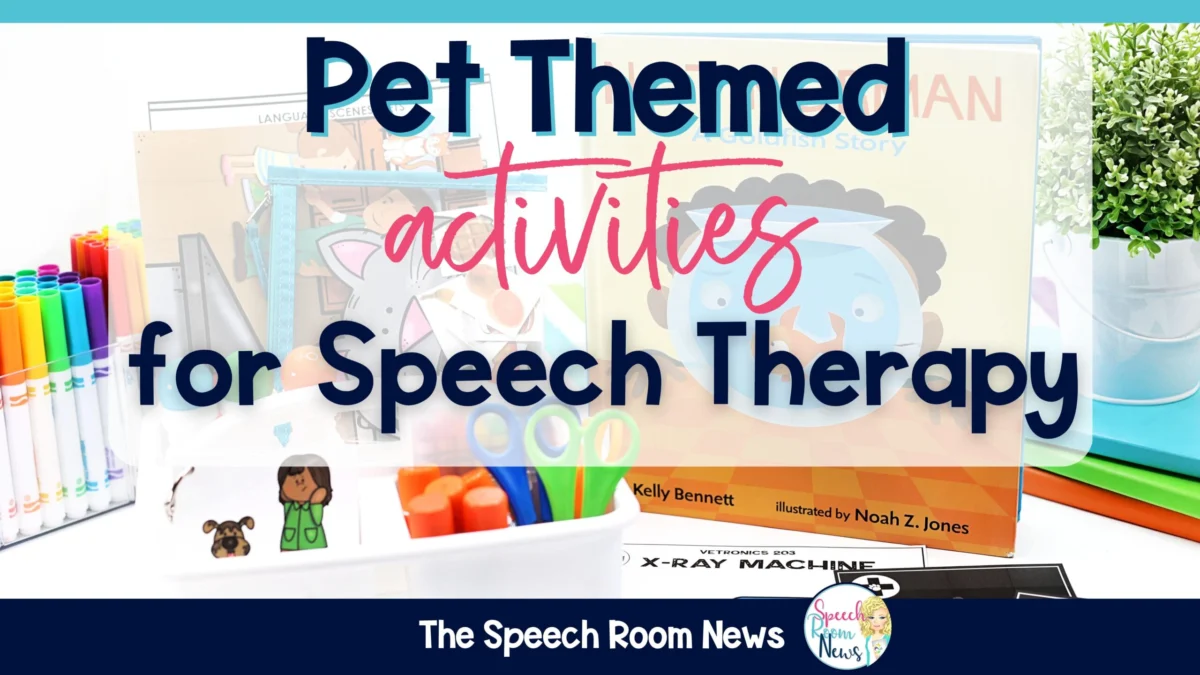
The field of speech-language pathology (SLP) is witnessing a transformative shift towards integrating thematic units into therapeutic interventions, a strategy increasingly recognized for its efficacy in fostering student engagement, maximizing learning potential, and streamlining clinical preparation. This pedagogical evolution moves beyond traditional, isolated drills to embrace holistic, context-rich learning environments, with non-holiday themes emerging as particularly valuable due to their versatility and year-round applicability. Among these, the "pets theme" stands out as a highly effective and universally appealing framework for addressing a diverse array of speech and language goals across various age groups.
The Evolution of Thematic Learning in Speech-Language Pathology

Historically, speech therapy often relied on highly structured, repetitive exercises designed to target specific deficits, such as articulation drills or discrete vocabulary instruction. While effective for certain aspects of intervention, this approach sometimes struggled with maintaining student engagement, promoting generalization of skills to naturalistic settings, and efficiently integrating multiple therapeutic objectives. Over the past two decades, influenced by broader educational reforms emphasizing play-based learning, constructivism, and whole-language approaches, speech-language pathologists have increasingly sought methods that mimic natural language acquisition and social interaction.
This shift gained momentum as research underscored the importance of intrinsic motivation and contextualized learning for cognitive development and skill transfer. Clinicians observed that children learned more effectively and retained information longer when activities were embedded within meaningful, engaging contexts. The adoption of thematic units marked a pivotal point in this evolution. By organizing therapy around a central topic—like animals, seasons, or community helpers—SLPs could create cohesive learning experiences that naturally encouraged vocabulary expansion, narrative development, social communication, and articulation practice, all while maintaining a high level of student interest. The "pets theme," in particular, leverages children’s innate fascination with animals, creating an immediate connection and fostering an environment ripe for communication.
Pedagogical Rationale: Why Thematic Units Are Clinically Effective

The benefits of employing thematic units in speech-language therapy are multi-faceted, addressing both clinical efficacy and practical considerations for the therapist.
- Enhanced Engagement and Motivation: Children are naturally curious and often have personal experiences or strong interests related to common themes. A "pets theme," for instance, resonates deeply with many children who have pets or dream of owning one. This intrinsic interest significantly boosts motivation, leading to greater participation and attention during therapy sessions. When students are genuinely engaged, they are more receptive to learning and more likely to exert effort, which is crucial for mastering challenging speech and language skills.
- Vocabulary Expansion and Semantic Networks: Themes provide a rich semantic context for introducing and reinforcing new vocabulary. Within a pet theme, children encounter words related to different types of animals, their habitats, care routines, sounds, and associated actions (e.g., "feed," "groom," "walk"). This contextual learning facilitates deeper understanding and helps children build robust semantic networks, where new words are connected to existing knowledge, making them easier to recall and use appropriately. The interactive nature of thematic activities allows for repeated exposure to target vocabulary in varied contexts, which is essential for retention.
- Generalization of Skills: One of the primary challenges in speech therapy is ensuring that skills learned in the clinical setting generalize to everyday environments. Thematic units inherently promote generalization by providing multiple opportunities to practice target sounds, grammatical structures, or social communication strategies across different activities within the same theme. For example, a child working on the /k/ sound might practice it while naming "cats," "kittens," and "kennels," describing a "collar," and pretending to "cuddle" a pet. This consistent, varied practice helps cement new skills.
- Time Efficiency and Resource Optimization for Clinicians: For busy speech-language pathologists, time is a precious commodity. Thematic units, especially those designed for year-round use, significantly reduce planning and preparation time. Once a theme is established and materials are curated or developed, they can be reused multiple times throughout the year or across different student groups with similar goals. This reusability, particularly for non-holiday themes, represents a considerable advantage over holiday-specific materials that have limited application windows. It allows clinicians to focus more on direct student interaction and individualized intervention planning rather than constant material creation.
- Flexibility and Adaptability: A well-designed theme can be adapted to target a wide range of speech and language goals, including articulation, phonological processes, receptive and expressive language, social pragmatic skills, fluency, and even early literacy. Activities can be differentiated to suit various developmental levels and individual student needs, making thematic units highly versatile for diverse caseloads.
The "Pets Theme" in Practice: A Multifaceted Therapeutic Framework
The "pets theme" exemplifies how a central concept can be leveraged to create a comprehensive and engaging therapeutic experience. By integrating diverse resources and activities, clinicians can address a broad spectrum of speech and language objectives.

1. Literacy Integration: Building Narrative and Comprehension Skills
Books serve as foundational elements for any thematic unit, providing rich language models and narrative structures. Within a pets theme, carefully selected books can target vocabulary, story grammar, inferencing, and emotional understanding.
- "Not Norman by Kelly Bennett": This humorous tale about a boy’s initial disappointment with a goldfish named Norman offers excellent opportunities for discussing emotions (disappointment, acceptance, affection), contrasting traits (active vs. quiet pets), and predicting outcomes. Clinicians can use it to work on narrative retell, character analysis, and expressing opinions.
- "Some Pets by Angela DiTerlizzi": With its vibrant illustrations and diverse representation of children and their pets, this book is ideal for early vocabulary building, categorization (types of pets, pet accessories), and descriptive language. It can also be used to explore concepts of responsibility and care associated with pet ownership.
- "Lola Gets a Cat by Anna McQuinn": This story explores the realities of pet ownership, contrasting Lola’s daydreams with the responsibilities involved. It’s excellent for sequencing events, understanding cause and effect, problem-solving, and discussing the concept of responsibility, fostering pragmatic language skills related to caretaking.
- Interactive Vocabulary Books about Pets: These specialized books often include visual aids and interactive elements (e.g., lift-the-flaps, movable pieces) to reinforce core vocabulary related to pets, their characteristics, actions, and associated items. They are particularly effective for students with emerging language skills or those needing concrete visual support.
2. Auditory Processing and Phonological Awareness Through Music
Songs are powerful tools for engaging young learners and targeting auditory skills. The repetitive nature and rhythm of pet-themed songs make them ideal for developing phonological awareness, identifying animal sounds, practicing word patterns, and expanding basic vocabulary and action words.
- Songs like "I Have a Pet," "Do You Have a Pet?", "I Love Dogs," and "Wag Your Tail" provide opportunities for children to imitate animal sounds, practice target words in a rhythmic context, follow simple directions (e.g., "wag your tail"), and engage in turn-taking during sing-alongs. These activities support auditory memory, discrimination, and the development of early literacy skills.
3. Gamification for Targeted Skill Practice
Games introduce an element of fun and competition, making repetitive tasks more palatable and motivating.

- "Color and Play Pets Bingo": This game can target a multitude of goals. For articulation, students can practice target sounds when naming pet-related pictures. For language, it can facilitate vocabulary acquisition, categorization (e.g., "find all the pets that fly"), and descriptive language (e.g., "describe the pet on your card"). The game format also encourages turn-taking and following directions.
- "Feed the Dog Articulation Boom Cards": Digital interactive games like this leverage technology to create highly engaging articulation practice. The immediate feedback (e.g., "crunch sound") and interactive element of "feeding" the dog make the repetitive practice of speech sounds exciting. These platforms typically offer comprehensive coverage of various articulation sounds, allowing for highly individualized therapy.
4. Role-Playing and Social-Pragmatic Development with Toys
Toys that facilitate imaginative play are invaluable for targeting social communication, narrative skills, and problem-solving.
- "Critter Clinic Toy Vet Set": This toy is a cornerstone for pet-themed role-playing. It naturally encourages children to engage in pretend play, taking on roles as veterinarians or pet owners. This scenario provides rich opportunities for practicing:
- Social Language: greetings, asking questions ("What’s wrong with your pet?"), giving instructions, expressing empathy.
- Narrative Skills: creating a story about a sick pet, explaining symptoms, describing treatment.
- Vocabulary: medical terms (e.g., "stethoscope," "bandage," "medicine"), animal body parts, actions (e.g., "examine," "heal").
- Problem-Solving: identifying a pet’s ailment and deciding on a course of action.
- The lock-and-unlock features also offer opportunities for practicing concepts like "open/close," "in/out," and following multi-step directions.
- "Hape Family Pet Houses": This set, with its small pieces and various animal figures, is excellent for developing spatial concepts (e.g., "the cat is in the house," "the dog is under the table"), prepositions, descriptive language, and creating mini-narratives about pets’ daily lives. It also promotes fine motor skills through manipulation of the small pieces.
5. Creative Expression and Fine Motor Skills Through Crafts
Crafts combine artistic expression with therapeutic goals, offering a multi-sensory approach to learning.
- Clifford the Big Red Dog Craft: Creating a craft like a paper plate Clifford allows for a connection to popular children’s literature, reinforcing character recognition and story elements. The crafting process itself provides opportunities for:
- Following Directions: "First, cut the red circle; then, glue on the ears."
- Vocabulary: colors, shapes, action verbs (cut, glue, draw).
- Descriptive Language: describing the finished product or the steps involved.
- Fine Motor Skills: cutting, gluing, coloring.
6. Sensory Play for Multi-Modal Learning
Sensory bins offer a tactile and engaging way to explore themes, particularly beneficial for younger children or those with sensory processing needs.

- Pet-Themed Sensory Bin: Filling a bin with sensory materials like shredded paper, felt pieces, or kinetic sand, and hiding small toy pets within, creates a highly interactive experience. This activity can target:
- Descriptive Language: children describe what they feel, see, and find (e.g., "I feel something soft," "I see a pointy black ear").
- Vocabulary: textures, colors, animal names, actions (e.g., "dig," "search").
- Requesting and Social Interaction: asking for turns, requesting specific items.
- Concept Development: "in/out," "under/over."
The Rise of Curated Therapy Kits and Professional Support
The growing recognition of thematic intervention’s value has led to the development of comprehensive, pre-planned resources such as the "Pet Themed Speech Therapy Kit." These kits represent a significant advancement in supporting speech-language pathologists by offering entire months of lessons and activities, including printables, interactive play resources, circle time lessons, parent handouts, crafts, and book companions.
Industry experts suggest that such comprehensive kits are becoming indispensable tools for speech-language pathologists, offering structured curricula that save valuable planning time while ensuring high-quality, engaging interventions. These resources not only provide a coherent framework for therapy but also ensure consistency across sessions and clinicians. By providing ready-to-use materials, these kits empower SLPs to focus their energy on individualized assessment and direct client interaction, ultimately enhancing therapeutic effectiveness. The availability of such curated content addresses a critical need for accessible, evidence-informed resources in a demanding profession.

Broader Implications for Speech-Language Pathology and Education
The widespread adoption of thematic approaches carries significant implications for the field of speech-language pathology and education as a whole:
- Professional Development: It encourages SLPs to develop creative curriculum integration skills, moving beyond isolated skill remediation to holistic, contextualized learning. This fosters a more dynamic and interdisciplinary approach to therapy.
- Interdisciplinary Collaboration: Thematic units naturally lend themselves to collaboration with classroom teachers, occupational therapists, and other specialists. By aligning therapy themes with classroom curricula, SLPs can reinforce academic content and promote carryover of skills across different learning environments. For example, a pet theme in speech therapy can complement a science unit on animals in the classroom.
- Parental Engagement: Providing parents with clear, theme-based home practice activities can significantly boost carryover of skills outside the therapy room. When parents understand the theme and have accessible materials or ideas, they are more likely to engage in targeted practice with their children, strengthening the home-school connection.
- Research Opportunities: The growing popularity of thematic interventions highlights the need for continued empirical research to rigorously evaluate their long-term efficacy across various populations and target goals. Documenting specific outcomes associated with theme-based learning can further solidify its evidence base and refine best practices.
In conclusion, the strategic implementation of thematic units, particularly versatile and engaging ones like the "pets theme," marks a significant advancement in speech-language pathology. By fostering motivation, enriching vocabulary, promoting skill generalization, and optimizing clinical efficiency, these approaches are not merely trends but foundational shifts towards more effective, child-centered, and holistic therapeutic interventions. As the field continues to evolve, the integration of well-designed, adaptable themes will remain a cornerstone of successful speech and language development.
