

The journey of a child’s speech and language development is a foundational aspect of their overall growth, profoundly influencing their cognitive, social, and emotional capabilities. For both dedicated speech-language pathologists (SLPs) and parents observing the nascent stages of their child’s communication, the proactive stance of early intervention speech therapy is not merely beneficial but critically imperative. Understanding the pivotal roles each party plays in identifying, tracking, and addressing early speech challenges is essential to fostering optimal developmental outcomes. This comprehensive overview delves into the scientific basis, practical strategies, and systemic importance of early intervention, complemented by insights into effective tracking methodologies and engaging home-based activities.
The Foundational Science of Early Language Acquisition
Language acquisition is one of the most remarkable feats of human development, largely occurring within the first few years of life. This period is characterized by extraordinary brain plasticity, where neural pathways for language are rapidly forming and strengthening through exposure and interaction. Research consistently demonstrates that a child’s brain is most receptive to learning language from birth through age three, often referred to as a "critical period" for language development. During this window, the brain’s ability to organize and store linguistic information is at its peak.
Early communication skills, beginning with pre-linguistic gestures, babbling, and joint attention, lay the groundwork for later vocabulary growth, sentence formation, and complex conversational abilities. Deficits in these early stages can cascade into broader developmental challenges, impacting not only speech clarity but also reading readiness, social interactions, and academic performance. Studies by organizations such as the American Speech-Language-Hearing Association (ASHA) indicate that approximately 15-20% of children aged 0-5 years exhibit some form of speech or language delay, making early identification and intervention a significant public health concern. Without timely support, these initial delays can persist, requiring more intensive and prolonged interventions later in life.
Identifying "Late Talkers": Milestones and Early Concerns
Recognizing typical developmental milestones is the first step in discerning potential delays. While every child’s developmental timeline is unique, there are established benchmarks that guide parents and professionals.
- Birth to 6 months: Cooing, gurgling, turning heads towards sounds, crying to express needs.
- 6 to 12 months: Babbling with consonant-vowel combinations (e.g., "ba-ba," "da-da"), responding to their name, understanding simple words like "no" and "bye-bye," using gestures (waving, pointing). First words often emerge around 12 months.
- 12 to 18 months: Using 1-3 words beyond "mama" and "dada," imitating sounds and words, following simple one-step commands (e.g., "Give me the ball").
- 18 to 24 months: Acquiring approximately 50 words, combining two words (e.g., "more juice," "daddy go"), pointing to body parts, understanding simple questions.
- 24 to 36 months: Vocabulary expanding rapidly to hundreds of words, using 3-4 word sentences, asking "what" and "where" questions, being understood by familiar listeners most of the time.
A child who does not reach these milestones within a reasonable timeframe is often termed a "late talker." Specifically, a child aged 18-30 months who has a limited vocabulary (fewer than 50 words) and does not combine words is typically considered a late talker. It is crucial for parents not to adopt a "wait and see" approach beyond a certain point, as early identification significantly improves outcomes. Pediatricians play a vital role in initial screenings, but parental observation and proactive engagement are equally important. The transition from general observation to systematic tracking becomes essential when concerns arise.
The Indispensable Role of Speech-Language Pathologists and the Parent-Professional Partnership
Speech-language pathologists are highly trained professionals who specialize in the assessment, diagnosis, and treatment of communication disorders. In early intervention settings, their expertise is foundational. They conduct comprehensive evaluations to determine the nature and extent of a child’s speech and language difficulties, developing individualized therapy plans tailored to the child’s specific needs.
A core principle of effective early intervention is the family-centered approach, where parents are recognized as the child’s primary communicators and educators. SLPs often adopt a coaching model, empowering parents with strategies and techniques to integrate therapeutic practices into daily routines. This collaborative partnership ensures that learning opportunities extend beyond therapy sessions into the child’s natural environment, maximizing exposure and practice. For many SLPs, experiencing the developmental journey with their own children, particularly if challenges arise, offers a unique and invaluable perspective, deepening their empathy and refining their professional approach. This personal insight often fuels the development of practical tools and resources designed to bridge the gap between clinical expertise and parental application.
Data-Driven Progress: The Critical Value of Tracking First Words and Sounds
Systematic data collection, often through word and sound tracking, is a cornerstone of effective early intervention. It moves beyond subjective recall, providing objective evidence of a child’s communicative growth. When a child is struggling to meet speech milestones, consistent tracking offers several benefits:
- Objective Measurement of Progress: Memory alone is insufficient for accurately recalling every new sound or word a child produces. A written record provides a clear, measurable timeline of development, highlighting subtle but significant changes over time.
- Informing Therapeutic Decisions: For SLPs, comprehensive tracking data from parents is invaluable. It helps therapists understand the child’s natural communication patterns, identify emerging sounds, and assess the effectiveness of current intervention strategies. This data allows for precise adjustments to therapy goals and techniques.
- Identifying Syllable Shapes and Phonological Development: Beyond mere word count, tracking allows for the analysis of the child’s developing sound repertoire and syllable structures (e.g., Consonant-Vowel (CV) words like "go," Vowel-Consonant (VC) words like "up," CVCV words like "mama," or CVC words like "pop"). This information is critical for understanding phonological development and identifying areas requiring targeted intervention.
- Empowering Parents: The act of tracking can be incredibly empowering for parents. It transforms what might feel like an overwhelming, ambiguous struggle into a concrete process of observation and documentation. Parents often report being surprised by the number of sounds and words their child is actually producing once they begin intentional tracking, fostering a sense of progress and hope.
- Facilitating Communication with Professionals: Organized tracking sheets simplify reporting to therapists and pediatricians, ensuring that crucial information is shared accurately and efficiently during consultations. This detailed account supports more informed discussions and collaborative decision-making regarding the child’s care plan.
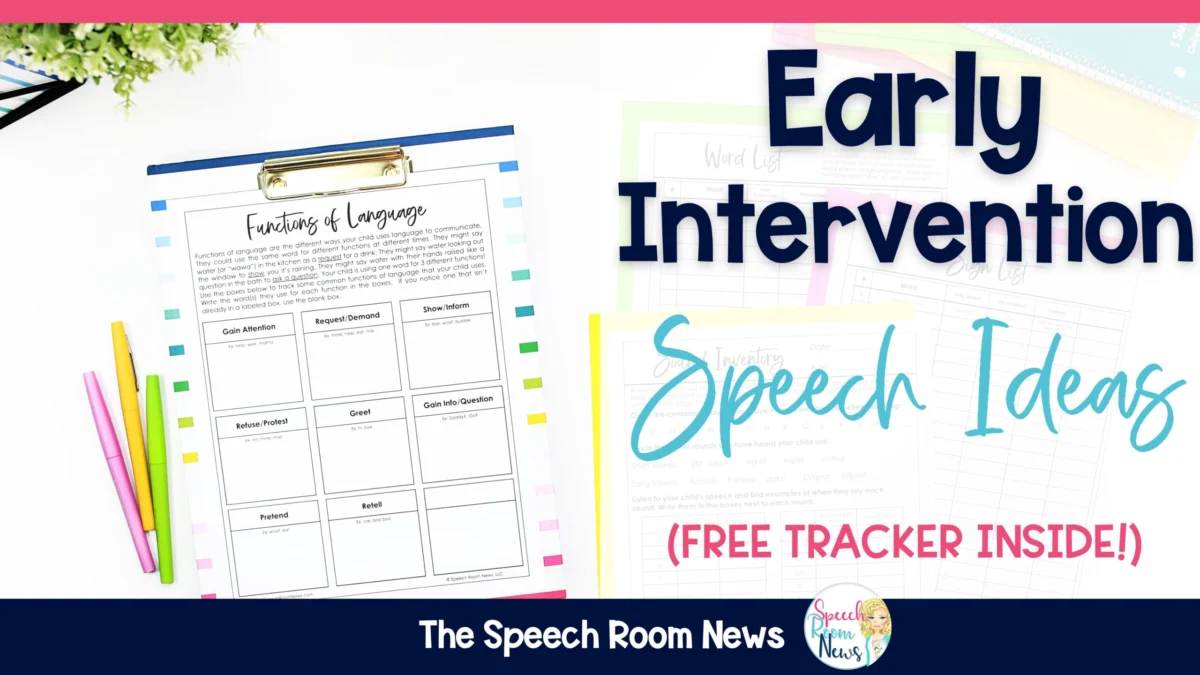
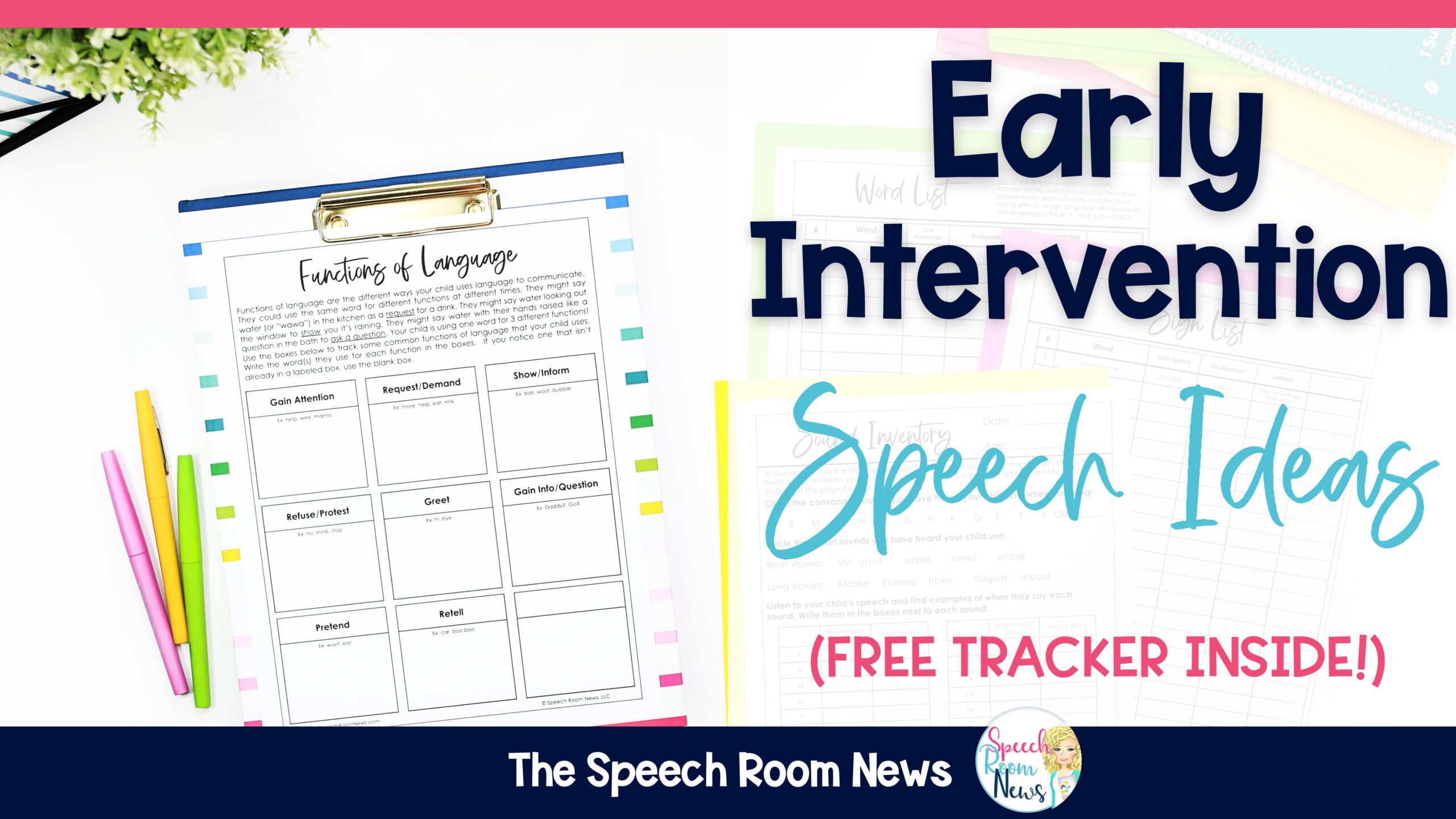
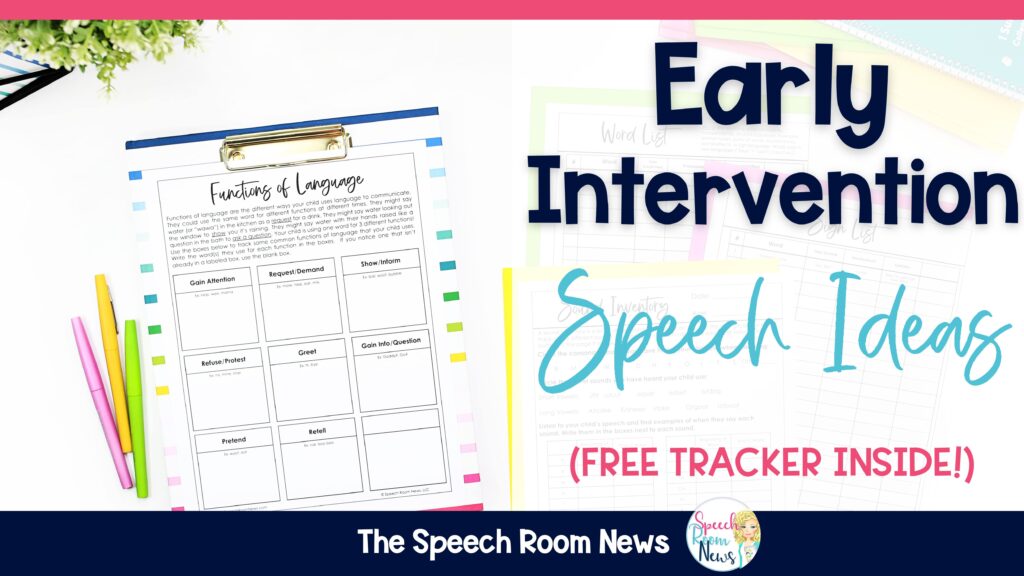
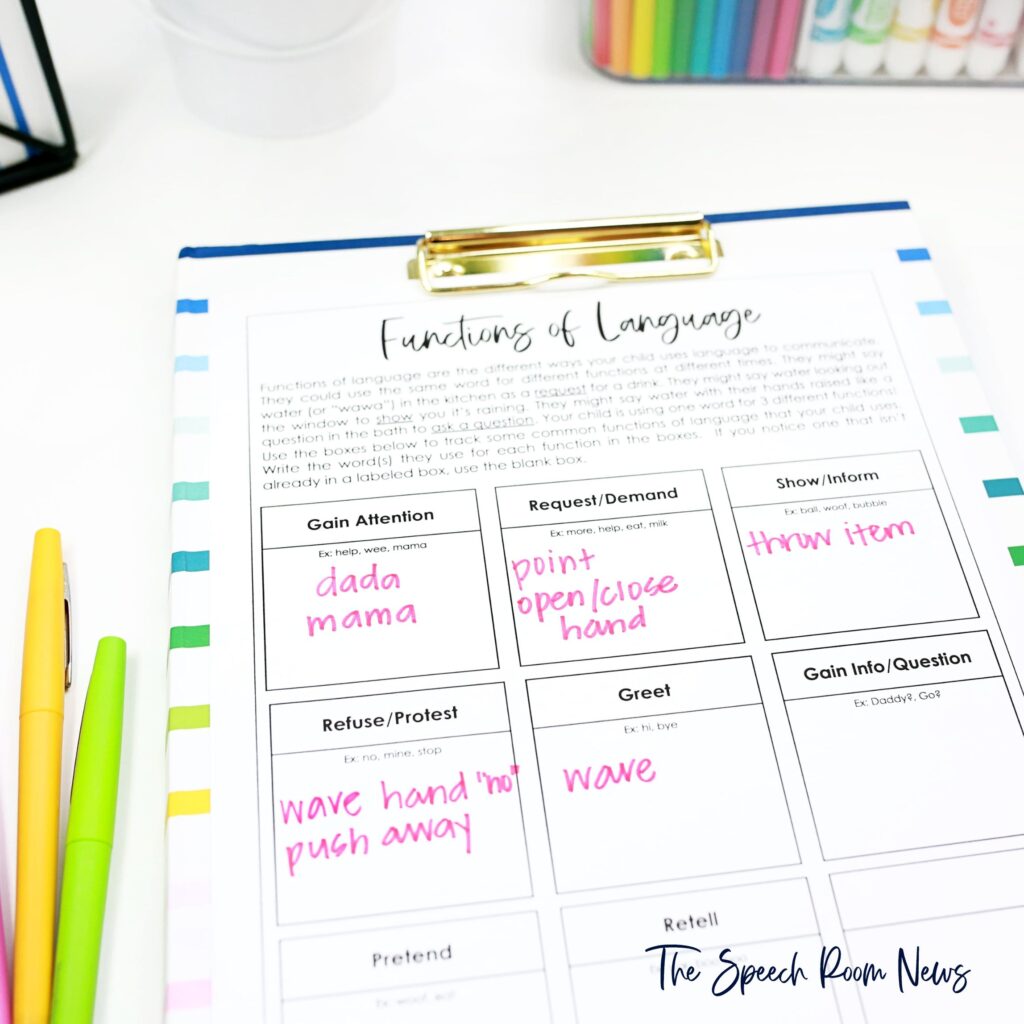
Resources such as "First Words Tracking Sheets" are designed to streamline this process, enabling parents to document early sounds, emerging words, and the context in which they are used. These tools often include sections for recording different word types, functions of language (e.g., requesting, commenting), and even communicative gestures.
Empowering Parents: Everyday Strategies for Language Stimulation

Integrating language-rich activities into daily routines is a highly effective method for stimulating speech and language development in late talkers and children receiving early intervention services. Routines offer predictable patterns, allowing for repeated exposure to specific vocabulary, social expectations, and actions. This consistent, naturalistic practice capitalizes on everyday moments to build communication skills.
Here are expanded examples of fun early intervention speech therapy activities that can be incorporated into daily life:
-
Snack Time: A Communication Temptation Goldmine
- Strategy: Create deliberate opportunities for your child to initiate communication.
- Application: Instead of simply handing over a snack, place it slightly out of reach or offer only a small portion. Use exaggerated facial expressions and vocalizations while preparing the snack.
- Modeling: "Look, I’m pouring the crackers into the bowl. Crunch, crunch! Yum! I love crackers. Do you want crackers?"
- Waiting: After asking, pause and wait expectantly for a response, whether it’s a sound, a gesture, or an attempt at a word (e.g., "ca," "ack").
- Expanding: If the child points, respond with the word: "Oh, you want crackers! Here are some crackers." If they say "ca," say "Yes, cracker! You said cracker!"
- Varying Vocabulary: Introduce action words ("open," "eat," "pour"), descriptive words ("yummy," "crunchy," "more"), and positional words ("in," "out").
- "Sabotage": Deliberately "forget" a spoon for yogurt or a cup for juice, creating a natural opportunity for the child to communicate a need.
-
Brushing Teeth: Mirror Play and Descriptive Language
- Strategy: Utilize the reflective surface of a mirror to enhance self-awareness and social interaction, while narrating actions.
- Application: Stand with your child in front of a mirror. Begin by modeling sounds and facial expressions.
- Interactive Play:
- Make silly faces together ("Open wide!").
- Imitate animal sounds (e.g., "Roar!" like a lion).
- Practice sounds like "ahhh" (for checking teeth) or "eeeee" (for smiling).
- Sing simple songs related to brushing.
- Detailed Narration: Explain every step using clear, concise language and emphasizing key verbs and prepositions.
- "It’s time to brush your teeth! We need to make them clean and healthy. Let’s find your blue toothbrush. Squeeze the toothpaste – just a little bit! Now, brush, brush, brush the front teeth! Go up and down. Now the back teeth! Swish, swish, swish! Good job! Time to rinse."
- Focus on Concepts: Incorporate positional words (up, down, front, back, inside, outside), descriptive words (clean, healthy, sparkly), and action verbs (brush, squeeze, rinse, spit).
-
Bath Time: Sensory Exploration and Vocabulary Expansion
- Strategy: The engaging sensory nature of bath time provides a rich context for language learning.
- Application: Use bath toys to create narratives. Label objects and actions.
- Modeling: "Splash, splash! The water is warm. Here’s your yellow ducky. Ducky goes in the water, and out of the water. Look, the boat is floating! Let’s pour water with the cup."
- Questioning: "Where’s the soap? Can you find your washcloth?"
- Expanding: If your child says "duck," respond with "Yes, a yellow ducky is swimming!"
-
Getting Dressed: Sequencing and Body Parts
- Strategy: Turn dressing into an opportunity for sequencing, identifying body parts, and understanding clothing items.
- Application: As you dress your child, name each item of clothing and the body part it goes on.
- Modeling: "Time to put on your shirt. First, your head goes in! Then your arms. One arm, two arms! Now your pants. Where are your legs?"
- Following Directions: "Can you lift your foot so we can put on your sock?"
-
Reading Books: Joint Attention and Narrative Skills
- Strategy: Reading together fosters joint attention, expands vocabulary, and introduces narrative structures.
- Application: Choose board books with bright pictures. Point to and label objects.
- Modeling: "Look at the doggy! The doggy says woof, woof! He’s running fast."
- Engagement: Ask simple questions: "Where’s the cat?" "What does the cow say?" Encourage the child to turn pages.
- Repetition: Read favorite books repeatedly, as this helps children memorize words and anticipate phrases.
When to Seek Professional Help: Navigating the Referral Process
While these home-based activities are invaluable, it is paramount to know when to seek professional evaluation. If a child consistently misses several key speech and language milestones, exhibits a sudden loss of previously acquired words, struggles with understanding simple instructions, or shows minimal attempts at communication (verbal or non-verbal), a consultation with a pediatrician and a referral for an SLP evaluation are strongly recommended.
Parents can initiate the process by contacting their pediatrician, who can provide a referral. Alternatively, many regions offer "Child Find" services through local school districts or state early intervention programs (often governed by Part C of the Individuals with Disabilities Education Act, IDEA, for children from birth to three years old). These programs provide free or low-cost evaluations and services.

The assessment process typically involves a comprehensive evaluation by an SLP, which may include standardized tests, observational assessments, and a detailed developmental history gathered from parents. Eligibility for early intervention services is determined based on these findings. The benefits of early intervention extend far beyond immediate speech improvement, positively impacting a child’s literacy skills, academic performance, social interactions, and overall emotional well-being, potentially reducing the need for more intensive special education services later.
Resources and Continued Support
The journey of supporting a child’s speech and language development is ongoing. A wealth of resources exists to assist parents and professionals. Comprehensive parent handouts, often developed by SLPs, provide detailed guidance on topics such as understanding late talkers, encouraging first words, utilizing gestures for communication, and integrating language strategies into daily routines. These resources serve as practical handbooks, offering actionable advice and reinforcing the strategies learned in therapy. They are invaluable for empowering parents to become active and informed participants in their child’s developmental progress, solidifying the collaborative foundation between home and clinical support.
In conclusion, the early years are a unique and powerful window for language development. Through a combination of scientific understanding, diligent observation, systematic tracking, and engaging, routine-based activities, parents, in partnership with skilled speech-language pathologists, can profoundly impact a child’s communicative future. Proactive early intervention is not just about addressing a delay; it is about unlocking a child’s full potential, ensuring they have the tools to connect, learn, and thrive in the world.
