

The landscape of pediatric speech and language therapy is continually evolving, with a growing emphasis on incorporating engaging, multi-sensory tools to optimize therapeutic outcomes. Among the diverse array of resources available to clinicians and educators, magnetic tiles have emerged as a remarkably versatile and effective medium for addressing a wide spectrum of speech and language goals in young children. Far from being merely a recreational toy, these colorful, geometric building blocks offer a dynamic platform for fostering crucial communication skills, making therapy sessions not only productive but also profoundly enjoyable for students. This integration reflects a broader pedagogical shift towards play-based, child-centered interventions, recognizing that children learn most effectively when actively engaged and motivated.
The Evolution of Pediatric Speech Therapy: A Shift Towards Play
Historically, speech therapy often relied on more structured, drill-based approaches, where repetition of sounds or words was the primary method of intervention. While effective for some aspects, this model could sometimes struggle with maintaining child engagement, particularly for younger learners or those with attention challenges. Over recent decades, a significant paradigm shift has occurred, moving towards more naturalistic, play-based interventions. This modern approach is rooted in developmental psychology, which posits that play is a child’s natural learning ground. Through play, children explore, experiment, problem-solve, and interact with their environment and peers, all of which are critical for language acquisition and cognitive development.
This shift has led speech-language pathologists (SLPs) to actively seek out tools and activities that can seamlessly integrate therapeutic goals into playful scenarios. Magnetic tiles fit this mold perfectly, offering an open-ended, tactile, and visually stimulating experience that can be adapted to target a vast array of speech and language objectives. Their inherent ability to captivate a child’s attention and facilitate spontaneous interaction makes them an invaluable asset in the contemporary therapy room, appealing to children from as young as one year old through early elementary grades. The initial investment in quality magnetic tile sets, while potentially higher than some other toys, is often justified by their durability, versatility, and the extensive range of developmental benefits they offer across multiple age groups and therapeutic needs.
Unlocking Potential: Ten Strategic Applications of Magnetic Tiles in Speech Therapy
The utility of magnetic tiles extends across various domains of speech and language development. Here are ten distinct ways these innovative tools are being leveraged to enhance therapeutic interventions:
1. Cultivating Social Cooperative Work
Magnetic tiles are exceptional for fostering social interaction and cooperative play, which are foundational for effective communication. In a therapy setting, two or more students can be tasked with building a joint structure, requiring them to engage in back-and-forth communication, negotiation, and shared problem-solving. This environment naturally encourages turn-taking, sharing materials, expressing ideas ("Let’s make a tall tower!"), asking for help ("Can you pass me a square?"), and providing instructions ("Put the triangle on top"). SLPs can facilitate these interactions by prompting specific phrases or social scripts, observing for joint attention, and encouraging conflict resolution. This hands-on collaboration not only enhances verbal communication but also nurtures vital social-emotional skills, such as empathy, compromise, and teamwork, which are critical for successful peer relationships and classroom integration. Studies on play-based interventions consistently highlight their efficacy in improving social communication skills in children with various developmental needs.
2. Mastering Prepositions and Spatial Concepts
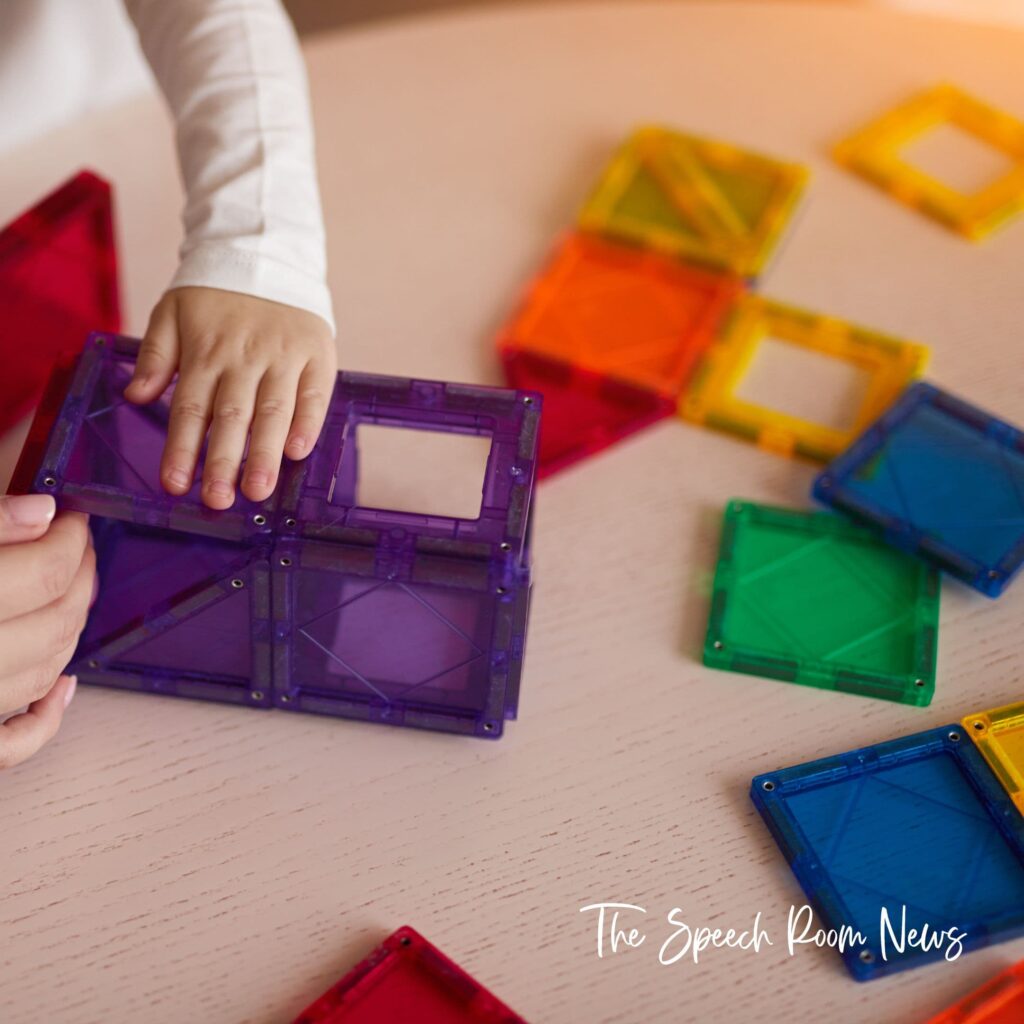
Abstract spatial concepts like "on," "under," "beside," "between," "in front of," and "behind" can be challenging for young children to grasp through verbal instruction alone. Magnetic tiles provide a concrete, manipulable medium to make these concepts tangible. Students can physically place tiles "on" or "under" a structure, hide a small toy "inside" a tile house, or arrange tiles "between" two larger pieces. This kinesthetic learning experience reinforces the meaning of prepositions, allowing children to connect the word to a direct action and visual outcome. SLPs can give directives ("Put the blue tile under the red one") to target receptive language skills, and prompt students to describe their creations ("The car is on the ramp") for expressive language practice. This hands-on exploration significantly aids in the internalization of spatial relationships, laying a crucial groundwork for descriptive language and narrative development.
3. Enhancing Sorting by Shape and Color
Categorization and discrimination are fundamental cognitive skills that underpin language development. Magnetic tiles, with their diverse shapes (squares, triangles, pentagons) and vibrant colors, offer an ideal tool for sorting activities. Students can be prompted to group tiles by color, shape, or even size. This activity not only hones their ability to identify and differentiate attributes but also provides natural opportunities for speech practice as they name the colors and shapes. To elevate the activity, students can build "sorting bins" or "garages" using the tiles themselves, then sort other tiles into these self-made containers. This adds an extra layer of engagement and creativity, transforming a simple sorting task into a multi-step project that enhances descriptive vocabulary, following multi-step directions, and articulating choices ("I need a red square for this bin").
4. Articulation Practice in an Engaging Context
One of the persistent challenges in articulation therapy is making repetitive sound practice engaging and meaningful. Magnetic tiles ingeniously address this by embedding target speech sounds into a fun, functional context. For example, if the target sound is /k/, an SLP might prompt words like "castle," "cage," "car," "block," "stick," or "park" as students build. Each time a tile is placed or a part of the structure is named, the child practices their target sound. For the /s/ sound, they might build a "snake" or a "slide." For /r/, they could construct a "road" or a "rocket." This approach moves beyond isolated sound drills, integrating articulation practice into natural conversation and play, thereby improving carryover and making therapy more dynamic and enjoyable. The child’s focus shifts from the pressure of producing a sound correctly to the intrinsic motivation of building, making the practice feel less like work and more like play.
5. Reinforcing Irregular Verbs
Irregular verbs present a common hurdle for language learners, as their past tense forms do not follow standard grammatical rules (e.g., "go" becomes "went," not "goed"). Magnetic tiles offer a creative solution for practicing these tricky verbs. Students can construct a scene or a sequence of actions with the tiles and then narrate what happened, incorporating irregular verbs. For instance, a child might build a tower and then demonstrate it falling, saying, "The tower fell down." They could describe building a house, using the verb "built," or a car moving, using "went." This contextualized practice helps solidify the correct usage of irregular verbs within a narrative framework, making the learning process more intuitive and memorable than rote memorization. The visual and kinesthetic components of building and narrating enhance understanding and retention.
6. Developing Executive Functioning Skills
Executive functioning skills—such as planning, organization, working memory, inhibitory control, and task initiation—are crucial for academic success and daily life. Magnetic tiles offer an excellent medium for developing these cognitive abilities. SLPs can set specific challenges, such as "Build a house with a roof and a door in five minutes," or "Create a bridge using only triangles and squares." These parameters require students to plan their construction, select appropriate pieces, manage their time, and adapt their strategy if challenges arise. The act of conceptualizing a structure, gathering the necessary tiles, executing the build, and then reflecting on the process directly exercises these executive functions. Furthermore, verbalizing their plans and reflecting on their choices also integrates speech and language practice, making this a highly integrated therapeutic activity.
7. Practicing Regular Plurals
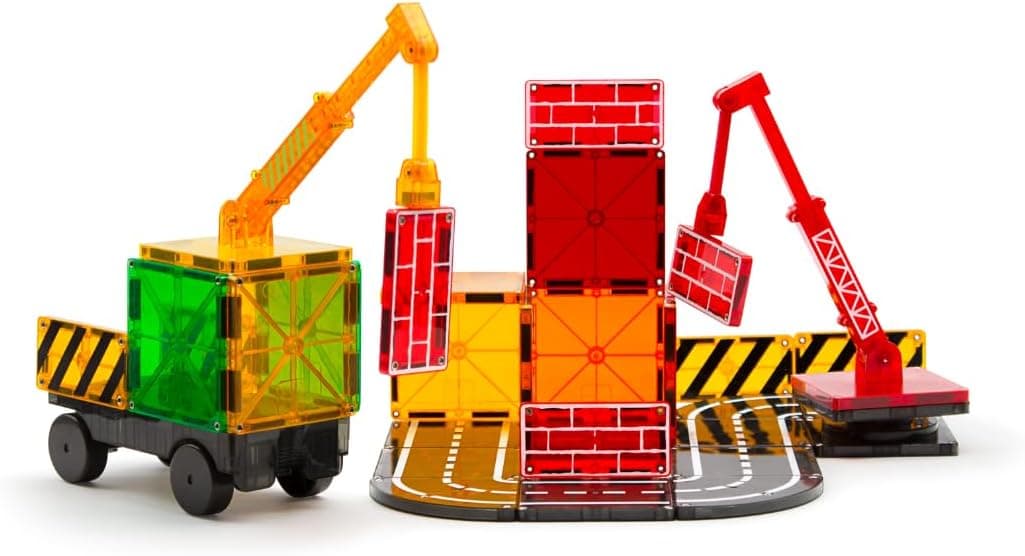
The acquisition of regular plural forms (adding "-s" or "-es" to nouns) is a key developmental milestone. Magnetic tiles provide numerous opportunities for naturalistic practice. As students build, they frequently encounter multiple items, leading to spontaneous or prompted use of plurals. For instance, an SLP might ask, "How many squares do you have?" prompting the child to say, "I have three squares." Or, "What are you building?" "I’m making two towers." By encouraging discussions about the quantity and types of shapes used, children repeatedly practice forming regular plurals in a meaningful context. This interactive counting and describing activity supports both expressive language development and the understanding of quantity, making the grammatical rule feel less abstract.
8. Responding to and Formulating WH Questions
WH questions ("who," "what," "where," "when," "why," "how") are fundamental to comprehension, information retrieval, and expressive language. Magnetic tiles create dynamic scenarios for practicing these question types. As students build, SLPs can ask: "Where does this tile go?" "Who is building the tallest tower?" "What color is your favorite piece?" "When will your castle be finished?" "Why did that piece fall?" Students can also be encouraged to ask WH questions of the clinician or their peers. This interactive questioning fosters active listening, encourages descriptive language, and helps children develop the cognitive skills necessary to seek and provide information, which is a cornerstone of effective communication. The open-ended nature of building allows for a limitless array of WH questions to be integrated.
9. Reinforcing the Pronoun "I"
Many young children, particularly those with language delays, struggle with correct pronoun usage, often confusing "I" and "me," or reversing pronouns entirely. Magnetic tiles provide a natural, self-referential context for practicing the first-person singular pronoun "I." By asking students to describe their individual actions or choices during the building process, SLPs can elicit repeated use of "I." Examples include: "I picked the blue triangle," "I want to make a roof," "I am building a tall wall," or "I put it there." This direct association between the child’s action and the pronoun "I" helps to solidify its correct usage in a meaningful and personal way, reducing confusion and promoting self-referential language skills.
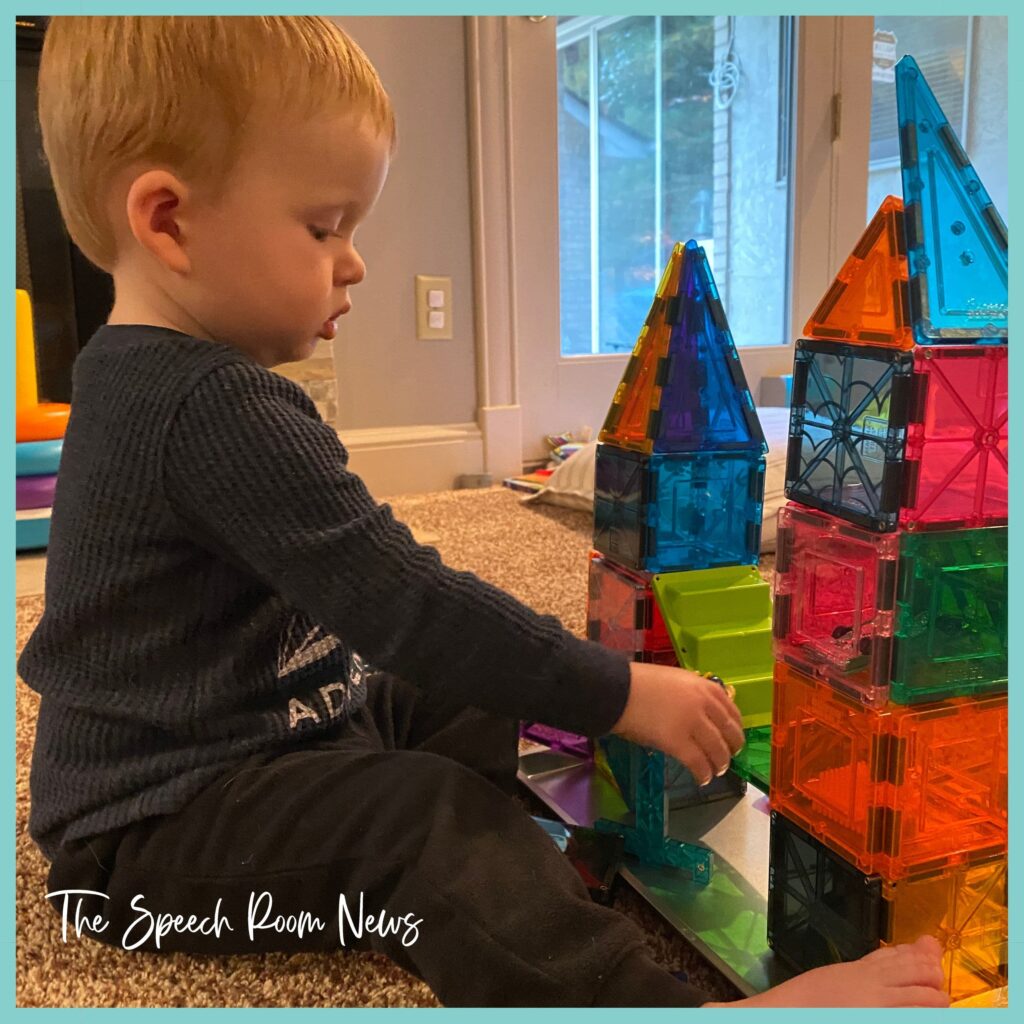
10. Supporting Augmentative and Alternative Communication (AAC) Core Words
For children who use Augmentative and Alternative Communication (AAC) systems, magnetic tiles are an invaluable tool for reinforcing core words. Core words are high-frequency, versatile words (e.g., "more," "go," "stop," "on," "off," "up," "down," "want," "help," "big," "little") that can be used across various contexts. During magnetic tile play, SLPs can model these core words on a child’s AAC device or picture exchange system. For example, "You want more tiles?" "Put it on," "Make it go up." The child can then be prompted to use their AAC device to request "more," comment "big," or ask for "help." This provides practical, contextualized exposure and practice with core words, making the AAC system more functional and integrated into natural communication exchanges. The highly motivating nature of magnetic tiles encourages children to use their AAC systems to interact with the activity.
Broader Implications and Expert Perspectives
The integration of versatile tools like magnetic tiles into speech therapy programs signifies a broader positive trend in early childhood education and special education. According to numerous speech-language pathologists, the ability of these materials to simultaneously address multiple goals—cognitive, social, and linguistic—within a single, engaging activity is a significant advantage. Dr. Anya Sharma, a pediatric SLP with over 15 years of experience, notes, "Magnetic tiles are a game-changer. They naturally foster an environment where children are intrinsically motivated to communicate. We’re seeing not just improvements in specific speech sounds or grammatical structures, but also enhanced engagement, sustained attention, and improved social reciprocity, which are crucial for overall development."
Data from various studies consistently underscore the effectiveness of play-based interventions. Research indicates that children participating in such programs often demonstrate greater retention of learned skills, improved generalization to new contexts, and reduced anxiety associated with therapy. Furthermore, the tactile and visual nature of magnetic tiles aligns with principles of multi-sensory learning, which has been shown to be particularly beneficial for children with diverse learning styles and developmental needs, including those with autism spectrum disorder or developmental language disorders. The Centers for Disease Control and Prevention (CDC) estimates that approximately 1 in 12 children aged 3-17 years in the U.S. has a disorder related to voice, speech, language, or swallowing, highlighting the critical need for effective and accessible therapeutic tools.
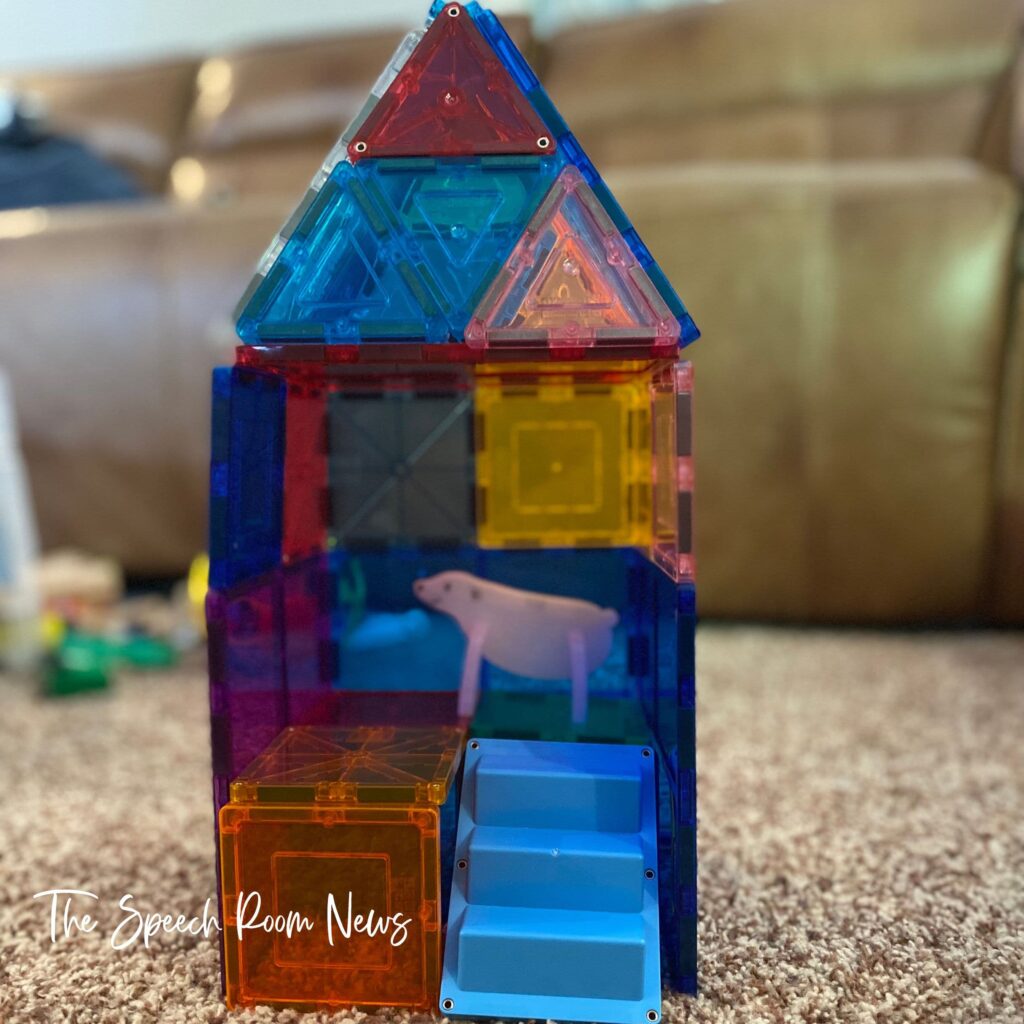
The accessibility of magnetic tiles also allows for seamless integration of therapeutic strategies into home environments. Parents can be coached on how to use these toys to reinforce therapy goals, thereby extending the therapeutic benefits beyond clinic walls and promoting consistent practice, a key factor in sustained progress. This transferability of skills from clinic to home empowers families and strengthens the partnership between therapists and caregivers.
In conclusion, magnetic tiles represent more than just an entertaining toy; they are a powerful, pedagogically sound instrument in the modern speech therapy toolkit. Their unparalleled versatility, capacity for fostering engagement, and ability to address a wide array of speech and language goals make them an indispensable resource for clinicians, educators, and parents dedicated to supporting the communicative development of young children. As the field of speech pathology continues to evolve, the embrace of such innovative, child-centered tools will undoubtedly pave the way for more effective, enjoyable, and impactful therapeutic experiences for the next generation of learners.
